
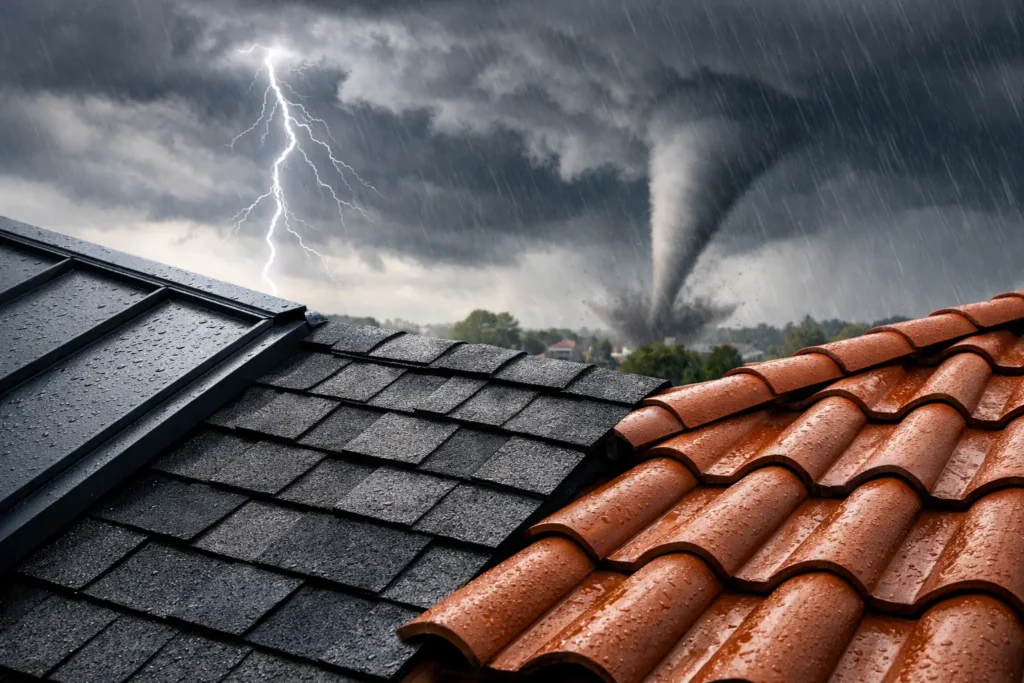
A storm can turn a roof from a background detail into the one thing standing between your property and expensive water damage. The best roofing materials for storm protection are not always the most expensive option. For East Texas homeowners and business owners, the right choice depends on wind exposure, hail risk, roof shape, budget, and whether the system is installed with the details storms tend to expose.
A good roof should do more than look finished on installation day. It needs to shed heavy rain, resist wind uplift, handle hail impacts, and protect vulnerable areas like valleys, vents, chimneys, skylights, and roof edges. Material matters, but so does the full roofing system underneath it.
What Makes a Roofing Material Storm-Ready?
Storm performance comes down to several factors working together. Wind resistance helps keep shingles, panels, and flashing from lifting or tearing away. Impact resistance matters when hail or wind-driven debris hits the roof. Water management protects the decking and interior when rain pushes under the outer surface.
The roof’s age and condition matter, too. Even a high-quality material can fail early if it is installed over damaged decking, has poor ventilation, or lacks proper flashing. A roof that performed well for years may also be more vulnerable after repeated summer heat, sun exposure, and previous storm damage.
When comparing materials, ask about the manufacturer rating, the installation method, underlayment, fastening pattern, edge metal, and warranty coverage. Those details are where storm protection is either built in or left to chance.
Best Roofing Materials for Storm Protection in East Texas
Impact-Resistant Asphalt Shingles
For many homes, impact-resistant architectural shingles offer the strongest balance of cost, appearance, and protection. These shingles are designed to better withstand hail strikes than standard asphalt shingles and are commonly available in Class 4 impact-resistant options, the highest rating in the common impact test standard.
They also give homeowners plenty of color and style choices without the price jump of metal or tile. This makes them a practical choice for families replacing an aging roof or rebuilding after a covered storm claim.
There are trade-offs. Impact-resistant does not mean hail-proof, and a severe storm can still cause damage. It also does not automatically mean every part of the roof is protected. Flashing, vents, ridge caps, and gutters can still take a beating. Proper installation is especially important because wind can find weak points at the eaves, rakes, and ridge.
For a typical East Texas home, a quality architectural shingle with a high wind rating and impact-resistant construction is often a smart starting point.
Standing-Seam Metal Roofing
Standing-seam metal roofing is one of the best long-term options for wind and heavy rain protection. Its interlocking panels, concealed fasteners, and smooth surface help water move quickly off the roof. When installed correctly, standing-seam metal can offer excellent wind resistance and avoid many of the exposed-fastener concerns found with lower-cost metal panel systems.
Metal is also a strong choice for property owners who plan to stay put and want a durable, lower-maintenance roof over the long run. It can be especially valuable on rural properties or homes with little protection from high winds and falling branches.
The upfront cost is higher than an asphalt shingle roof, and hail can dent some metal panels. A dented panel may still be weather-tight, but cosmetic damage can be frustrating when curb appeal matters. Panel gauge, profile, coating, roof slope, and installation quality all affect how a metal roof handles a storm.
Not all metal roofing is equal. Exposed-fastener panels can be a budget-friendly option for certain structures, but fasteners and washers need inspection and maintenance over time. For maximum weather protection on a residence, standing seam is generally the stronger system.
Metal Shingles and Stone-Coated Steel
Homeowners who want metal performance without the look of long vertical panels may consider metal shingles or stone-coated steel. These systems can resemble traditional shingles, shake, or tile while offering a more durable metal base.
They can perform well against wind and rain, but they are specialty products with higher material and labor costs. The best fit is usually a homeowner who values appearance as much as storm resistance and is prepared to invest in a premium roof system.
As with any specialty material, installation experience is not optional. A contractor must understand the manufacturer requirements for fastening, flashing, trim, and ventilation. A beautiful roof that is not installed to specification can lose the advantages you paid for.
Tile and Slate
Tile and slate roofs can have impressive life spans and strong fire resistance, but they are not the default answer for storm protection in East Texas. Their weight may require structural review, and individual pieces can crack when struck by hail or debris. Repairs can also be more specialized and costly than shingle repairs.
These materials make sense on certain high-end homes where the structure, design, and budget support them. They are not automatically the best choice simply because they are premium. For many local properties, an impact-resistant shingle or properly installed metal system delivers better practical value.
Silicone Roofing for Low-Slope Commercial Roofs
Commercial buildings and some residential additions often have low-slope roofs, where traditional shingles are not appropriate. Silicone roof coatings can be an effective storm-focused solution for eligible commercial roof systems because they create a continuous, waterproof surface that stands up well to ponding water.
A silicone system is not a cure for structural damage, saturated insulation, or failing seams. The existing roof must be evaluated first. When the substrate is in suitable condition and the preparation is done correctly, silicone can extend service life and reduce the risk of leaks from standing water.
For a commercial property owner, the decision should include drainage, rooftop equipment, foot traffic, existing roof condition, and how quickly a leak could disrupt operations. The lowest initial price is rarely the best measure of value when inventory, tenants, or business continuity are on the line.
The Material Is Only Half the Storm-Protection Plan
A roof does not fail in one piece. Storm damage often begins at a loose shingle, an improperly sealed pipe boot, a missing drip edge, or flashing that was never integrated correctly. That is why material selection should be paired with a clear installation scope.
For shingle systems, ask about synthetic underlayment, ice and water protection in vulnerable areas, starter shingles, ridge ventilation, and high-wind fastening requirements. For metal, ask how panels are secured, how penetrations are flashed, and whether trim details are designed for wind-driven rain.
Decking deserves a close look as well. If water has softened the wood beneath the roof, new materials cannot create a reliable foundation on their own. Replacing compromised decking before the new roof goes on is a necessary repair, not an upsell.
Trees also play a role. Branches that hang over the roof can scrape shingles, trap moisture, and become heavy projectiles in high wind. Trimming them back is one of the simplest ways to reduce avoidable storm risk.
How to Choose the Right Roof for Your Property
Start with the storm threats your property actually faces. If hail is the main concern, impact-resistant shingles may offer the best value. If wind, long-term durability, and fast rain shedding are priorities, standing-seam metal may justify the added cost. If you manage a low-slope commercial roof with ponding water, a silicone system may be the more appropriate conversation.
Then consider your ownership timeline. A homeowner preparing to sell may make a different choice than a family planning to remain in the house for decades. Appearance, neighborhood style, insurance requirements, financing, and repairability all deserve a place in the decision.
After a storm, do not rely only on what you can see from the ground. Hail bruising, lifted shingles, damaged flashing, and punctures can be easy to miss until a ceiling stain appears. Document the date of the storm, take photos from a safe location, and have the roof inspected before a small issue becomes interior damage.
The right roof should give you confidence when the forecast turns bad, not leave you wondering what the next hard rain will reveal. Spartan Exteriors helps East Texas property owners understand their options, document storm damage, and choose a roofing system built for the way local weather actually behaves.