
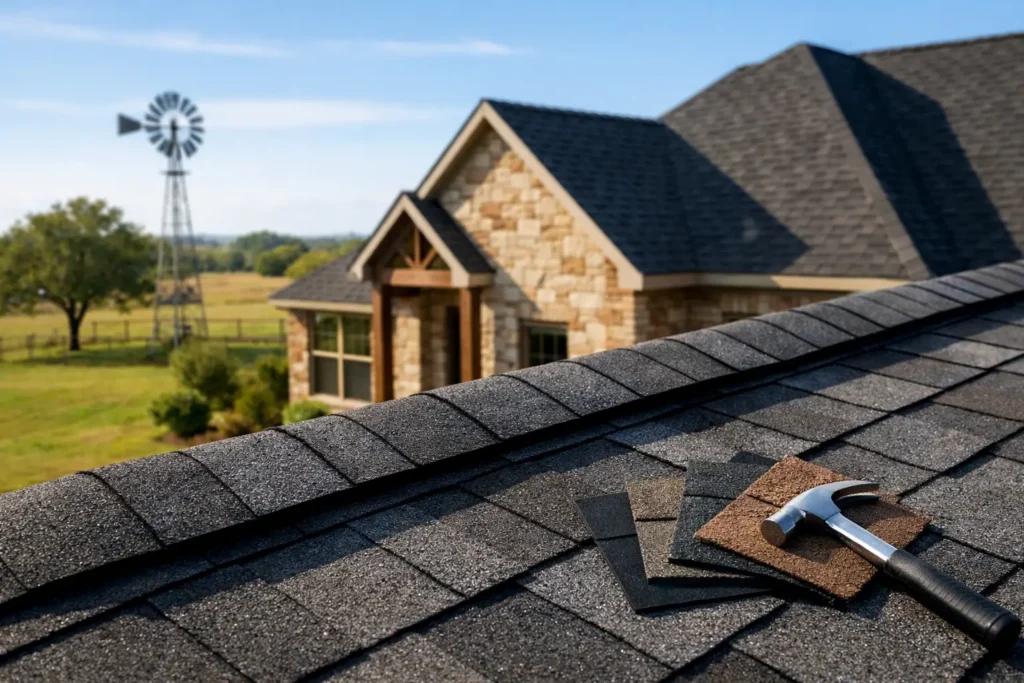
Texas roofs do not get an easy assignment. They sit through brutal summer heat, fast-moving thunderstorms, hail, high winds, and the kind of humidity that can wear down weak materials faster than most homeowners expect. That is why choosing the best shingles for Texas homes is less about picking a color you like and more about picking a roof system that can hold up when the weather turns.
If you live in East Texas, that decision deserves a little more thought. A shingle that performs well in a mild climate may not be the right fit here. The best choice depends on your roof pitch, your home’s ventilation, your budget, your insurance considerations, and how long you plan to stay in the house.
What makes the best shingles for Texas homes?
The short answer is durability under stress. In Texas, shingles need to handle prolonged UV exposure, rapid temperature swings, heavy rain, and the possibility of hail and wind-driven storms. A roof can look fine from the street and still be aging faster than it should if the materials are not matched to the climate.
For most homeowners, the best shingles for Texas homes share a few core traits. They carry a strong wind rating, have solid impact resistance, and are built to resist heat-related breakdown over time. Good algae resistance also matters in humid parts of East Texas, where roof staining can become a problem on shaded slopes.
That does not mean the most expensive shingle is always the best option. It means the product needs to fit the house and the weather it faces. A premium roof on a home with poor attic ventilation can still underperform. On the other hand, a well-installed mid-range architectural shingle can serve a homeowner very well when the roof system is built correctly from the deck up.
Asphalt shingles are still the top choice for most homes
For Texas homeowners, asphalt shingles remain the most practical and common roofing material. They are widely available, come in a range of styles and price points, and can perform very well when installed properly. Within asphalt roofing, though, there are major differences.
3-tab shingles
3-tab shingles are the budget option. They are lighter, flatter in appearance, and generally less durable than upgraded products. Years ago, they were a common choice for cost-conscious homeowners, but they make less sense for many Texas homes now.
Their lower cost is attractive upfront, but they usually do not offer the same wind resistance or long-term performance as architectural shingles. In areas that see frequent storms, that trade-off can show up quickly. If your goal is the cheapest possible replacement, 3-tab may get you there. If your goal is value over time, most homeowners are better served by moving up a level.
Architectural shingles
Architectural shingles are the standard recommendation for many Texas homes, and for good reason. They are thicker, heavier, and more dimensionally stable than 3-tab shingles. They also tend to offer stronger warranties and better resistance to wind and weather.
For a large number of homeowners in places like Tyler and across East Texas, architectural shingles hit the sweet spot. They balance cost, appearance, and durability better than most entry-level products. They also give the roof a fuller, higher-end look without pushing the price into premium territory.
If someone asks for one practical answer to the question of the best shingles for Texas homes, architectural shingles are usually where the conversation starts.
Impact-resistant shingles
If your property has taken hail before, or you simply want more protection against the next storm, impact-resistant shingles are worth serious attention. These shingles are engineered to better withstand hail strikes and flying debris. They are not indestructible, and they do not guarantee zero damage, but they can reduce the likelihood of severe shingle bruising, cracking, and premature failure.
That matters in Texas. Hail can shorten the life of a roof long before you notice a leak. A roof may look mostly intact from the ground while granule loss and hidden damage are already setting the stage for future issues.
Impact-resistant shingles typically cost more than standard architectural shingles. For some homeowners, that extra cost makes sense because of local storm patterns, insurance incentives, or long-term ownership plans. For others, a high-quality architectural shingle may still be the better value. This is one of those decisions where honest guidance matters more than a sales pitch.
Heat matters more than many homeowners realize
Texas sun does more than make your attic hot. Over time, high temperatures and UV exposure dry out roofing materials, accelerate aging, and stress the entire system. That is why color, granule design, and ventilation all play a role in shingle performance.
Lighter-colored shingles can help reflect more heat than very dark options, though the exact difference depends on the product line. That does not mean every Texas home needs a light gray roof. It means homeowners should think about solar heat gain, attic temperatures, and energy efficiency as part of the decision.
Ventilation is just as important. Even the best shingle will struggle if excessive heat is trapped in the attic. Poor airflow can lead to faster shingle wear, higher cooling costs, and moisture-related problems inside the roof system. When evaluating materials, it is smart to look beyond the shingle itself and ask whether the entire roof assembly is being addressed.
Wind and storm performance should be non-negotiable
In East Texas, wind ratings are not a small print detail. Storms can lift weak shingles, break seals, and create openings that let water in fast. A roof that survives heat well but fails in high wind is not a strong choice for this region.
Look for shingles with solid wind-resistance ratings and manufacturer installation requirements that are actually followed on the job. That last part matters. A premium product installed carelessly can fail sooner than a standard product installed the right way.
This is where workmanship separates a roof that simply looks new from one that is built to protect your home. Underlayment, starter strips, proper nailing, ridge ventilation, flashing, and cleanup are not extras. They are part of whether your shingle system performs the way it should.
Best shingle features to prioritize
When homeowners compare products, they often get overwhelmed by brand names and marketing language. It helps to narrow the decision to the features that matter most in Texas conditions.
Impact resistance is high on the list if hail is a concern. Wind resistance should also rank near the top, especially in storm-prone areas. Algae resistance can be valuable in humid, shaded environments where black streaking is common. Strong manufacturer backing is helpful, but it should never distract from the quality of the installation itself.
Appearance matters too. A new roof is a major investment, and it should look right on your home. Architectural shingles come in enough colors and profiles to improve curb appeal without sacrificing practicality. The best roof is one that protects the property well and still gives you confidence when you pull into the driveway.
When a premium shingle is worth it
Not every house needs a top-tier designer shingle. But there are situations where upgrading makes sense. If you plan to stay in your home for many years, if your neighborhood expects a higher-end look, or if your property has a storm history that makes added durability valuable, a premium product can be the right move.
The key is understanding what you are paying for. Sometimes you are buying thicker construction, better impact performance, longer coverage, or a more distinctive appearance. Sometimes you are mostly paying for style. Neither is wrong, but homeowners deserve a straight answer about the difference.
A trustworthy contractor should be willing to explain where the upgrade brings real protection and where it is simply an aesthetic choice. That kind of clarity helps homeowners make confident decisions instead of rushed ones.
Choosing the right shingle for your home
The best shingles for Texas homes are usually the ones that match local weather demands, your budget, and the condition of the rest of the roof system. For many homeowners, that means a high-quality architectural shingle with good wind performance and algae resistance. For others, especially in hail-prone areas, impact-resistant shingles may be the smarter investment.
If your roof is aging, leaking, or showing storm damage, this is not a decision to make based on price alone. It helps to have a contractor inspect the roof, explain what is happening, and walk you through the real pros and cons of each option. In East Texas, that practical guidance can save you money and stress later.
At the end of the day, a roof should do one job without excuses – protect your home and the people inside it. Pick the shingle that is built for that job, and make sure it is installed by a crew that treats your property like it matters.