
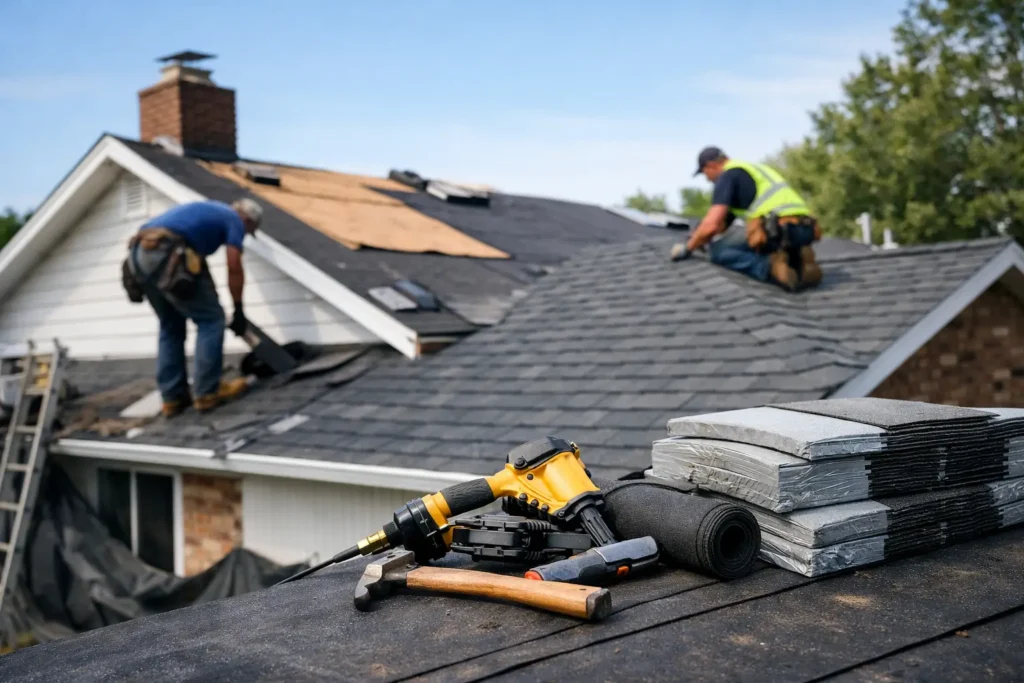
A roof replacement usually starts the same way – a stain on the ceiling, shingles in the yard, or that sinking feeling after a hard East Texas storm. If you are looking for a complete residential roof replacement guide, you probably do not need theory. You need straight answers about when to replace, what it costs, how the job works, and how to protect your home without getting pushed into the wrong decision.
When a repair is no longer enough
Some roofs still have life left in them and only need targeted repairs. Others are past that point, even if the damage looks minor from the ground. The difference usually comes down to age, spread of damage, and whether the roof system is failing in more than one area.
If your shingles are curling, cracking, losing granules, or lifting in the wind, that is more than cosmetic wear. If leaks keep returning in different spots, the problem may not be a single flashing issue. It may be the broader roofing system breaking down. Sagging decking, widespread storm impact, repeated patchwork, or water intrusion into insulation are all signs that replacement is often the safer and more cost-effective move.
That is especially true after hail or wind events. In East Texas, storm damage is not always obvious from the driveway. A roof can look mostly intact and still have bruised shingles, broken seals, or loosened components that shorten its life fast.
A complete residential roof replacement guide starts with inspection
Before talking materials or pricing, the first step is a real inspection. Not a sales pitch from the curb. A real inspection checks the shingles or panels, underlayment, flashing, vents, valleys, ridge components, decking condition, and signs of interior moisture.
This matters because two homes with the same square footage can need very different scopes of work. One may only need tear-off and replacement. Another may also need rotten decking replaced, upgraded ventilation, chimney flashing work, or code-related adjustments.
A good contractor should be able to explain what they found in plain language. You should know what is damaged, what is worn out, what can stay, and what should be replaced now to avoid bigger costs later. If the explanation feels vague, rushed, or overly dramatic, that is a red flag.
What happens during a full roof replacement
A residential roof replacement is more than laying down new shingles. The old roofing material is removed so the structure underneath can be checked. Once the roof deck is exposed, damaged wood is identified and replaced as needed. Then the new system is built back in layers.
That usually includes underlayment for water protection, flashing around penetrations and transition points, starter materials, the main roofing surface, ridge components, and ventilation elements. Cleanup is also part of the job, and it should be handled seriously. Nails, debris, and torn materials should not be left around your driveway, flower beds, or yard.
The timeline depends on roof size, weather, material type, and whether hidden damage is uncovered after tear-off. Many homes can be completed quickly, but speed should never come at the expense of workmanship. A fast crew is helpful. A rushed crew is expensive later.
Choosing the right roofing material for your home
For many homeowners, asphalt shingles are the most practical choice. They are cost-effective, widely available, and come in styles that can improve curb appeal without stretching the budget too far. Architectural shingles are especially popular because they offer a stronger profile and generally better wind performance than basic three-tab products.
Metal roofing is another strong option, particularly for homeowners thinking long term. It can last significantly longer than shingles and performs well in many storm conditions. It also changes the look of a home in a big way, which some owners love and others do not. The higher upfront cost can make sense if you plan to stay in the home for many years.
The best material depends on more than appearance. Budget, roof pitch, neighborhood style, insurance considerations, and how long you plan to own the home all matter. There is no one-size-fits-all answer, and any contractor who pretends there is is not giving you the full picture.
How much a roof replacement really costs
Every homeowner asks about price, and they should. But roof replacement pricing is not as simple as cost per square foot. Material choice matters, but so do roof complexity, slope, tear-off layers, decking repairs, flashing details, ventilation needs, and local labor conditions.
A lower estimate is not always a better deal. Sometimes it means corners are being cut on underlayment, ventilation, flashing reuse, or cleanup. Sometimes it means the contractor is pricing the visible job and leaving out the likely extras that show up later as change orders.
A reliable estimate should break down what is included and explain what could affect final cost if hidden damage is found. Financing can also be worth discussing early if cash flow is a concern. For many families, the right monthly payment structure is what allows them to replace a failing roof before interior damage gets worse.
Insurance claims and storm damage
When storm damage is involved, roof replacement can overlap with an insurance claim. That process is where many homeowners feel overwhelmed, and for good reason. Documentation matters, timing matters, and the wording in the adjuster report matters.
The right contractor should help you understand the damage and provide clear supporting information. That does not mean making promises about claim approval. It means helping you see what is storm-related, what may be age-related, and what to expect during the inspection and scope review.
If your roof was hit by hail or wind, do not wait too long to have it checked. Delays can make it harder to separate fresh damage from ongoing wear. A prompt response also helps prevent secondary problems like leaks, stained ceilings, mold growth, and damaged insulation.
Why ventilation and decking matter more than most homeowners realize
Homeowners often focus on the visible roofing material, but the hidden parts of the system matter just as much. Poor attic ventilation can trap heat and moisture, which shortens shingle life and increases the chance of mold or decking problems. Replacing the roof without addressing ventilation is sometimes just putting a clean finish on an unhealthy system.
Decking condition is another major issue. If the wood under the roof covering is soft, warped, or water-damaged, new shingles will not solve the problem. The roof needs a solid base. This is one area where honesty matters. You want a contractor who will show you the issue, explain the fix, and do the work right the first time.
How to choose the right roofing contractor
A roof replacement is a major project, and the contractor you hire matters as much as the material you choose. Look for professionalism in how they inspect, communicate, estimate, and document the work. Credentials matter. Local reputation matters. Warranty terms matter.
You also want clarity. Who supervises the crew? How is property protected during tear-off? What happens if bad decking is found? What workmanship warranty is included? Who handles communication if insurance is involved?
For East Texas homeowners, local experience has real value. Roofs in this region take heat, humidity, high winds, hail, and sudden storm swings. A contractor who understands those conditions is better equipped to recommend a system that fits the home and the climate. That is one reason many families choose a local company like Spartan Exteriors when they want fast response, honest guidance, and workmanship that stands up over time.
Preparing your home for installation day
Once the job is scheduled, a little preparation makes the process easier. Move vehicles out of the driveway, secure fragile wall hangings inside, and cover items in the attic if dust is a concern. If you have kids, pets, or anyone sensitive to noise, plan for the workday accordingly.
It also helps to ask where materials will be delivered, how cleanup will be handled, and whether someone will be available to answer questions during the project. A good team should keep you informed, not leave you guessing.
Complete residential roof replacement guide for better decisions
The best roof replacement decisions are not driven by panic or pressure. They are made with a clear understanding of the roof’s condition, the material options, the installation process, and the contractor standing behind the work. Sometimes the right move is a simple repair. Sometimes replacement is the only smart path left.
If your roof is showing its age or you have storm concerns, do not wait for the next ceiling stain to tell you what you already suspect. Get it inspected, ask direct questions, and make the decision that protects your home, your budget, and your peace of mind for the long haul.