
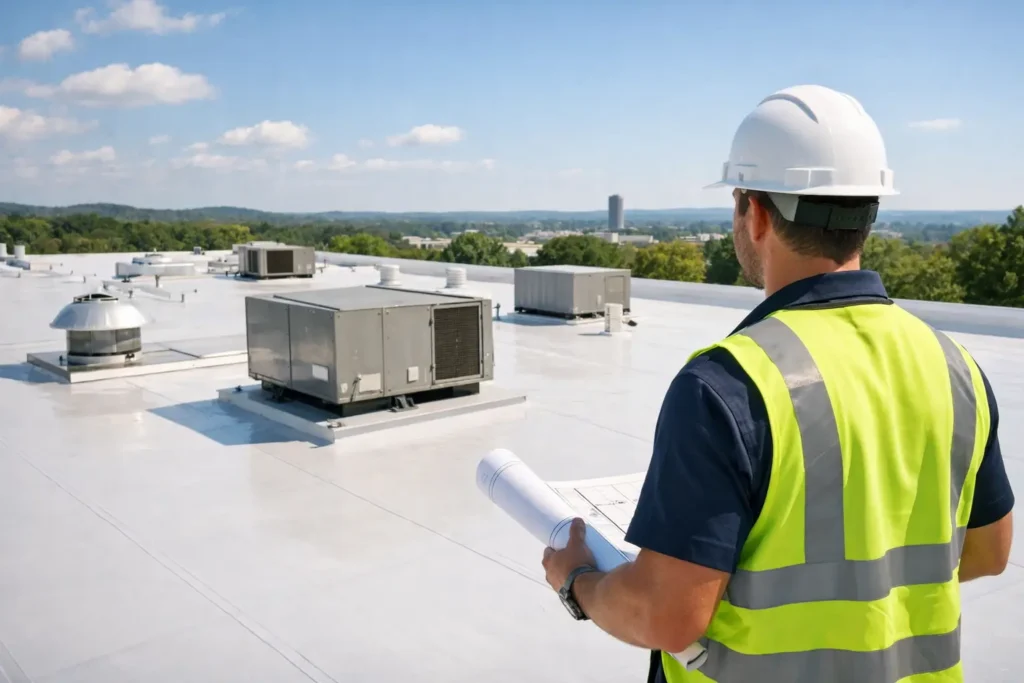
A commercial roof rarely fails at a convenient time. It starts with a ceiling stain above inventory, water near electrical equipment, or a leak that shows up during a hard East Texas storm. Longview commercial roofing is not just about putting material on a building. It is about protecting operations, employees, customers, equipment, and the budget you need to run your business.
For many property owners, the right answer is not automatically a full replacement. A timely repair, a silicone restoration system, or a properly planned reroof may offer the best return. The key is getting an honest assessment before a small issue turns into interior damage and business interruption.
What Your Commercial Roof Is Up Against
Commercial roofs in Longview deal with more than ordinary wear. High heat, humidity, heavy rain, wind-driven storms, falling limbs, and rapid temperature changes all put pressure on roofing materials and the areas where they connect.
Flat and low-slope roofs are especially dependent on proper drainage. Water that remains on the roof after a storm can work its way into seams, flashing, penetrations, and weakened sections of the membrane. Even a roof that appears mostly sound can have one low area or failed detail that creates a recurring leak.
Metal roofing brings a different set of concerns. Fasteners can back out, seals can deteriorate, and rust can develop around exposed areas if maintenance is delayed. On any commercial system, rooftop HVAC units, vents, pipes, skylights, and parapet walls create transition points that deserve close inspection. Leaks often begin at these details, not in the middle of the roof field.
Longview Commercial Roofing: Repair, Restore, or Replace?
A responsible contractor should not walk onto your property with one answer already in mind. The best path depends on the roof’s age, existing material, moisture conditions, drainage, prior repairs, and how long you plan to own or operate the building.
When a Repair Makes Sense
Repair is often the smart choice when the damage is isolated and the larger roof system remains in good condition. A torn membrane, damaged flashing, loose metal panel, puncture, or small leak around a penetration may be repairable without disturbing the entire roof.
The trade-off is that repeated patching can become expensive if the roof has widespread age-related failure. A repair should solve the cause of the leak, not simply cover the visible symptom. If water is getting in because a drainage issue is repeatedly stressing the same area, that issue has to be addressed as part of the work.
When Silicone Roof Restoration Is Worth Considering
Silicone roofing can be a practical commercial option for certain low-slope roofs. A silicone coating system is applied over an eligible existing roof to create a durable, waterproof surface. It can reduce the need for a costly tear-off, limit disruption at the property, and help extend the life of a roof that still has a sound foundation.
That does not mean every roof is a candidate. The existing system must be inspected for trapped moisture, major deterioration, unstable materials, and drainage problems. Coating over a roof with serious underlying issues only delays the real repair. When the roof qualifies, however, silicone can be an effective solution for business owners who want protection without the cost and downtime of a complete replacement.
When Replacement Is the Better Investment
Replacement becomes the more dependable choice when leaks are widespread, insulation is saturated, the roof has reached the end of its service life, or repairs are no longer holding. It may also make sense when a property owner wants to change systems, improve drainage, or install a more durable roof for the building’s long-term needs.
A full reroof is a larger investment, but it gives you the opportunity to correct issues hidden beneath the existing surface. It can also make planning easier. Instead of responding to every storm with another repair bill, you have a new system, a clear scope of work, and warranty protection for the road ahead.
Warning Signs You Should Not Ignore
A roof does not have to be actively pouring water into the building to need attention. Interior stains, bubbling paint, musty odors, warped ceiling tiles, and increased humidity can all point to a roof leak. On the exterior, look for standing water, cracked coatings, open seams, damaged flashing, loose materials, clogged drains, or rust around fasteners and penetrations.
If you notice any of these signs after severe weather, act quickly. Water can travel along decking, insulation, framing, and utility lines, so the stain inside may not sit directly below the entry point. Fast emergency response can limit damage and help preserve the documentation needed for an insurance claim.
Why Documentation Matters After Storm Damage
Commercial storm damage claims can become complicated when there is little proof of the roof’s condition or the scope of the damage. Photos, inspection findings, measurements, and clear repair recommendations help property owners make informed decisions and give insurance carriers a better picture of what happened.
Do not assume a roof is fine because there is no immediate leak. Wind can lift edges, damage flashing, loosen fasteners, and compromise seams without creating an obvious interior issue right away. A professional inspection after a major storm helps identify problems while they are still manageable.
A contractor should explain what was found in plain language, show you the affected areas when possible, and separate urgent repairs from long-term recommendations. That clarity matters when you are responsible for tenants, employees, inventory, or customers.
Choosing a Commercial Roofing Contractor
The lowest bid is not always the lowest cost. Commercial roofing work requires careful assessment, appropriate materials, trained installation, jobsite coordination, and clear communication from the first inspection through final cleanup.
Ask how the contractor plans to protect your building during the work, manage access around customers or tenants, and respond if weather moves in. Ask whether they can handle emergency repairs, provide assistance with storm documentation, and stand behind their installation. You also want to know whether the proposed system fits your roof’s real condition or simply happens to be the contractor’s preferred product.
At Spartan Exteriors, we believe commercial property owners deserve direct answers, quality workmanship, and a team that treats their building with the same care we would expect for our own. Our East Texas crews help business owners evaluate roof repairs, commercial reroofing, metal roofing, and silicone roofing options without pressure or confusing sales talk.
Protect Your Roof Before It Disrupts Your Business
The best time to address a roofing concern is before the next heavy rain turns it into an emergency. A professional inspection can identify minor failures, drainage concerns, and storm damage that may not yet be visible from inside the building.
Whether your Longview property needs a fast leak repair, help after storm damage, or a plan for a commercial roofing replacement, start with a clear assessment. The right decision is the one that protects your property, fits your budget, and gives you confidence when the next East Texas storm rolls through.