
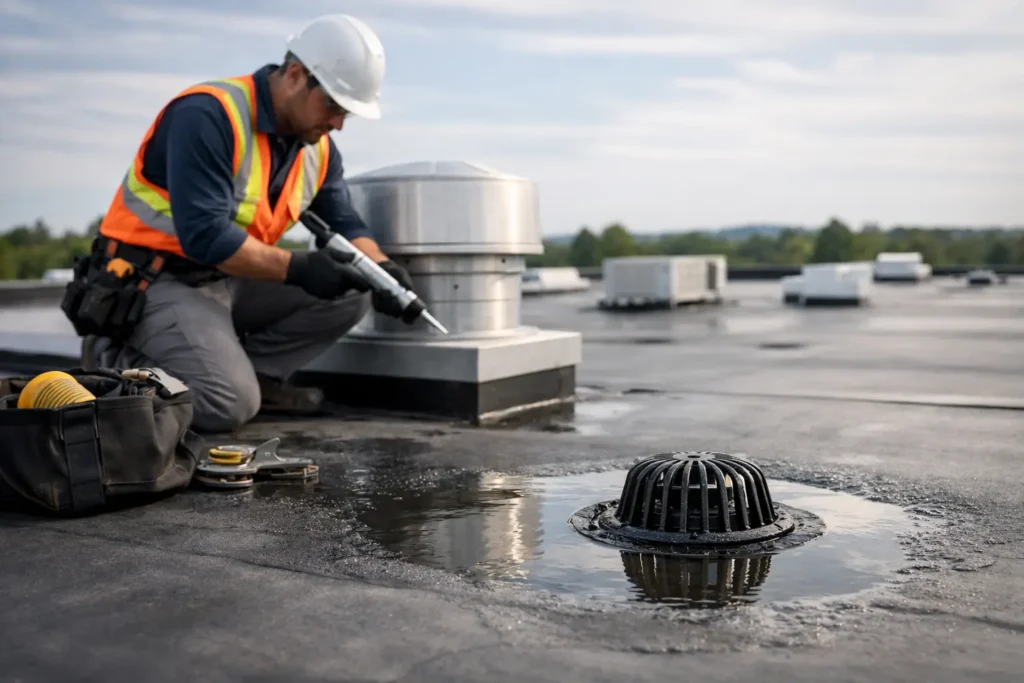
A commercial roof rarely fails without warning. Water stains near ceiling tiles, a loose edge at the parapet, standing water after rain, or a drain that never seems to clear can all point to a small issue getting worse. Tyler commercial roof maintenance gives property owners a chance to address those issues before they interrupt operations, damage inventory, or turn into an emergency repair.
For businesses in Tyler, roof care needs to account for heat, heavy rain, wind, and the sudden storms East Texas is known for. A maintenance plan is not about finding work that does not need to be done. It is about getting clear answers, making practical repairs, and protecting the roof system you already paid for.
Why Commercial Roof Maintenance Pays Off
A roof is easy to ignore when it is doing its job. That changes quickly when water reaches insulation, electrical components, offices, equipment, or customer areas. By that point, the visible leak may be only part of the problem.
Routine maintenance helps catch failed sealant, damaged flashing, punctures, open seams, clogged drains, and worn roof penetrations while repairs are usually more contained. It also creates a record of the roof’s condition. That documentation can be useful for budgeting, communicating with owners or tenants, and showing that the property has been properly maintained after a storm.
There is a financial trade-off to consider. Inspections and preventative repairs cost money, but waiting for obvious failure can mean wet insulation, interior restoration, disrupted work, and more extensive roofing work. The right maintenance schedule depends on the roof’s age, material, drainage, traffic, and exposure to trees or wind, but doing nothing is rarely the lower-cost choice over time.
What a Tyler Commercial Roof Maintenance Visit Should Cover
A meaningful inspection goes beyond looking at the roof from the ground. The goal is to identify weak points, explain their condition plainly, and recommend only the work that makes sense for the building.
A contractor should review the field of the roof for splits, blisters, punctures, loose material, and areas where water collects. They should also inspect the perimeter, since edge metal and flashing often take the force of wind. On low-slope roofs, seams and transitions deserve close attention. On metal roofs, fasteners, panels, laps, and penetrations need to be checked for movement and deteriorated seals.
Drainage is another major part of the visit. Leaves, sediment, and debris can block drains, scuppers, gutters, and downspouts. Even a small blockage can allow ponding water to put added stress on the membrane and find its way into vulnerable seams. If water is still sitting on the roof long after rain stops, the issue may be more than simple debris. It can point to drainage design concerns, sagging areas, or a roof system that needs a professional evaluation.
The inspection should include roof-mounted equipment and penetrations such as HVAC curbs, vents, pipes, skylights, and satellite mounts. These areas move with temperature changes and are frequent sources of leaks. A clear report with photos and repair priorities helps building owners make decisions without guesswork.
Warning Signs Your Building Needs Attention
Some roof concerns call for prompt scheduling, while others require an immediate response. Do not wait for a major interior leak if you notice any of these conditions:
- Ceiling stains, dripping water, damp insulation, or unexplained odors inside the building.
- Pooled water that remains after normal drying time or drainage points that overflow during rain.
- Loose flashing, lifted membrane edges, damaged metal panels, or missing fasteners after high winds.
- Cracked sealant around pipes, vents, curbs, skylights, and other roof penetrations.
- Rising energy costs that may be connected to wet insulation or a roof system losing thermal performance.
A roof may look acceptable from ground level while a vulnerable detail is letting water in. Early assessment matters, especially after a severe storm. The faster a contractor can document the condition and secure active leak points, the more options you usually have.
Build a Schedule Around Your Roof, Not a Calendar Alone
Most commercial properties benefit from professional inspections at least twice a year, commonly before the most demanding weather periods and again afterward. A spring and fall schedule is a practical starting point, but it is not a one-size-fits-all rule.
Older roofs, buildings with rooftop HVAC equipment, properties surrounded by trees, and roofs with a history of ponding water may need more frequent attention. So may facilities where a leak would cause immediate disruption, such as medical offices, retail spaces, warehouses, churches, or multi-tenant buildings. High-traffic roofs also need closer monitoring because service crews can accidentally create punctures or disturb flashing during equipment work.
In addition to scheduled inspections, arrange a roof check after significant wind, hail, or heavy rainfall. Storm damage is not always dramatic. Wind can loosen a flashing detail, back out fasteners, or create a small opening at a seam. That opening may not leak until the next hard rain, when it becomes harder to determine when the damage began.
Maintenance Looks Different Across Commercial Roof Systems
The material on your building affects what a contractor looks for and how repairs are made. A maintenance plan should fit the roof system rather than apply the same fix everywhere.
Low-Slope Membrane Roofs
Single-ply and other membrane systems rely heavily on properly sealed seams, flashing, and penetrations. Maintenance often focuses on checking welds or seams, removing debris, repairing punctures, and addressing water that is not draining as it should. Coatings may be a good option in certain situations, but only after the underlying roof is dry, stable, and properly repaired. A coating cannot solve saturated insulation, failed flashing, or an active structural drainage problem.
Metal Commercial Roofs
Metal roofs are durable, but they still need regular attention. Fasteners can loosen over time, washers can wear, and sealants at laps or penetrations can break down under heat and weather exposure. Maintenance may include replacing compromised fasteners, resealing details, correcting loose trim, and addressing early corrosion before it spreads.
Modified Bitumen and Built-Up Roofs
These systems require checks for cracks, open laps, blisters, splitting, and worn surfacing. Foot traffic and standing water can accelerate wear. Repairs need to be compatible with the existing material and installed correctly, not simply covered with temporary patch material that fails during the next weather event.
Protect the Roof Between Professional Visits
Property managers and maintenance teams do not need to perform roofing repairs themselves, but they can help reduce risk. Keep roof access limited to trained personnel. Make sure HVAC technicians know not to leave loose materials, tools, or sharp debris behind. If a contractor accesses the roof for another trade, ask that they report any damage they notice around their work area.
Ground-level checks are useful too. After rain, look for overflowing gutters, water collecting near the foundation, or unusual discharge from downspouts. Inside the building, report ceiling changes quickly. A small stain is not something to paint over and forget. It is a signal to determine whether moisture is still entering the building.
Keep records of inspections, repairs, weather events, and photographs. This does not need to be complicated. A simple property file makes it easier to track recurring issues, compare recommendations, and plan for eventual replacement before the roof reaches a crisis point.
Choose Straight Answers Over Temporary Patches
Commercial roof work should begin with an honest assessment of whether a repair will hold, whether restoration is appropriate, or whether the roof is nearing the end of its useful service life. The lowest upfront quote is not always the best value if it skips the real source of the leak or relies on materials that do not match the existing system.
Ask for an explanation of the affected area, the recommended repair, the expected result, and any conditions that could change the scope once work begins. A dependable contractor should also explain what does not need to be done. That level of clarity helps owners protect their property and budget with confidence.
Spartan Exteriors helps Tyler commercial property owners get prompt roof evaluations, clear repair recommendations, and workmanship backed by a commitment to doing the job right the first time. If your building has a new leak, storm-related concern, or a roof that has not been inspected recently, a professional assessment now can protect far more than the roof above your business.