
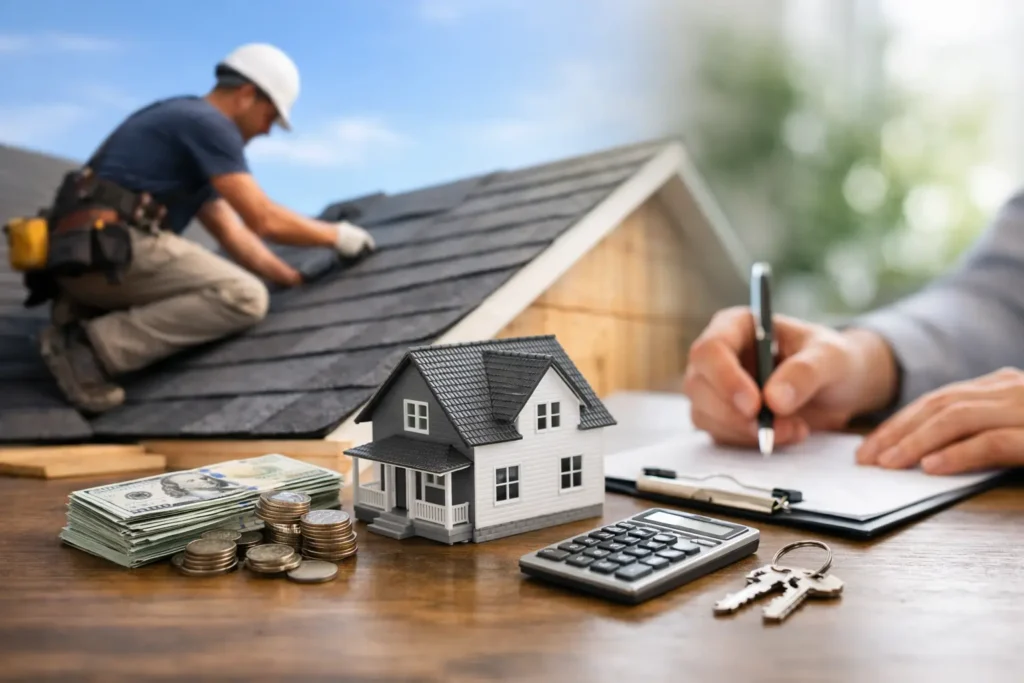
A leaking roof does not wait for a better month. When shingles are failing, decking is soft, or storm damage has exposed your home, most families are not asking whether they need a new roof. They are asking which roof replacement financing options will let them protect the house now without putting the rest of their budget in a bind.
That is the real issue for East Texas property owners. A roof is not a luxury purchase. It is protection for your family, your belongings, your structure, and in many cases your insurance position. Waiting too long can turn one roofing problem into interior water damage, mold concerns, insulation issues, and higher repair costs. Financing can make it possible to move quickly, but only if you understand what you are agreeing to.
Why roof replacement financing options matter
Most property owners do not plan roof replacement years in advance. Sometimes the roof is simply old. Sometimes a storm rolls through and the damage is obvious overnight. Sometimes a slow leak becomes impossible to ignore. In all three cases, cash on hand may not line up with the urgency of the work.
That is where financing becomes practical, not reckless. Used wisely, it helps spread a major project into manageable payments while allowing the replacement to happen before the damage gets worse. The key is to compare the total cost, not just the monthly number. A low payment can look comfortable at first glance, but if the term is too long or the interest is too high, the roof ends up costing far more than expected.
Common roof replacement financing options
There is no single best financing path for every homeowner or commercial property owner. The right fit depends on your credit profile, how fast the roof must be replaced, whether insurance is involved, and how much flexibility you need.
Contractor financing
Many roofing companies offer financing through lending partners. This is often the fastest and simplest route because the application process is built into the project. For customers facing active leaks or storm damage, speed matters.
The advantage is convenience. You can often review payment terms as part of the estimate process and move from approval to scheduling without hunting down outside lenders. The trade-off is that terms vary. Some plans may offer promotional rates, while others may carry higher interest depending on credit and loan length. Ask whether there are prepayment penalties, deferred interest terms, or fees folded into the financing.
Home improvement loans
A personal or home improvement loan through a bank, credit union, or lender can be a strong option if you want to separate the financing decision from the contractor relationship. These loans typically provide a set amount with fixed monthly payments.
This can make budgeting easier because the payment schedule is clear from day one. The downside is that approval and funding may take longer than contractor-arranged financing, which is not ideal if your roof problem is urgent. Rates also depend heavily on credit strength.
Home equity financing
If you have built equity in your property, a home equity loan or line of credit may offer lower rates than unsecured borrowing. For large residential projects, this can reduce the overall cost of financing.
Still, there is more risk attached because your home is part of the equation. It also takes more paperwork and time. If the roof is actively leaking after a storm, many owners do not want to wait through a longer lending process. For planned replacement on an aging roof, though, it can be worth considering.
Credit cards
For smaller roofing projects, some owners use a credit card, especially if they qualify for a short promotional rate. But for full roof replacement, this is usually the most expensive route if the balance is not paid off quickly.
Credit cards can be useful for deductibles, temporary emergency expenses, or a small gap between insurance funds and final cost. They are less attractive for the entire project unless you have a very clear payoff plan.
Insurance plus out-of-pocket financing
After storm damage, financing is not always about covering the full roof cost. Sometimes it is about bridging the deductible, upgrades not covered by insurance, or additional work discovered during replacement.
This is common in East Texas after hail and wind events. Insurance may cover part of the project, but timing and coverage details matter. In those cases, a financing plan can fill the gap without delaying work that needs to happen now.
How to compare financing without getting burned
Not all financing offers are equal, even when the monthly payment looks similar. The details matter more than the sales pitch.
Start with the annual percentage rate, not just the interest language. Then look at the loan term. A longer term lowers the monthly payment but can raise the total cost significantly. Also ask about origination fees, late fees, promotional periods, and what happens if a deferred-interest balance is not paid in full on time.
It is also smart to compare the financed total against the cash price. Some owners are so focused on the monthly number that they never stop to calculate what they will actually pay over the life of the loan. A trustworthy contractor should be comfortable walking through those numbers clearly.
When financing makes sense and when it may not
Financing makes sense when the roof needs timely replacement and delaying the project would create bigger structural or interior problems. It also makes sense when you can secure terms that fit your budget without stretching your household or business too thin.
It may not make sense to rush into financing if the roof issue is minor and can be solved with a repair, or if the proposed terms are so costly that they create financial strain for years. This is why a proper inspection matters. Not every roof needs full replacement, and not every replacement needs the same material system or price point.
For some customers, a longer-term loan provides breathing room and protects savings for other emergencies. For others, a shorter-term option with a higher payment is the better move because it reduces total interest. It depends on your cash flow, credit, and how stable you need your monthly expenses to be.
Choosing a contractor matters as much as choosing financing
The financing itself is only part of the decision. If the roof is installed poorly, cheap financing will not save you from future headaches. You need a contractor who gives a clear scope of work, explains material choices, documents damage properly, and stands behind workmanship after the job is done.
That matters even more after storms, when property owners are under pressure and out-of-town crews start knocking on doors. Fast promises mean very little if communication is poor, warranty support disappears, or corners get cut on installation. A local company with strong customer support and clear financing access gives you a better chance of getting both the roof and the process handled right.
At Spartan Exteriors, that means treating financing as part of the solution, not the whole solution. Families and property owners need honest numbers, fast response, and guidance they can trust from estimate through final installation.
Questions to ask before you sign
Before agreeing to any financing plan, slow the process down just enough to get straight answers. Ask what your monthly payment will be, what the total repayment amount will be, whether there are penalties for early payoff, and whether the rate is fixed or can change. Ask how soon funds are available and whether the roofing schedule depends on lender approval.
You should also ask the contractor what happens if additional damage is found once the roof is opened up. Hidden decking issues, ventilation corrections, or code-related items can affect final pricing. It is better to understand that possibility upfront than to be surprised later.
The best financing choice is the one that protects your property and your budget
A good financing plan should give you room to solve the roofing problem now without creating a second problem in your bank account. That takes honest inspection, clear pricing, and terms you fully understand.
If your roof has reached the point where repair is no longer the smart option, do not let uncertainty around payment keep the damage going. Ask questions, compare terms carefully, and work with a contractor who will explain the job as clearly as the financing. Peace of mind starts with a dry, dependable roof and a plan you can actually live with.