
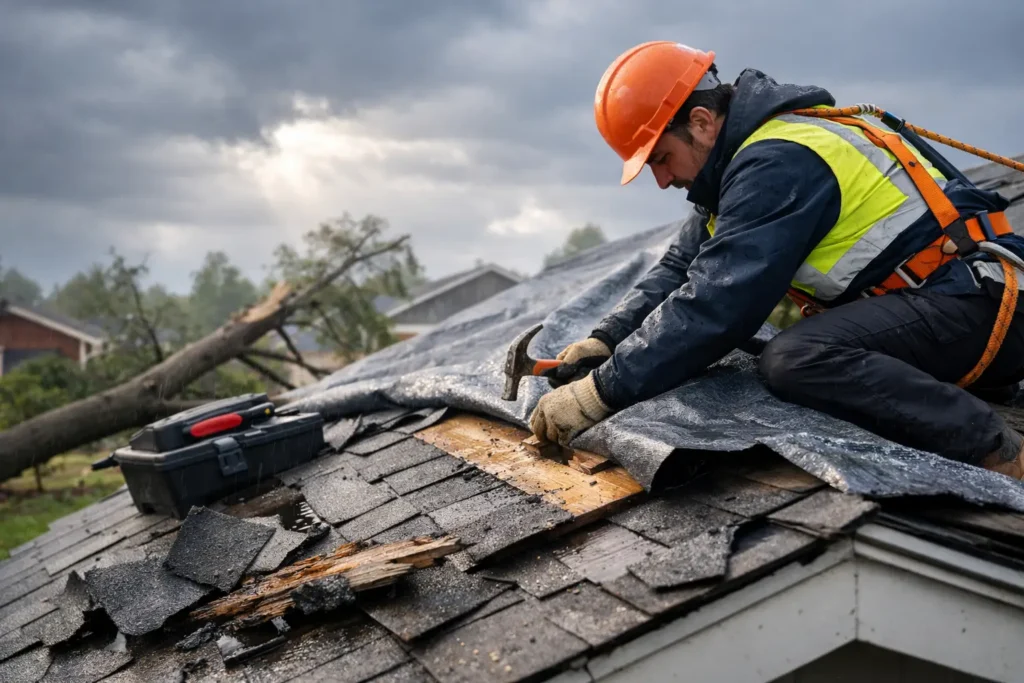
When a storm tears through East Texas, roof damage is not something you put on tomorrow’s list. Water moves fast, wind exposes weak spots, and a small opening can turn into soaked insulation, stained ceilings, ruined drywall, and mold before you know it. That is why emergency roof repair after storm damage needs to start with quick action, clear decisions, and a contractor who knows how to protect your property first and repair it the right way.
For homeowners, mobile homeowners, and commercial property owners, the first few hours matter most. The goal is not to guess at the damage from the ground or wait to see if the leak gets worse. The goal is to stop further damage, document what happened, and get experienced eyes on the roof as soon as conditions are safe.
What counts as emergency roof repair after storm damage
Not every storm issue is cosmetic. Emergency roof repair after storm damage usually means the roof has been compromised enough that your home or building is exposed to water, debris, or structural risk. That can include missing shingles, lifted metal panels, punctures from limbs, flashing torn loose, exposed underlayment, active leaks, sagging areas, or damage around vents, skylights, chimneys, and roof edges.
Sometimes the emergency is obvious. A tree limb came through the roof, or water is dripping into a hallway. Other times it is quieter and just as serious. You may notice a brown spot spreading across the ceiling, shingles in the yard, or water entering only when the wind blows from one direction. Those are still urgent problems because hidden moisture has a way of spreading beyond the visible damage.
If you own a commercial property, the warning signs may look different. Pooling water, membrane punctures, seam separation, and flashing failure can all lead to interior damage and business interruption. On metal and low-slope roofing systems, waiting too long often makes repairs larger and more expensive than they needed to be.
What to do right after the storm
Start with safety. If there are downed power lines, major structural concerns, or a tree on the roof, stay back and call the appropriate emergency services first. Do not climb onto a wet or storm-damaged roof. Even roofs that look stable from the ground can have soft decking, loose materials, or hidden weak spots.
Once the weather has cleared enough to move safely around the property, check for visible signs from the ground. Look for missing shingles, dented metal, fallen branches, displaced flashing, and debris piled where it should not be. Inside, check ceilings, attic spaces, upper walls, and light fixtures for water stains or active dripping.
Take photos and video of everything you can see. That includes exterior damage, interior water intrusion, fallen limbs, and any personal property affected by the leak. Good documentation helps with insurance and gives your roofing contractor a better starting point. If water is entering the home, move furniture, electronics, and valuables away from the leak and use buckets or containers to catch dripping water.
If it is safe to do so, you can take small protective steps inside the building. Relieve bulging ceiling areas carefully if water is trapped and creating pressure, but only if you can do it safely and without putting yourself under a collapsing section. For most people, the better move is to contain the water and get professional help on the way.
Temporary protection matters more than people realize
A lot of storm calls are really two jobs. First, stop the immediate intrusion. Then determine what permanent repair is actually needed. That first part is where many property owners lose valuable time.
Emergency service often involves tarping exposed sections, sealing vulnerable penetrations, securing loose materials, and preventing additional water from getting inside before a full repair can be completed. Temporary protection is not a final fix, but it can save insulation, drywall, flooring, inventory, and framing from much worse damage.
This is where experience matters. A rushed patch that misses the actual entry point can create a false sense of security. Storm damage rarely stays limited to the one spot where water finally shows up indoors. Wind-driven rain can travel, and roof systems fail at seams, edges, and flashing details long before the leak becomes visible in your living room or office.
Why a professional inspection needs to happen fast
Storm damage is not always dramatic, but it is often layered. A roof may have torn shingles in one area, hail impact in another, and flashing damage around a vent that was not leaking until the next storm. If you only address the most obvious issue, the rest of the damage keeps working against you.
A proper inspection should look at the whole roofing system, not just the spot with the stain. That includes shingles or panels, underlayment, flashing, decking condition, roof penetrations, ventilation components, valleys, ridge areas, and the condition of gutters and drainage paths. On commercial systems, it also means checking seams, coatings, edge metal, drains, and insulation conditions where moisture may already be trapped.
The reason speed matters is simple. Storm damage gets worse with time. Sun exposure can dry and crack vulnerable areas. Another rain event can push water deeper into the assembly. Small structural concerns can spread. Fast response protects your budget as much as your property.
Repair or replacement depends on the damage
One of the biggest concerns after a storm is whether you need a repair or a full reroof. The honest answer is that it depends on the age of the roof, the type of material, the extent of the damage, and whether the system was already near the end of its service life.
If the damage is isolated and the surrounding roof is still in solid condition, a targeted repair may be the smartest path. Replacing damaged shingles, restoring flashing, sealing penetrations, or repairing a section of metal roofing can often return the system to proper performance.
If the storm exposed widespread weakness, tore up multiple slopes, caused structural issues, or hit an older roof that was already failing, replacement may make more sense financially. A cheaper short-term patch can become expensive if it leads to repeated leaks and interior repairs. The right contractor will walk you through that trade-off clearly instead of pushing one answer for every job.
Insurance claims are easier with the right support
Storm damage is stressful enough without trying to decode insurance paperwork on your own. Most property owners are not filing roof claims every year, so it helps to work with a contractor who knows how to document damage, explain scope, and communicate clearly during the process.
Photos, inspection findings, measurements, and written descriptions all matter. So does timing. Waiting too long to report a storm loss can complicate a claim, especially if the insurer argues that additional damage happened because the property was not protected quickly enough.
That does not mean every damaged roof will qualify for full replacement through insurance, and a trustworthy contractor should never promise that before a proper inspection. What they should do is give you accurate information, help you understand what storm-related damage is present, and make sure the repair scope matches the actual condition of the roof.
Choosing the right contractor after a storm
Storm season brings out serious roofing professionals and opportunists at the same time. When your roof is exposed, urgency is real, but that does not mean you should hand the job to whoever knocks first.
Look for a contractor with a local reputation, clear communication, proof of credentials, and a track record of storm response. Ask whether they handle emergency tarping, repairs, and full restoration. Ask how they document damage, whether they assist with insurance claims, and what kind of workmanship backing they provide. A contractor who treats your property like their own will explain what is urgent, what can wait a day or two, and what the long-term fix should be.
In East Texas, fast response matters, but so does staying power. You want a company that will still be here after the storm trucks move on. That is one reason many property owners call Spartan Exteriors when severe weather hits. They want a local team that responds quickly, communicates plainly, and does the job right the first time.
Emergency roof repair after storm events in East Texas
East Texas weather can be rough on roofing systems. High winds, hail, heavy rain, fallen limbs, and repeated storm cycles test every weak point on a roof. That is why emergency roof repair after storm events is not just about fixing what you can see. It is about protecting the entire structure from what comes next.
Homes, mobile homes, and commercial buildings all have different repair needs, and roofing materials respond differently to storm impacts. Shingles may crease or blow off. Metal roofing may dent, loosen, or separate at fasteners and trim. Commercial systems may hold water in places that lead to hidden moisture spread. The right repair plan has to fit the roof you actually have, not a one-size-fits-all script.
If your roof took a hit, do not wait for a second storm to tell you how bad it is. Get it inspected, get it protected, and get a clear plan in place. A strong roof gives you peace of mind, but fast action after damage is what keeps a bad day from becoming a major loss.