
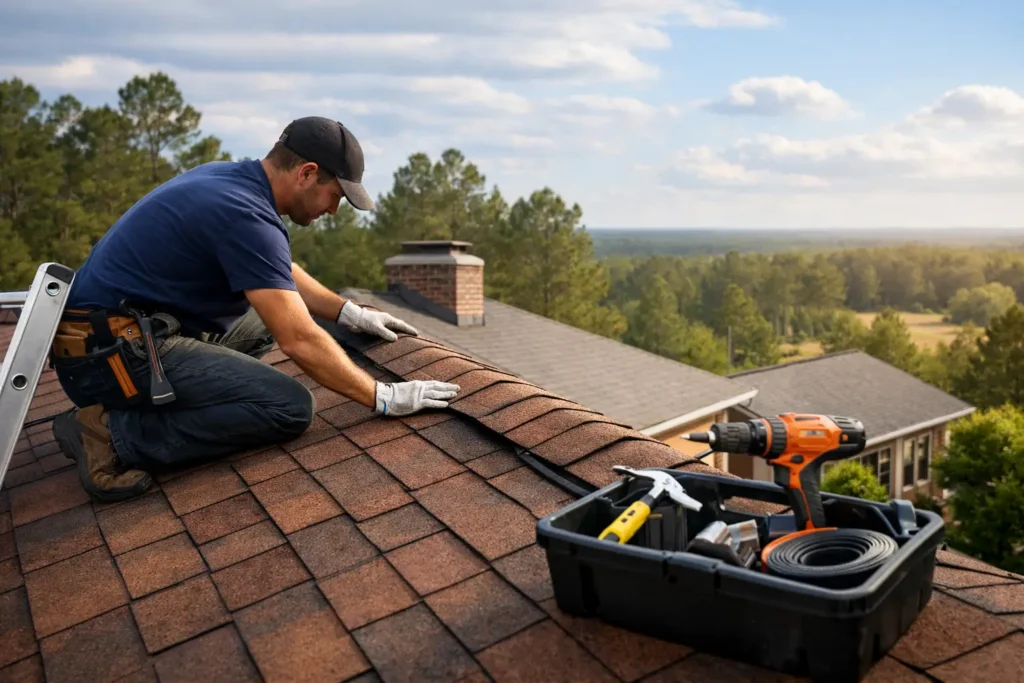
A roof rarely fails all at once. More often, a loose shingle after a hard storm, a clogged valley, or a small flashing gap lets water in little by little. Consistent roof maintenance gives East Texas homeowners and property owners a chance to find those problems before they turn into stained ceilings, damaged insulation, mold, or a costly replacement decision made under pressure.
Our weather is hard on roofing systems. Summer heat can age shingles faster, heavy rain exposes weak drainage, and windstorms can lift materials that looked perfectly fine from the ground. The goal is not to worry about every dark spot or fallen granule. It is to keep a close eye on the parts of your roof that protect the rest of the property.
What Roof Maintenance Actually Includes
Roof maintenance is not just cleaning debris off the roof once a year. It is a practical routine of checking the roofing materials, drainage paths, penetrations, and areas where water is most likely to enter. On a home, that includes shingles or metal panels, flashing around chimneys and vents, pipe boots, gutters, valleys, ridge lines, and roof-to-wall transitions.
For commercial properties, the details may differ. Low-slope roofing systems need attention around seams, drains, scuppers, edge metal, and areas where water tends to pond. The principle is the same: water needs a clear route off the roof, and every seam or transition needs to stay secure.
A maintenance visit should also consider what is happening below the roof deck. A musty attic smell, damp insulation, peeling paint near the ceiling, or daylight visible around a vent can point to a problem that is not obvious outside.
A Smart Schedule for Roof Maintenance
Most properties benefit from a professional roof inspection at least once a year, plus another check after a significant wind or hail event. Spring and fall are useful times to look closely because they follow seasons that can put stress on roofing materials.
You do not need to climb onto your roof to be proactive. In fact, walking on shingles without the right experience can cause damage and creates a real fall risk. A ground-level walkaround after major weather, combined with a quick attic check, can tell you when it is time to call a roofing professional.
For older roofs, trees hanging close to the structure, or buildings with recurring drainage issues, inspections may need to happen more often. The right schedule depends on roof age, material, slope, tree cover, and the severity of recent weather.
Check After Storms, Not Just When You See a Leak
A leak is usually a late warning sign. Water can travel along decking, rafters, and insulation before it reaches the ceiling where you notice it. That is why a post-storm inspection matters even when the roof appears intact from the driveway.
Look for missing, cracked, or lifted shingles; pieces of flashing on the ground; dented vents or gutters; exposed fasteners; and granules collecting near downspouts. On metal roofs, check for loose panels, damaged sealant, and fasteners that may have backed out. Take clear photos from a safe location if you see anything unusual.
If a branch strikes the roof, call for an inspection promptly. A small puncture or broken shingle can be repaired. Waiting through several rainstorms can allow a manageable repair to become structural work.
The Areas Most Likely to Cause Trouble
Roofing materials are built to shed water, but the vulnerable points are where the roof changes direction or something passes through it. Those locations deserve the most attention during maintenance.
Flashing is one of the most common sources of leaks. It seals the areas around chimneys, skylights, walls, vents, and valleys. When flashing corrodes, pulls away, or loses sealant, water can get behind the roofing material even if the shingles themselves are still in good shape.
Gutters and valleys matter just as much. Leaves, pine needles, and roof granules can slow water down until it backs up under the edge of the roof. Clean gutters help protect the roof, fascia, siding, and foundation. If you regularly see water spilling over the gutter during rain, there may be a blockage, a drainage design issue, or a gutter that needs to be resecured.
Ventilation is another overlooked part of roof health. An attic that traps excessive heat and moisture can shorten shingle life and contribute to condensation problems. Proper intake and exhaust ventilation should be evaluated as part of any major roof repair or replacement conversation.
What Property Owners Can Do Safely
Routine attention does not require roofing tools or risky ladder work. A few simple habits can help you spot issues early and give a contractor better information when you call.
- Walk the property after high winds or heavy rain and look for roofing debris, bent metal, or branches resting on the roof.
- Keep gutters and downspouts clear when it can be done safely, or schedule professional cleaning for tall or difficult areas.
- Trim back branches that scrape the roof or drop heavy debris, while avoiding cuts that could damage the tree or property.
- Check the attic periodically for wet insulation, water stains, mold-like odors, or sunlight coming through the roof deck.
- Watch ceilings, exterior walls, and window trim for new stains, bubbling paint, or peeling finishes that may indicate moisture intrusion.
Avoid pressure washing shingles, applying coatings not designed for your roofing material, or sealing visible areas with random caulk. Those shortcuts can trap moisture, interfere with drainage, or make a later repair more difficult. A repair should solve the source of water entry, not merely cover the symptom.
Repair or Replace? Maintenance Helps You Decide Earlier
One benefit of regular inspections is clarity. Not every damaged roof needs to be replaced, and not every aging roof can be protected with a few repairs. The condition of the overall system matters.
A focused repair may make sense when damage is limited to a small area, the roof is otherwise in sound condition, and compatible materials are available. Replacing a few wind-damaged shingles, repairing flashing, or correcting a pipe boot can extend the service life of the roof without unnecessary expense.
Replacement becomes the more responsible option when problems are widespread, leaks keep returning, shingles are brittle or losing significant granules, or the decking and underlayment show broader water damage. For commercial roofs, recurring seam failures or standing water may signal a system-level issue rather than an isolated repair.
An honest inspection should explain what was found, what can wait, what needs prompt attention, and what each option is likely to accomplish. That information is especially valuable when storm damage may involve an insurance claim. Good photos, a documented inspection, and a clear scope of work help property owners make decisions with confidence.
When to Call a Roofing Professional Right Away
Some conditions should not wait for the next scheduled inspection. Call promptly if water is actively entering the property, a tree or large branch has hit the roof, shingles or metal panels are missing, the roof is sagging, or a ceiling begins to bulge. Move valuables away from the affected area and use containers to manage dripping water if necessary, but do not climb onto a wet or storm-damaged roof.
Fast action can limit interior damage and preserve evidence of storm-related issues. For homeowners and business owners in Tyler and nearby East Texas communities, Spartan Exteriors can inspect the roof, document visible damage, explain practical next steps, and help keep the process clear from the first call forward.
Your roof does not need constant attention, but it does need timely attention. A careful check after storms and a dependable maintenance routine can protect the place where your family lives, your employees work, and your investment grows.