
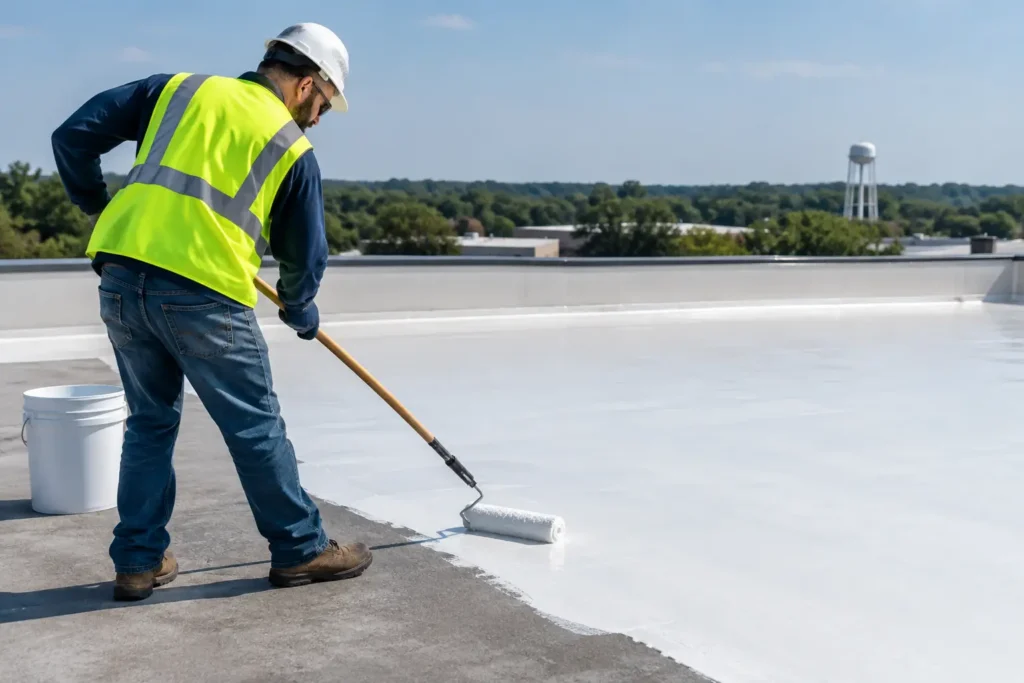
A commercial roof does not have to be torn off just because it is aging. If the roof structure is sound and moisture has not spread through the system, the best commercial roof coating options can restore protection, reduce heat gain, and extend the roof’s useful life at a lower cost than replacement.
That said, coatings are not a shortcut for serious roof failure. A coating system performs best when it is matched to the existing roof material, drainage conditions, foot traffic, and the building’s exposure to East Texas heat, rain, humidity, and storm seasons. The right answer is not always the cheapest coating. It is the system that addresses the real condition of the roof and gives the property owner a clear path forward.
When a Commercial Roof Coating Makes Sense
A roof coating is a liquid-applied membrane that cures into a continuous protective layer over an existing commercial roof. It is commonly used on low-slope roofs, including metal, modified bitumen, built-up roofing, single-ply membranes, and certain spray foam systems.
Coating can be a smart investment when the roof is weathered but still structurally sound. Common signs include surface oxidation on metal, fading or cracking of an existing coating, minor seam concerns, and recurring small leaks that have not caused widespread insulation or decking damage. A properly prepared and coated roof can often delay a disruptive full replacement while improving the building’s appearance and water resistance.
The key phrase is properly prepared. The roof must be cleaned, dried, repaired, and primed when required. Loose material, failed seams, damaged flashing, ponding water, and wet insulation need attention before any coating goes down. Applying a premium coating over unresolved problems only hides them temporarily.
Best Commercial Roof Coating Options by Need
Silicone coating for standing water and harsh weather
Silicone is often one of the strongest choices for roofs that hold water after rain. Unlike many coating types, silicone maintains strong resistance to long-term ponding water. That makes it especially practical for low-slope roofs where improving drainage is difficult or where water regularly sits around drains, scuppers, and rooftop equipment.
Silicone also holds up well against UV exposure and does not usually become brittle from sun and weather. For commercial properties dealing with frequent rain, humidity, and high heat, that durability can make a real difference over time. It is available in reflective colors, with white being a common choice for reducing surface temperatures.
The trade-off is that silicone can attract dirt, which may reduce reflectivity as the roof ages. It can also be slick when wet, so walk pads may be needed in service areas. Future recoating should be planned with compatible materials, not treated as an afterthought.
Acrylic coating for reflective, budget-conscious protection
Acrylic roof coatings are water-based, reflective, and commonly selected for roofs with positive drainage. They can provide an attractive white finish that reflects sunlight and helps reduce heat absorbed by the roof surface. For a building with few ponding-water issues, acrylic can be a cost-effective way to renew an aging roof.
Acrylic systems are generally easy to apply and clean up, and they offer useful flexibility as temperatures shift. They are often a good fit for metal roofs and properly prepared low-slope systems that shed water well.
Their limitation is moisture exposure. Acrylic coatings can lose performance when water stands on the roof for long periods. They also need suitable weather during application and curing. If drains are slow, the roof has low areas, or ponding is already visible after a storm, a contractor should investigate whether silicone or another system is the better long-term choice.
Polyurethane coating for impact and foot-traffic resistance
Polyurethane coatings are known for toughness. They are often used where the roof receives more mechanical abuse from maintenance crews, HVAC service, branches, windblown debris, or equipment access. A polyurethane system can provide excellent abrasion resistance and may be a strong choice for commercial roofs that need more than basic weather protection.
There are different polyurethane formulations, including aromatic base coats and aliphatic topcoats. The exact system matters because some products are designed for adhesion and strength while others are intended to hold color and resist UV exposure. This is not a one-size-fits-all coating category, and material compatibility must be checked carefully.
Polyurethane can cost more than acrylic, but its durability may justify the expense on roofs with frequent activity. It is particularly worth considering when a roof has service paths or equipment areas that receive regular traffic. Walk pads are still a wise addition when crews routinely access the roof.
Asphalt-based coating for specific roofing systems
Asphalt-based coatings have long been used on built-up roofing and modified bitumen systems. They can provide a familiar, compatible solution for certain existing asphalt roofs, especially where a reflective surface is not the main goal.
These coatings are not automatically the best choice for every commercial property. Darker asphalt surfaces absorb more heat than white reflective coatings, and performance depends heavily on the specific product and roof system. Some asphalt materials are better suited for maintenance and repair work than for a complete reflective restoration.
For a roof with an existing asphalt-based membrane, the right approach starts with identifying the material already in place. Coating compatibility is critical. A contractor should not guess based on appearance alone.
How to Choose the Right Commercial Roof Coating
The roof’s condition should drive the decision before the coating brand or price does. A thorough inspection should identify the existing roof type, seam condition, flashing details, drainage patterns, prior repairs, moisture concerns, and the condition of the substrate below. If moisture is trapped in the insulation or deck, those areas may need to be removed and repaired before restoration can begin.
Drainage is one of the biggest decision points. A roof that dries quickly may be a candidate for acrylic or other water-based systems. A roof that regularly has standing water needs a coating with reliable ponding-water resistance, and it may also need drain repairs, tapered insulation, or other corrective work. Coating the roof without addressing a drainage problem can leave the same weak point in place.
Building use matters too. A warehouse with little roof traffic has different needs than a medical office, retail center, or multi-tenant building with frequent HVAC servicing. The more activity a roof sees, the more important abrasion resistance, reinforced details, and designated walk paths become.
Property owners should also consider the restoration plan beyond the first application. A well-installed coating system can often be maintained and recoated later, extending service life again. That value depends on keeping records, scheduling inspections, addressing small damage promptly, and using compatible repair materials.
Preparation Determines Whether the Coating Lasts
Even the best coating cannot make up for poor surface preparation. Commercial roof restoration is detail work. The roof should be cleaned thoroughly to remove chalking, dirt, oils, oxidation, and loose material. Seams, penetrations, fasteners, curbs, drains, and transitions need to be repaired and reinforced as required by the system design.
Metal roofs deserve special attention around fasteners and laps. Rust must be treated correctly, loose fasteners should be secured or replaced, and gaps at seams need reinforcement before coating begins. On membrane roofs, blisters, open seams, punctures, and deteriorated flashing must be corrected first.
Weather also affects the work. The roof must be dry, and application conditions must fall within the manufacturer’s requirements. Rushing a coating installation ahead of rain or applying it to a damp surface can create adhesion problems that shorten the system’s life.
A Better Way to Plan a Roof Restoration
The best commercial roof coating options are not simply products on a shelf. They are complete systems built around inspection, repairs, surface preparation, proper application thickness, and careful attention to roof details. A lower upfront quote may look appealing, but skipped prep work and thin application can turn a restoration project into another repair bill.
For commercial property owners in Tyler and nearby East Texas communities, a professional roof assessment should provide straightforward answers: whether coating is appropriate, what repairs are needed first, which material fits the roof, and what maintenance will protect the investment. Spartan Exteriors believes property owners deserve that level of clarity before work begins.
A coating can give a sound commercial roof more years of dependable service, but only when the roof is honestly evaluated and the system is installed the right way. Start with the roof’s condition, not the sales pitch, and the right solution becomes much easier to see.