
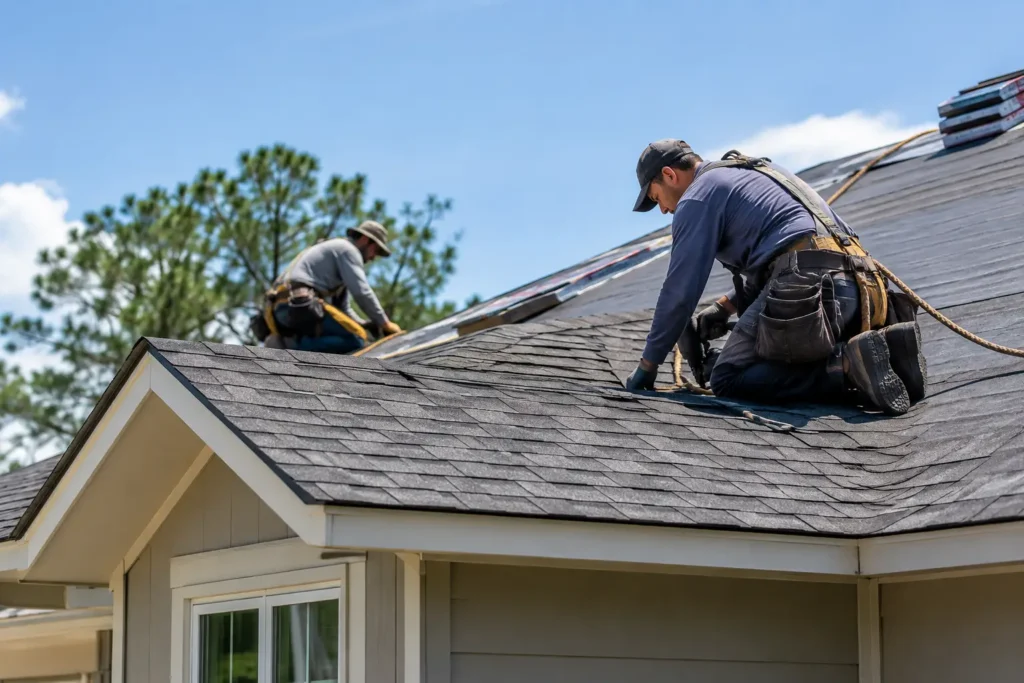
A roofing crew pulls into your driveway early, materials are staged, and the old shingles start coming off. For many homeowners, the first question is simple: how long does roof replacement take? On a typical East Texas home, the hands-on installation often takes one day. The full process, from inspection to final cleanup, may take several days or longer depending on weather, material availability, insurance details, and the condition of the roof deck.
A good contractor should not promise a timeline without first seeing the roof. The right answer is clear, honest, and based on the work your property actually needs.
How Long Does Roof Replacement Take for Most Homes?
For a standard single-family home with an asphalt shingle roof, replacement commonly takes one to two days once the job is scheduled and materials are on site. A straightforward roof with a simple shape, easy access, and no hidden damage can often be completed in a single full workday.
Larger homes, steep roofs, multiple rooflines, skylights, chimneys, or extensive damage beneath the shingles can extend the installation to two or three days. Metal roofing, tile, and specialty systems may take longer because the materials and installation details are more involved.
The installation day is only one part of the timeline. Before crews arrive, there is an inspection, estimate, material selection, scheduling, and sometimes permit or insurance-claim coordination. If your roof was damaged in a storm, that planning stage can matter just as much as the tear-off itself.
What Happens During a Roof Replacement?
A professional replacement moves quickly because the crew follows a defined sequence. First, the team protects landscaping, siding, windows, and outdoor areas near the work zone. Old roofing materials are removed, then the roof deck is inspected closely.
If the decking is solid, the crew installs the underlayment, flashing, ventilation components, and new roofing material. If they find soft, rotten, or water-damaged decking, that material needs to be replaced before the new roof goes on. Skipping this step may save time that day, but it puts the new roof at risk.
Once the roof is installed, the crew handles cleanup. That includes collecting debris, sweeping the property with magnets for nails, and making sure the site is left in good condition. A careful cleanup is not an extra. It is part of doing the job right.
Factors That Can Change Your Roof Replacement Timeline
Every roof has its own conditions. These are the issues most likely to add time to a replacement project.
Roof size, slope, and design
A compact, low-slope roof is faster and safer to work on than a large, steep roof with many valleys, dormers, and transitions. Complex areas require more cutting, flashing, and detailed installation. That work cannot be rushed without compromising protection around the places most likely to leak.
Access also matters. A home with clear driveway access and room for material delivery and debris removal generally moves faster than a property with limited access, tight landscaping, or obstacles around the structure.
Weather in East Texas
Rain, lightning, high winds, and unsafe temperatures can delay roofing work. Crews should not tear off large sections of a roof when storms are approaching. Your home needs to stay protected throughout the job, not just look finished quickly.
Weather delays can be frustrating, especially when you are dealing with a leak or recent storm damage. Still, a contractor who pauses for unsafe conditions is protecting your home and the people working on it. In many cases, the team can secure vulnerable areas with temporary protection until conditions improve.
Hidden damage under the shingles
The roof deck is not fully visible until the old roof comes off. Moisture intrusion, damaged plywood, deteriorated fascia, or poorly installed flashing from a previous roof may not appear during a ground-level inspection.
When hidden damage is discovered, the contractor should show you the issue, explain the repair, and discuss any effect on cost or timing before moving forward. These repairs may add several hours or a day, but they give the new roof a stable foundation.
Material choice and availability
Architectural asphalt shingles are widely used and generally allow for efficient installation. Metal panels, specialty colors, custom trim, or commercial roofing systems may require longer lead times and more installation time.
Choosing materials before your project is scheduled helps avoid preventable delays. If a specific shingle color is unavailable after a major storm, you may need to wait for delivery or select another option. A dependable contractor will be upfront about those choices rather than substituting materials without your approval.
Insurance claims and permits
If insurance is involved, the physical replacement may be fast while the approval process takes longer. Your carrier may need inspection reports, photos, estimates, or supplements for damage discovered after tear-off. Clear documentation helps keep the claim moving.
Some projects may also require permits or inspections. Requirements can vary by property and scope of work. A contractor who helps organize the details can prevent last-minute surprises that push back the start date.
A Realistic Timeline From Inspection to Completion
For a planned replacement with no major complications, the process often follows a practical rhythm. The inspection and estimate may happen quickly, followed by material selection and scheduling. Once the materials are delivered and weather is suitable, most residential installations are completed in one to two days.
After severe weather, timelines can change. Demand rises, adjusters may be booked out, and material supply can tighten. Emergency protection for an active leak should come first, followed by a documented inspection and a clear plan for permanent repairs or replacement.
Commercial properties need their own timeline. A small, accessible building may be completed relatively quickly, while a larger flat or low-slope roof can require phased work to protect business operations, equipment, and occupants. The best commercial schedule balances speed with safety, drainage, material cure times, and minimal disruption to the property.
How to Help Your Roofing Project Stay on Schedule
Property owners can make installation day easier by clearing vehicles from the driveway and garage area, moving patio furniture and fragile outdoor items, and keeping children and pets away from the work zone. Roofing is noisy, and debris removal requires room to work safely.
Inside the home, remove wall decorations that could shift from vibration, particularly in upper rooms. Let the contractor know about gates, locked access areas, sprinklers, or concerns about landscaping before the crew arrives. A short conversation ahead of time can save hours of confusion on installation day.
It also helps to ask direct questions before you sign. Find out who will supervise the project, how damaged decking is handled, what happens if weather changes, and how cleanup will be completed. A clear scope and steady communication are more valuable than a rushed promise.
Fast Does Not Mean Careless
A one-day roof replacement can be a sign of an experienced, well-organized crew. It should never mean shortcuts in decking repairs, flashing, ventilation, or cleanup. The goal is not simply to get shingles on the house before sunset. The goal is a roof that protects your family, your belongings, and your investment through the next hard rain.
For homeowners in Tyler and surrounding East Texas communities, Spartan Exteriors approaches every replacement with that standard in mind: clear information, responsive service, and workmanship built to last. If you are seeing missing shingles, leaks, storm damage, or signs of roof age, get a professional inspection before a small concern becomes a larger repair.