
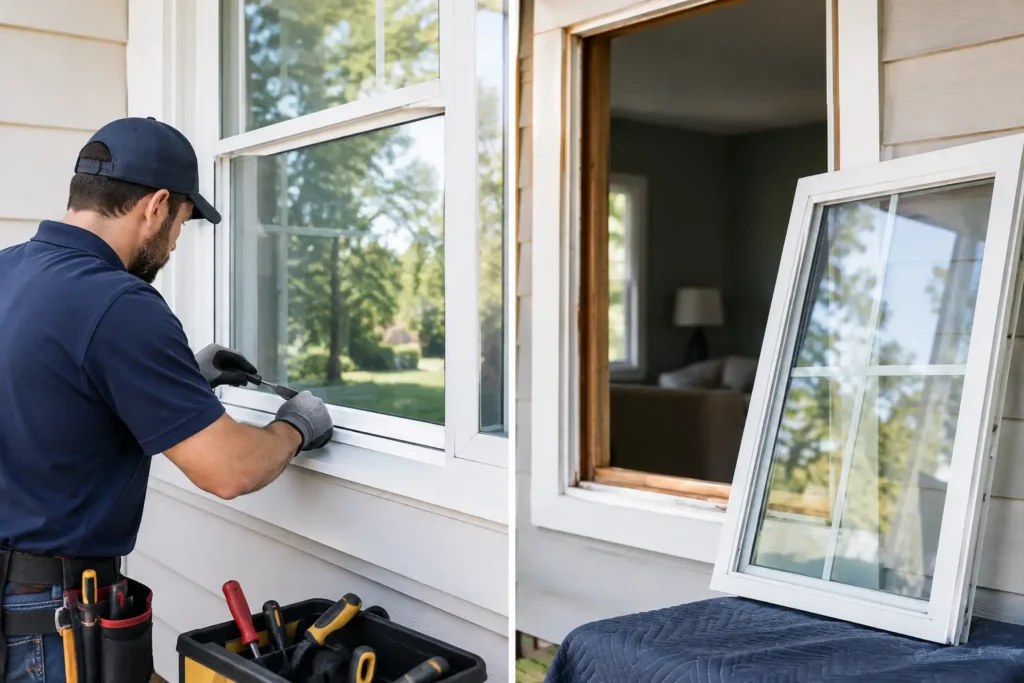
A fogged pane, a draft near the couch, or a window that will not stay open can make any property owner ask the same question: what are the real window repair versus replacement costs? The lowest upfront price is not always the best value, especially when East Texas heat, humidity, and storm seasons continue to work on an aging window system.
The right choice depends on what failed, how old the windows are, and whether the problem is isolated or repeated throughout the property. A clear inspection should give you facts, not pressure. You deserve to know what can be repaired safely, what will keep costing you money, and when replacement is the responsible move.
What Window Repairs Usually Cost
Repair is often the sensible option when the window frame, surrounding wall, and most of the operating parts are still in good shape. Minor repairs can restore day-to-day function without committing to a full window project.
For a single residential window, small fixes commonly fall in the lower hundreds. Replacing worn weatherstripping, adjusting a latch, repairing a screen, replacing basic hardware, or addressing a small amount of trim damage is generally less expensive than installing a new unit. The exact price depends on window type, access, materials, and whether hidden water damage is found after the work begins.
Glass repairs can cost more. A cracked single pane may be a straightforward repair, while insulated glass with a broken seal requires replacing the glass unit itself. When moisture appears between panes, the seal has failed. Cleaning the outside surface will not solve the problem because the fogging is trapped inside the insulated glass unit.
Wood rot changes the conversation quickly. Minor, localized rot may be repaired if the damage has not spread into the framing or exterior wall. Once moisture has compromised the sill, jambs, surrounding trim, or wall sheathing, a patch may only delay a larger and more expensive problem.
Window Repair Versus Replacement Costs: The Real Comparison
A repair quote can look much better than a replacement quote on day one. That is normal. Replacement includes a new window unit, removal of the old unit, proper flashing and sealing, insulation, exterior and interior finishing as needed, labor, and workmanship protection. It is a larger investment because it addresses more than the visible symptom.
Replacement costs vary widely by window size, style, glass package, frame material, number of windows, accessibility, and necessary carpentry. A basic standard-size replacement window may begin in the mid-hundreds per opening, while larger custom shapes, impact-resistant options, premium glass, or extensive damage repairs can move the cost significantly higher. Commercial window work is also priced according to scope, access, building requirements, and the system being installed.
The better comparison is not repair cost versus replacement cost once. It is repair cost over the remaining useful life of the window. If a $300 repair gives a sound window several more years of service, it may be money well spent. If that same repair is the third visit for leaks, failing seals, sticking sashes, and deteriorating wood, replacement can prevent the next round of bills and disruption.
A few questions help put the numbers in perspective:
- Is the issue limited to one window or showing up across the home or building?
- Has water entered the wall, trim, or flooring around the opening?
- Are utility bills climbing because multiple windows are drafty or poorly insulated?
- Will the repair preserve safe operation, secure locking, and proper weather protection?
- Is the window nearing the end of its expected service life?
When several answers point toward ongoing failure, replacement is usually the more durable financial decision.
When Repair Makes Good Financial Sense
Not every damaged window needs to be replaced. A targeted repair is worth considering when the glass is intact or can be replaced without addressing a larger system issue, the frame is solid, and the window still opens, closes, locks, and seals as it should after service.
Repair can also be the right short-term decision when you are preparing for a larger renovation, managing a single accidental break, or addressing one isolated hardware failure. For commercial property owners, maintaining a sound window with a focused repair can protect operations and avoid unnecessary downtime.
The key is honesty about the condition behind the visible issue. A window can look acceptable from inside while exterior caulk has failed, flashing is missing, or water has already started to damage the materials around it. A proper assessment should include the window, its frame, its seal, and the exterior details that keep water out.
Signs Replacement Will Likely Save You More
Replacement becomes the stronger option when the window is no longer doing its basic job: keeping out water, air, heat, and unwanted entry. Persistent drafts, repeated condensation between panes, warped frames, soft wood, broken locks, and windows that refuse to open or stay closed are all warning signs.
Pay close attention after severe weather. Wind-driven rain can expose weak seals that were not obvious before a storm. A window may not have shattered, yet water intrusion around the frame can still require prompt attention. Waiting allows moisture to move into trim, insulation, and wall materials, where repairs can become more involved.
Energy performance matters, too. Older single-pane windows and failed insulated glass can make rooms uncomfortable during hot East Texas afternoons. New replacement windows may reduce drafts and improve comfort, but savings depend on the entire home or building, including insulation, HVAC performance, and how many windows are being replaced. Do not let anyone promise a specific utility-bill reduction without reviewing those conditions.
Replacement also offers the opportunity to correct installation problems from the past. A quality installation uses the right measurements, flashing practices, sealing methods, and finishing details for the opening. The window itself matters, but installation quality determines whether it can perform as designed.
Do Not Let a Low Quote Hide a Bigger Problem
Two repair or replacement quotes can look far apart because they may not cover the same work. Before choosing based on price alone, ask what is included if damaged trim is uncovered, whether the contractor will inspect for moisture behind the frame, and how the opening will be sealed after the work is complete.
For replacement, confirm whether the proposal includes removal and disposal, insulation around the frame, interior and exterior trim work, caulking, cleanup, and workmanship coverage. For repair, ask whether the fix addresses the source of the leak or only the visible damage. A cheap surface caulk job can fail quickly if the underlying flashing, rot, or drainage issue remains.
This is also where local experience matters. Homes in Tyler, Whitehouse, Lindale, and nearby East Texas communities deal with intense sun, heavy rain, humidity, and storm-driven wind. The right recommendation should account for those conditions, not treat every window problem like a simple cosmetic fix.
How to Make the Decision With Confidence
Start with a no-pressure assessment of each affected opening. Take note of the window’s age, visible damage, indoor comfort concerns, and whether the issue has happened before. If only one window has a broken latch or damaged glass, repair may be the clear answer. If multiple windows are fogging, leaking, or rotting, request a replacement estimate that explains the scope one opening at a time.
If a storm caused the damage, document it early with photos and keep records of dates, leaks, and temporary protective measures. Insurance coverage depends on the policy and the cause of loss, but clear documentation can make the claim process easier to understand. A contractor experienced with storm-related exterior work can help identify damage and provide a detailed scope without making promises about claim approval.
Spartan Exteriors believes property owners should receive straight answers before they spend money. A free estimate should explain whether repair is practical, what replacement would solve, and what workmanship protection applies to the installation. Financing options may also help when a necessary replacement project cannot wait.
A window should protect your home or business every day, not become another recurring repair. If you are unsure which path makes sense, have the condition evaluated before the next hard rain turns a manageable concern into damage inside the wall.