
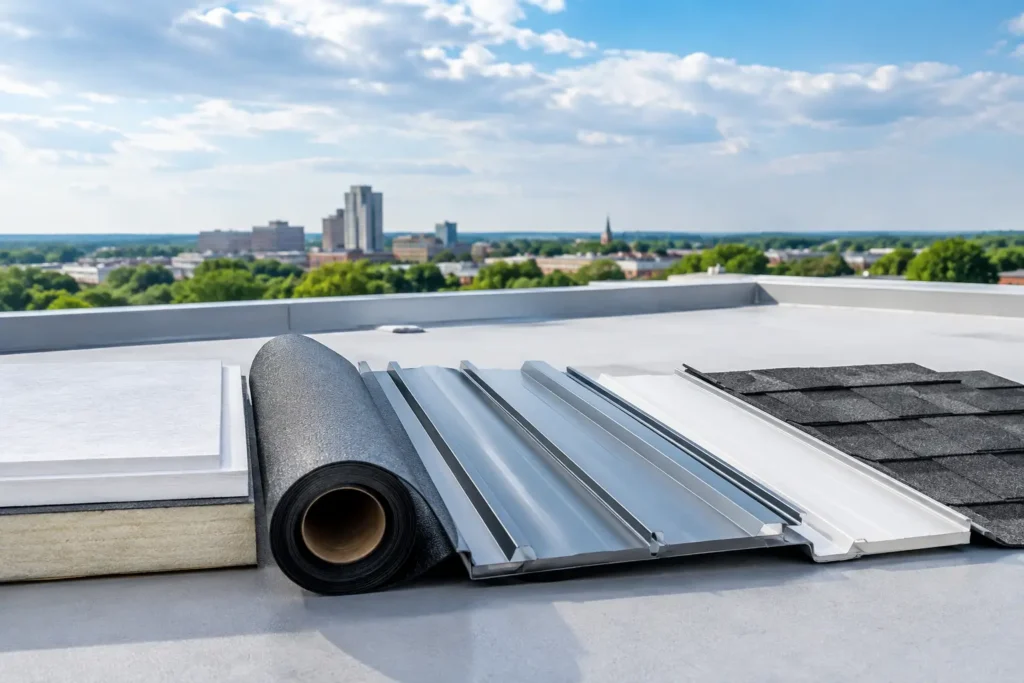
A commercial roof can look fine from the parking lot while hiding wet insulation, failing seams, or ponding water above the ceiling. Choosing the best commercial roof materials means looking beyond the initial price. Your building’s slope, drainage, daily use, existing roof deck, energy goals, and exposure to East Texas heat and storms all affect which system will protect your property well.
For many commercial property owners, the right answer is not a single “best” material. It is the roofing system that fits the building and is installed correctly. A material with an excellent reputation can still fail early when drainage is ignored, details around equipment are rushed, or the roof is not maintained. That is why a clear inspection and honest recommendation should come before a proposal.
What Matters When Choosing a Commercial Roof
Commercial roofs are usually low-slope systems, although some offices, retail spaces, churches, and multifamily buildings have steeper roof sections. Low-slope roofs need materials that manage standing water, heat, UV exposure, foot traffic, and penetrations from HVAC units, vents, and drains.
In Tyler and throughout East Texas, a roof also has to handle rapid weather changes. Summer sun puts stress on membranes and coatings. Heavy rain can expose small drainage issues fast. Wind-driven storms can damage flashing, seams, and edge metal. The right material should be judged by how it performs under those conditions, not just by its advertised lifespan.
Your existing roof matters, too. Some buildings are good candidates for a roof restoration coating. Others have wet insulation, damaged decking, or structural concerns that call for a full replacement. A professional assessment should identify what is under the surface before anyone recommends the least expensive option.
Best Commercial Roof Materials Compared
TPO Roofing: A Practical Choice for Many Flat Roofs
TPO, short for thermoplastic polyolefin, is one of the most common commercial roofing membranes for low-slope buildings. It is typically white or light-colored, which helps reflect sunlight and reduce heat absorbed by the roof surface. Seams are heat-welded, creating a strong connection when installed by trained crews.
TPO is often a smart fit for retail buildings, offices, warehouses, and other properties where energy efficiency and cost control matter. It offers good resistance to UV exposure and can be installed in several thicknesses. Thicker membranes generally provide better long-term durability, especially where service crews regularly access rooftop equipment.
The trade-off is that material quality and installation details matter greatly. Not all TPO membranes are equal, and poorly welded seams can create leak points. Proper insulation, flashing, perimeter fastening, and drainage design are as important as the membrane itself.
PVC Roofing: Strong Protection Around Grease and Chemicals
PVC roofing is another single-ply membrane with heat-welded seams. Like TPO, it is commonly used on low-slope commercial roofs and is often white to support solar reflectivity. Where PVC stands out is its resistance to grease, oils, and certain chemicals.
That makes PVC especially valuable for restaurants, food-service facilities, and buildings with rooftop exhaust systems. Grease exposure can damage some roofing materials over time, so using a membrane designed for that environment can prevent costly repairs later.
PVC can cost more upfront than TPO, but the added resistance may be worth it when the roof faces regular grease or chemical exposure. It is a performance decision, not simply a budget decision. For a clean office roof without those exposures, TPO may provide the better value. For a restaurant, PVC can be the more protective choice.
EPDM Roofing: A Proven Dark Rubber System
EPDM is a synthetic rubber membrane often recognized by its black surface. It has been used on commercial roofs for decades and has a track record for durability. It handles temperature swings well and can be a dependable option on large, low-slope roof areas.
The darker color absorbs more heat than a white reflective membrane, which can be a concern during long East Texas summers. However, EPDM remains a good solution for certain budgets, roof layouts, and applications. It can also be installed with ballasting, adhesives, or mechanical attachment, depending on the building and design requirements.
EPDM seams are typically adhered or taped rather than heat-welded. That does not make it a weak system, but it does make careful seam preparation essential. A skilled installer and a maintenance plan are important, particularly around penetrations and areas where water tends to collect.
Modified Bitumen: Durable Layered Protection
Modified bitumen is an asphalt-based roofing system installed in sheets, often in multiple layers. It is a familiar choice for commercial and institutional buildings because it provides a thick, durable surface with strong puncture resistance. It can be installed using different methods, including self-adhered and cold-applied systems.
This material is worth considering when the roof sees regular foot traffic or has many penetrations. Maintenance teams, HVAC technicians, and other workers can be hard on a roof, and modified bitumen provides more physical thickness than many single-ply membranes.
Its weight, installation method, and cost can make it less suitable for some buildings. The roof structure must be able to support the system, and the details must be handled carefully to prevent water intrusion. Still, for owners who value a proven, layered approach, modified bitumen can be a strong long-term option.
Metal Roofing: Built for Sloped Commercial Roofs
Metal roofing is often the right call for commercial buildings with a steeper pitch, including offices, storefronts, churches, and mixed-use properties. Standing seam metal roofs are known for long service life, wind resistance, and clean appearance. They can also shed rain quickly when designed with proper slope and flashing.
A metal roof is not automatically the best answer for every commercial building. It usually costs more at installation than many low-slope membrane systems, and complex roof shapes can increase labor. Fasteners, panel movement, penetrations, and transitions must be detailed correctly to avoid future leaks.
For the right building, though, metal can be an excellent investment. It is especially appealing to owners planning to keep a property for many years and who want a roof that offers durability along with curb appeal.
Silicone Roof Coatings: Restore an Eligible Existing Roof
A silicone coating is not a replacement roof system in every situation. It is a restoration option applied over an existing roof that is still structurally sound and dry enough to keep. Silicone is highly resistant to UV exposure and performs well in areas that experience ponding water, making it a strong option for many low-slope roofs.
The biggest advantage is avoiding a full tear-off when the roof qualifies. That can reduce disruption, limit waste, and extend the roof’s service life. Silicone coatings also create a continuous surface, reducing the number of seams that can become leak points.
The limitation is simple: a coating cannot fix a roof with widespread trapped moisture, failing substrate, major structural issues, or severely deteriorated insulation. Proper moisture testing and surface preparation are non-negotiable. Coating over hidden damage may delay the real repair while adding unnecessary cost.
How to Match the Material to Your Building
Start with the roof’s slope and drainage. A low-slope roof with ponding water may be a better candidate for silicone restoration or a membrane system designed around improved drainage. A sloped commercial roof may benefit more from standing seam metal. If drains, scuppers, or gutters are undersized or clogged, address that issue alongside the roofing work.
Next, consider what happens on the roof every week. A restaurant with grease exhaust needs different protection than a warehouse with occasional HVAC access. A building with constant technician traffic may need reinforced walk pads or a more puncture-resistant system. These details affect real-world performance more than broad product claims.
Finally, think in terms of ownership cost, not just the proposal total. A lower upfront price may be the right decision for a short-term property plan. But if you intend to hold the building, a higher-quality membrane, better insulation, or a metal system may reduce repairs and operating costs over time. The best recommendation should explain those trade-offs clearly.
Installation and Maintenance Protect the Investment
Even the best commercial roof material needs proper installation. Flashing at walls, roof edges, drains, skylights, pipes, and HVAC curbs is where many leaks begin. The crew should also inspect the deck, insulation, and existing moisture conditions rather than treating the roof as a simple surface replacement.
After installation, schedule routine inspections, especially after severe storms. Remove debris that blocks drains, look for punctures near service paths, and address small defects before water reaches insulation or interior spaces. Commercial roof maintenance is far less disruptive than emergency leak repair during business hours.
A dependable contractor should explain the material options in plain language, document the condition of your roof, and stand behind the finished work. If your commercial property needs an honest roof evaluation in East Texas, Spartan Exteriors can help you understand what your roof needs now and what will protect it for the years ahead.