
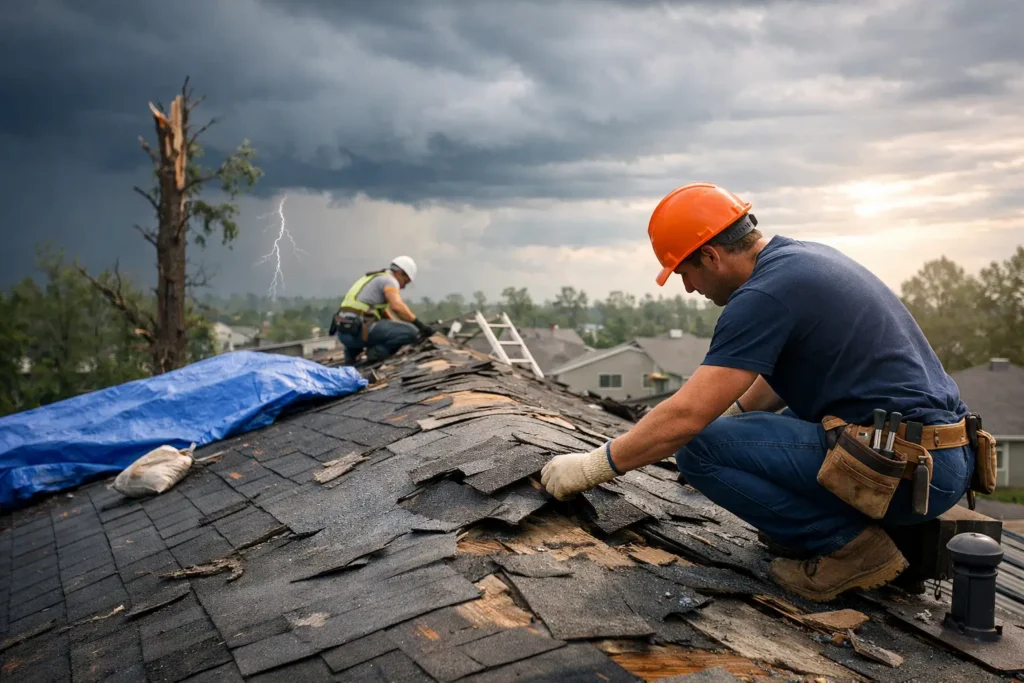
A hard East Texas storm can leave behind more than obvious damage. A few missing shingles, a dented vent, or a branch dragged across the roof may look minor from the ground, yet each can create a path for water to enter your home or business. Effective East Texas storm restoration starts with a prompt, honest assessment of what happened, what needs immediate protection, and what can wait for a planned repair or replacement.
For property owners, the first priority is not guessing at the damage or rushing into a major decision. It is stopping active leaks, documenting the condition of the property, and working with a local contractor who can explain the scope in plain language. The right next step depends on the roof’s age, the material, the severity of the storm, and whether water has already reached the attic, insulation, ceilings, or walls.
What Storm Damage Can Look Like From the Ground
Wind, hail, falling limbs, and wind-driven rain affect roofs differently. High winds can lift or crease shingles, break their adhesive seal, loosen ridge caps, and expose vulnerable areas around valleys and penetrations. Hail may leave bruising that is difficult to see without a close inspection, while also knocking granules from shingles and shortening the roof’s useful life.
Tree damage is often more direct. A limb can crack decking, puncture the roof covering, crush gutters, or pull flashing loose. Even after the limb is removed, the impact area may still be open to rain. That is why a roof should be checked after debris removal rather than assuming the problem is solved.
Inside the property, watch for fresh ceiling stains, dripping around light fixtures, damp insulation, peeling paint, musty odors, or water near exterior walls. Do not ignore a small spot simply because it stops dripping once the rain ends. Water can travel along rafters, decking, and wiring before it appears indoors, which means the visible stain is not always directly below the actual roof opening.
East Texas Storm Restoration: The First 24 Hours
Safety comes before cleanup. Stay away from downed power lines, unstable trees, damaged ceilings, and areas where water is near electrical equipment. If a tree has struck the building or water is entering quickly, protect people and valuables first. Move furniture, electronics, and important documents away from the affected area when it is safe to do so.
Next, document what you can from the ground. Take wide photos of the roof, gutters, fencing, siding, fallen limbs, and any interior water damage. Photograph close-ups of displaced shingles or debris only if you can do it safely without climbing onto the roof. Save photos, videos, receipts for emergency mitigation, and notes about the date and time of the storm. This record can be useful when speaking with your insurance carrier.
Then arrange a professional inspection as soon as conditions allow. Emergency roof repair may involve placing a secure temporary cover over a puncture, exposed decking, or active leak. A temporary repair is not the same as a final repair, but it can prevent a manageable roof issue from becoming damaged insulation, mold growth, ruined flooring, or a compromised ceiling.
Avoid letting a storm chaser pressure you into signing paperwork before you understand it. After major weather events, unfamiliar contractors often arrive quickly and make broad promises. A dependable contractor should be able to identify themselves, explain the damage, provide a clear scope of work, and answer direct questions about materials, workmanship, insurance documentation, and warranty coverage.
Repair or Replacement? The Answer Depends on the Roof
Not every storm-damaged roof needs to be replaced. If the damage is contained to a small area and the surrounding roofing system is in good shape, a targeted repair may be the responsible choice. Replacing a few shingles, repairing flashing, restoring a ridge cap, or addressing a localized puncture can protect the roof without taking on the cost of a full reroof.
A replacement is worth discussing when damage is widespread, the roof is nearing the end of its expected service life, or matching existing materials is no longer practical. Repeated repairs can add up, particularly when an older roof has brittle shingles, widespread granule loss, prior patchwork, or persistent leaks around multiple areas. In those cases, repairing only the latest damage may postpone a larger issue rather than solve it.
Commercial properties need the same clear-eyed approach. A low-slope roof may benefit from a repair if seams, drains, and the membrane remain sound. If ponding water, widespread deterioration, or recurring leaks are present, a longer-term solution such as a silicone roofing system may make more sense. Metal roofing can also be an excellent option for certain homes and commercial buildings, but it must be designed and installed correctly around fasteners, flashing, transitions, and drainage.
The best recommendation is not always the biggest project. It is the option that gives the property reliable protection and makes financial sense for its current condition.
Insurance Claims Need Clear Documentation, Not Confusion
Insurance claims can feel overwhelming when you are already dealing with a damaged property. The process is easier when the condition of the roof is documented early and the repair scope is clearly separated from unrelated maintenance concerns.
A contractor can inspect the roof, identify storm-related damage, photograph affected areas, and prepare an estimate that helps you understand the work involved. Your insurance company determines coverage and approves the claim, but accurate documentation helps make sure the adjuster has a clear picture of the damage.
Be careful with assumptions about what insurance will cover. Policies differ, deductibles matter, and some damage may be excluded because of age, wear, or prior conditions. An honest contractor will not promise an approval or tell you to ignore your deductible. They should help you understand the repair needs, provide straightforward paperwork, and communicate professionally during the process.
If funds are a concern, ask about financing before delaying a necessary repair. A small opening in the roof can become more expensive with every heavy rain, especially when moisture reaches the roof deck or the interior of the building.
Choosing Materials That Hold Up in East Texas
East Texas weather puts roofing materials through real work. Strong sun, humidity, heavy rain, wind, falling branches, and sudden temperature changes all influence how a roof performs over time. The right material should fit the building, the budget, the roof slope, and the owner’s long-term plans.
Architectural shingles remain a practical choice for many homes because they offer dependable protection, a wide range of colors, and a familiar appearance. For homeowners planning to stay in place for years, a quality shingle system installed with proper underlayment, ventilation, flashing, and drainage can provide strong value.
Metal roofing may appeal to owners who want longevity, distinctive curb appeal, and durable performance. It is not automatically the right choice for every structure, though. Details such as roof geometry, insulation, noise expectations, and the condition of the underlying deck should be evaluated before making the switch.
What matters most is the complete system. A premium shingle or metal panel cannot compensate for poor flashing, inadequate ventilation, weak decking, or rushed installation. Quality workmanship is what turns roofing materials into lasting protection.
Restoration Is More Than Replacing Shingles
A complete storm restoration plan may involve gutters, siding, windows, screens, fascia, soffit, or glass damage in addition to the roof. These exterior components work together. Damaged gutters can direct water against the foundation. Loose fascia can expose roof edges. Broken windows or damaged seals can allow moisture and air intrusion even when the roof itself is secure.
That does not mean every storm requires a full exterior overhaul. It means the inspection should look beyond the most visible damage. A contractor who checks the entire exterior can help you prioritize urgent repairs and plan the rest without surprises.
For homeowners in Tyler and surrounding East Texas communities, working with a local team also matters after the crews leave. You want someone who understands the weather patterns, answers the phone, and stands behind the work. Spartan Exteriors approaches storm work with that responsibility in mind, from emergency protection and insurance documentation to final installation backed by a lifetime workmanship warranty.
When the skies clear, do not let a roof problem fade from view just because the immediate emergency has passed. A timely inspection gives you facts, protects your property from the next storm, and lets you make the right decision with confidence.