
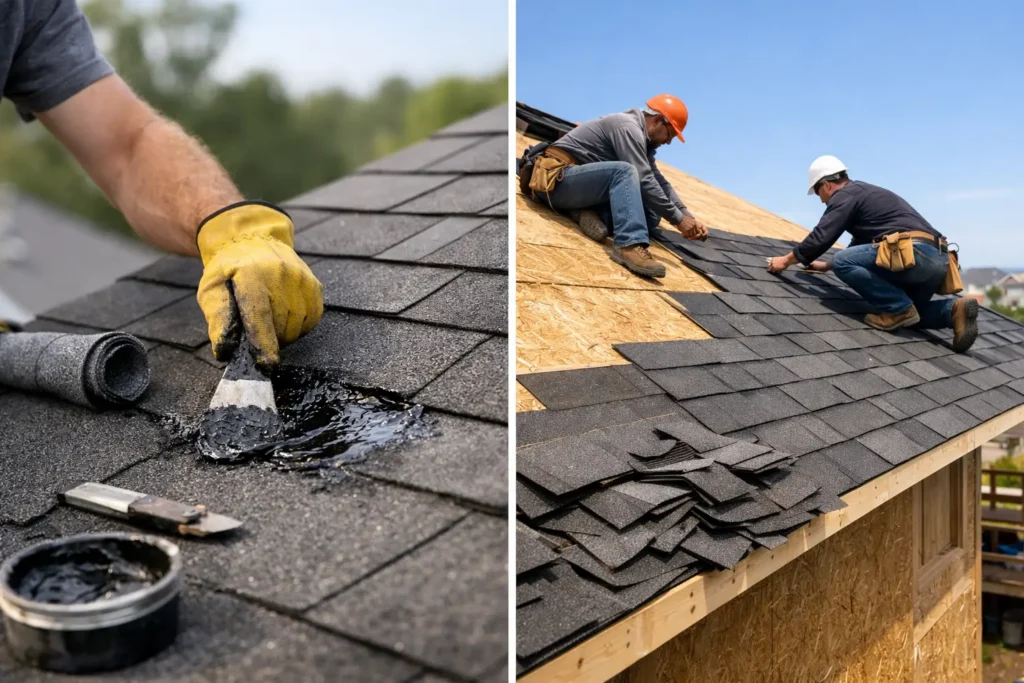
A water spot spreads across the ceiling after a hard East Texas storm. A few shingles are missing. The question becomes urgent: roof patching vs replacement – which one actually protects the property without spending money where it is not needed? The right answer depends on the roof’s age, the source and extent of the damage, and whether the remaining roof system can still do its job.
A patch can be a smart, cost-effective repair. It can also be a short-term fix that delays a necessary replacement until leaks, interior damage, and repair costs grow. Property owners deserve a clear recommendation based on what is on the roof, not a sales pitch or a guess from the ground.
When Roof Patching Makes Sense
Roof patching is usually the right call when damage is isolated and the rest of the roof is in sound condition. A few shingles blown off in one section, a leak around a pipe boot, damaged flashing near a chimney, or a small puncture from a fallen limb can often be repaired without replacing the entire roof.
The key is that the issue must truly be localized. A qualified roofer should inspect the surrounding materials, attic area when accessible, roof penetrations, valleys, and flashing. Water can travel beneath shingles or along roof decking, so the stain inside the home is not always directly below the actual leak.
A well-executed patch includes more than putting a new shingle over a visible problem. The damaged materials need to be removed, the decking checked for rot or softness, underlayment repaired as needed, and new materials installed so water is directed correctly. Flashing details matter just as much as shingles, especially around vents, skylights, chimneys, and wall transitions.
For commercial properties, a localized repair may make sense for a small membrane tear, seam issue, or penetration leak when the broader roof system remains stable. Silicone roofing can also be a strong restoration option for certain low-slope commercial roofs, but only after the existing roof is evaluated for trapped moisture, substrate condition, and drainage issues.
Signs a Patch May Only Buy Time
A patch is not the best answer simply because it is the least expensive option today. If the roof has several problem areas, widespread wear, or underlying material failure, repeated repairs can become the more expensive path.
Watch for shingles that are curling, cracking, losing a heavy amount of granules, or becoming brittle across multiple slopes. Dark streaks alone do not always mean replacement is needed, but widespread bare spots and worn shingles can signal that the roof is near the end of its useful life. Soft decking, recurring leaks, sagging roof lines, and water damage in multiple rooms require more than a surface repair.
Roof age is another major factor. An asphalt shingle roof nearing the end of its expected service life may not be a good candidate for multiple patches, particularly after hail or wind damage. New shingles may not match faded older shingles, and the older materials around the repair can continue failing soon after the work is complete.
A repair is also less practical when storm damage affects several roof slopes. After a severe wind or hail event, a property may have lifted shingles, compromised seals, damaged vents, dented metal components, and loosened flashing in more than one area. The damage may look minor from the yard while still creating openings that allow water into the roof system.
Roof Patching vs Replacement: The Cost Question
The upfront cost of a patch is almost always lower than a full roof replacement. That does not automatically make it the better value. The real question is how long the repair is likely to last and what risk remains after it is complete.
For example, repairing a five-year-old roof with one damaged pipe boot can protect the home for years at a reasonable cost. Repairing one leak on a 20-year-old roof that has already needed work in three other places may lead to another service call after the next heavy rain. In that situation, replacement can offer better long-term value, stronger protection, and more predictable budgeting.
Replacement also gives property owners the opportunity to address the entire roofing system at once. That includes decking repairs, underlayment, ventilation, flashing, drip edge, pipe boots, and material selection. A new roof is not just about fresh shingles. It is about restoring the layers that work together to keep water out and manage heat and moisture.
Financing can help make a necessary replacement more manageable when a roof has reached the point where patches are no longer responsible. A reputable contractor should explain available options clearly, without pressuring a family or business owner into work that does not fit the condition of the roof.
Storm Damage and Insurance Claims
After a storm, do not assume a small visible issue means a small repair. Wind can break shingle seals without tearing shingles completely off. Hail can bruise or fracture shingles, reducing their ability to shed water over time. Falling branches may damage decking or puncture underlayment even if the surface damage appears limited.
If there is an active leak, protect the interior first. Move valuables away from the area, use containers to catch dripping water, and avoid climbing onto a wet or damaged roof. Emergency roof repair can stop additional water intrusion while the full condition of the roof is assessed.
When insurance may be involved, documentation matters. Take clear photos of interior stains, damaged ceilings, visible exterior damage, and any fallen limbs. Keep receipts for emergency mitigation work. An experienced roofing contractor can document the roof condition, explain the scope of damage, and help property owners understand what an insurer may need for the claim process.
Insurance coverage depends on the policy, the cause of loss, deductible, and the adjuster’s assessment. A contractor should never promise claim approval. What they can do is provide accurate information and a detailed, honest assessment so the owner can make informed decisions.
How Age, Materials, and Property Type Change the Answer
Not every roof should be evaluated the same way. A newer architectural shingle roof with one damaged area may be an excellent repair candidate. A mobile home roof may need special attention at seams, edges, and transitions. Metal roofing can sometimes be repaired by addressing fasteners, sealant failures, or damaged panels, though corrosion and widespread panel issues can change the recommendation.
For commercial buildings, low-slope roofs need a close review of drainage. Ponding water, failed seams, deteriorated coatings, and repeated leaks around equipment curbs may point toward restoration or replacement rather than isolated patching. The goal is to solve the water-management problem, not simply cover the latest leak.
Appearance matters, too. A patch on an older roof may be noticeable because new shingles have not weathered like the existing ones. That may be acceptable for a small rear-facing repair, but it can be a consideration on a prominent front slope or for a business where curb appeal matters.
What a Trustworthy Roof Assessment Should Include
The best way to decide between repair and replacement is with a thorough inspection and straightforward explanation. You should be shown the damaged areas when possible and told why a patch will hold up or why it may not. The recommendation should account for the roof’s remaining life, not just the current leak.
Ask how much of the roof is affected, whether the decking is sound, whether there are ventilation concerns, and what the repair warranty covers. If replacement is recommended, ask what materials and system components are included. Clear scope and clear communication protect the property owner from surprises.
At Spartan Exteriors, the focus is on helping East Texas families and property owners choose the work their roof actually needs, whether that is a targeted repair, emergency protection after a storm, or a complete reroof backed by quality workmanship.
A roof does not have to be replaced because it has one problem, and it should not be patched repeatedly when it is clearly failing. Get the condition documented, understand the trade-offs, and make the decision that gives your property reliable protection through the next hard rain.