
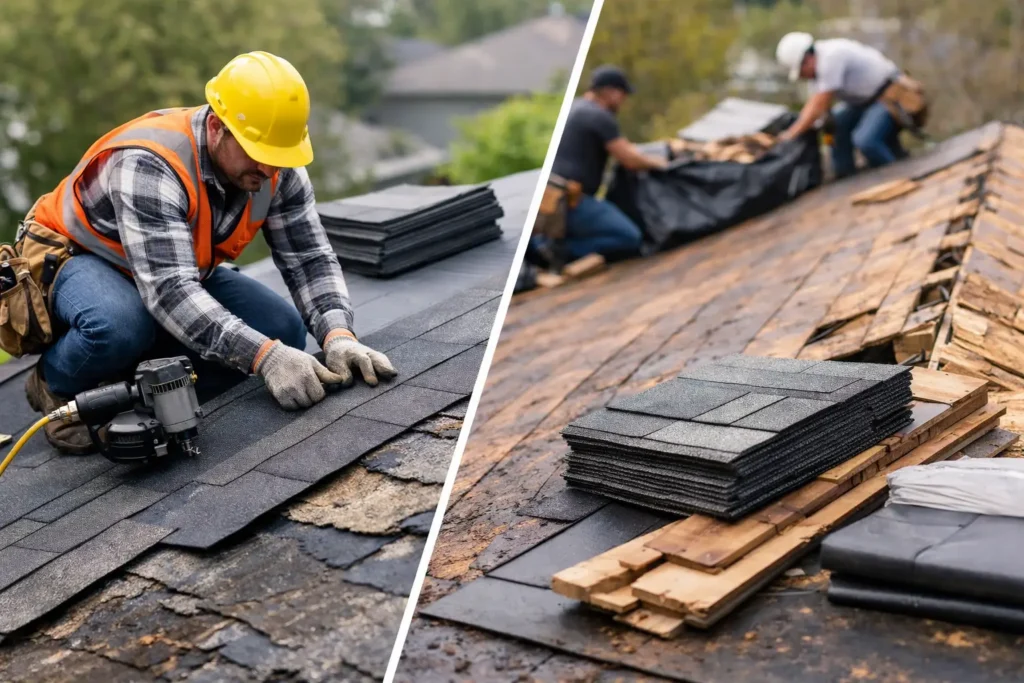
A roof quote can be confusing when one contractor recommends reroofing and another recommends a full replacement. Is reroofing cheaper than replacement? Usually, it is cheaper at the start when reroofing means installing a new layer of shingles over an existing roof. But the lower price does not automatically make it the better value for your home, business, or mobile home.
The right decision comes down to what is underneath the shingles, how much life your current roof has left, and whether the roof can protect the property through the next East Texas storm season. A good roofing contractor should explain the difference clearly, inspect the full system, and never sell an overlay simply because it is the quickest option.
Is Reroofing Cheaper Than Replacement Up Front?
Yes, reroofing is often less expensive upfront because it can eliminate the labor and disposal costs involved in tearing off old shingles. With a traditional reroof, the existing shingle layer stays in place and a new layer is installed over it. Less demolition generally means less time on the job and fewer materials hauled away.
A full roof replacement includes removing the old roofing material down to the roof deck, inspecting what is exposed, making necessary repairs, and then installing the new roofing system. That added labor and cleanup increase the initial investment.
Still, price should not be the only comparison. If reroofing hides soft decking, wet insulation, deteriorated flashing, or storm-related damage, the money saved today can turn into a much larger repair later. A roof is not just shingles. It is a complete system designed to move water away from your property and protect what matters inside.
When Reroofing Can Be a Smart Value
Reroofing may be a reasonable option when the existing roof has only one layer of shingles, the decking is solid, and there are no active leaks or signs of trapped moisture. It can also make sense when the roof is nearing the end of its useful life but has not suffered widespread wind or hail damage.
For an owner focused on controlling upfront costs, an overlay can provide a refreshed appearance and another layer of protection without the expense of a complete tear-off. This may be especially appealing for a property being prepared for sale or for a building where the roof has been carefully maintained and inspection shows no hidden concerns.
Even then, the existing roof must be evaluated closely. Curled shingles, significant sagging, soft spots, visible deck movement, or repeated leaks are warning signs that should not be covered over. Adding new shingles over a compromised roof does not repair the cause of the problem.
Local requirements, manufacturer instructions, and the number of existing roof layers also matter. Many roofing systems are not intended to carry unlimited layers, and an added layer can affect future replacement costs. A professional inspection helps determine whether reroofing is even an appropriate option for your specific structure.
Why Full Replacement Often Delivers Better Long-Term Value
A full replacement costs more because it gives your contractor access to the roof deck and the components that are easy to miss from the ground. Once old shingles are removed, the crew can identify damaged decking, inspect flashing around chimneys and vents, and address weak areas before the new roof goes on.
That matters in East Texas, where heavy rain, high winds, hail, humidity, and falling limbs can expose small roofing weaknesses quickly. A roof that looks acceptable from the driveway may have water intrusion around penetrations or deteriorated decking beneath the shingles.
Full replacement also gives you a clean starting point for the new roofing system. The shingles can lie flatter, flashing details can be rebuilt correctly, and ventilation can be evaluated as part of the project. Proper ventilation helps manage heat and moisture in the attic, which can support the performance and lifespan of the roof materials.
There is another financial factor to consider: the next replacement. If you install a second layer now, that second layer and the original shingles will both need to be removed later. The future tear-off is usually more labor-intensive, heavier, and more expensive than removing one layer. In some cases, a lower-cost reroof simply postpones a larger bill.
Conditions That Usually Call for Replacement, Not an Overlay
A contractor should be direct when a reroof is not the safe choice. Full replacement is generally the better route when there is active leaking, visible interior water staining, or evidence that water has reached the roof deck.
It is also recommended when storm damage has affected a large portion of the roof, when shingles are badly curled or missing, or when the existing roof already has multiple layers. Roof sagging, soft areas underfoot, mold concerns, and damaged flashing are additional reasons to remove the old material and inspect the system fully.
For commercial properties, the answer may be different from a shingle-roofed home. A commercial roof may qualify for restoration options, including silicone roofing, depending on the roof type, drainage, existing membrane condition, and moisture findings. That is why commercial owners need a system-specific evaluation rather than a one-size-fits-all answer.
Compare More Than the Initial Estimate
When reviewing reroofing versus replacement quotes, ask what the proposal includes and what it leaves out. A low number is only useful if it covers the protection your property needs.
Pay attention to whether the contractor has included deck inspection and repairs, replacement of flashing where needed, ventilation improvements, underlayment, drip edge, cleanup, and disposal. Ask how storm damage will be documented if an insurance claim may apply. If a roof was damaged by hail or wind, an insurance review may affect the decision more than the difference between an overlay and a tear-off.
Also ask about workmanship coverage. Materials matter, but installation details are where many roof problems begin. A contractor who stands behind the work gives you more confidence that the roof will be installed correctly and that you will have support if an issue arises.
The Best Choice Depends on What Your Roof Is Hiding
A reroof can be cheaper, faster, and perfectly reasonable for the right roof. But it is not a shortcut that fits every property. If the old roof has leaks, storm damage, multiple layers, or signs of structural deterioration, replacement is usually the more responsible investment.
At Spartan Exteriors, we believe property owners deserve an honest assessment, not pressure toward the fastest sale. A careful inspection can show whether reroofing will truly save money or whether a full replacement gives your family, tenants, or business the protection needed for the years ahead. Before choosing based on the lowest number, make sure you know the condition of the roof beneath it.