
A roof can look fine from the driveway and still be nearing the end of its useful life. Granule loss, lifted tabs, soft decking, aging sealant, and storm wear often show up long before a leak reaches the ceiling. Knowing how to choose roofing shingles means looking beyond a color sample and choosing a system that can handle East Texas heat, wind, rain, and the occasional hard-hitting storm.
The right shingle is not automatically the most expensive one. It is the one that fits your roof’s condition, your home’s style, your insurance considerations, and the level of protection you expect over the years ahead.
Start With What Your Roof Needs
Before comparing brands, colors, or warranties, get a clear picture of the roof itself. A newer home with sound decking and good ventilation may be ready for a straightforward replacement. An older home may need deck repairs, flashing upgrades, ventilation changes, or attention around chimneys, valleys, skylights, and pipe penetrations.
This matters because shingles are only the visible layer of a roofing system. Underlayment, starter shingles, ridge components, flashing, fasteners, ventilation, and workmanship all affect how well the finished roof performs. Premium shingles installed over damaged decking or with poor ventilation will not deliver the protection you paid for.
If your roof has been through hail or high winds, do not rely on a quick look from the ground. A professional inspection can identify bruised shingles, broken seals, exposed matting, and other damage that may support an insurance claim. It also helps prevent homeowners from replacing a roof based only on age when a repair may be appropriate – or delaying replacement when hidden damage is getting worse.
Choose the Right Shingle Type
For most East Texas homes, architectural asphalt shingles are the practical starting point. Also called dimensional or laminated shingles, they have a layered appearance that adds depth and generally offers better wind performance and durability than older three-tab shingles.
Three-tab shingles cost less upfront and create a flat, uniform look. They can make sense for tight budgets, certain rental properties, or simple structures, but they typically have a shorter lifespan and less visual dimension. For a primary residence, many homeowners find the step up to architectural shingles worthwhile.
Designer shingles are built for homeowners who want more pronounced texture, shadow lines, or a high-end appearance that resembles slate or wood shake. They can improve curb appeal, especially on prominent rooflines, but they add cost and may not be necessary for every home. Choose them because you value the look and the added durability, not because a product name sounds impressive.
How to Choose Roofing Shingles for Storm Protection
East Texas roofs deal with more than heat. Wind-driven rain, hail, falling limbs, and sudden thunderstorms can test every weak point in a roof. When comparing shingles, ask about the wind rating, impact rating, and the installation requirements needed to achieve those ratings.
A higher wind rating can be a smart investment in exposed areas or neighborhoods that regularly see severe weather. However, the rating is only meaningful when the complete system is installed correctly. Starter strips, nail placement, adhesive seals, ridge caps, and edge protection all play a role in resisting wind uplift.
Impact-resistant shingles are another option worth considering. These products are designed to better withstand hail strikes and are commonly identified by a Class 4 impact rating. They are not hail-proof, and they do not guarantee that a storm will cause no damage. Still, they may reduce the likelihood of certain types of damage and may qualify for insurance discounts with some carriers. Check with your insurer before making a decision, since discounts and requirements vary by policy.
Do not let a sales pitch reduce this decision to one rating. A Class 4 shingle can be a good fit for a homeowner planning to stay put for years, while a quality standard architectural shingle may be the better value for another property. The best choice depends on your budget, storm exposure, and long-term plans.
Look at Color in Real Light
Shingle color affects more than curb appeal. A roof is a major portion of what people see from the street, and the wrong tone can clash with brick, siding, stone, trim, or gutters for decades.
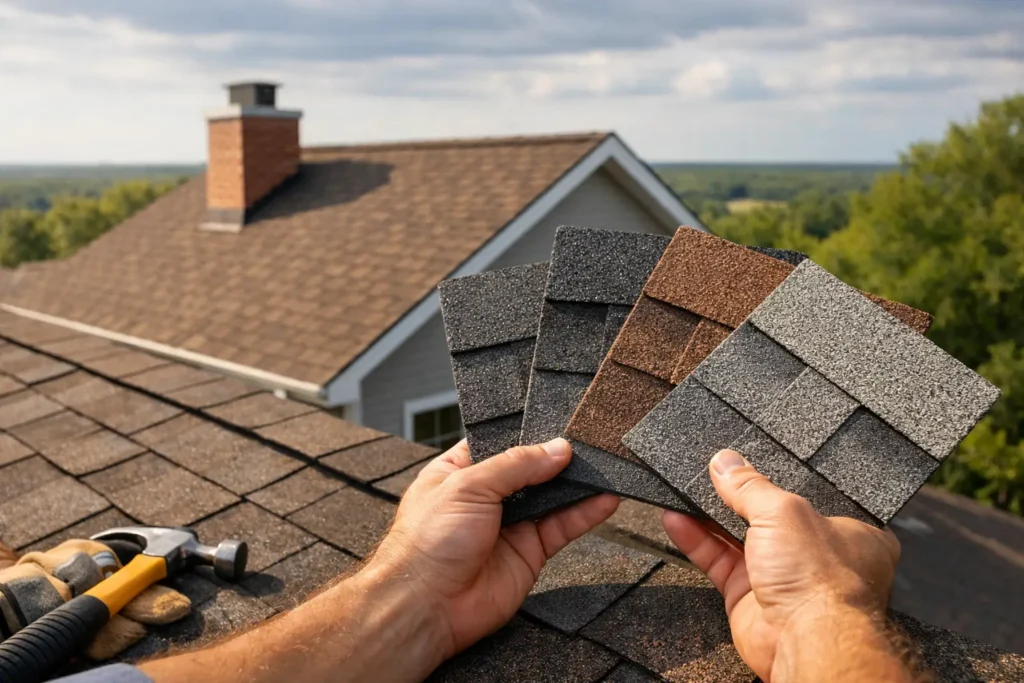
Bring full-size samples outside and look at them in morning sun, late-afternoon light, and shade. Small sample boards can make a color appear very different than it will across an entire roof. Warm brown, weathered wood, charcoal, black, gray, and blended colors each create a different effect. Dark colors can give a home a sharp, grounded look, while lighter blends may feel softer and can make some homes appear larger.
In our climate, homeowners sometimes assume a light shingle will dramatically lower energy bills. Color can affect surface temperature, but attic ventilation and insulation often have a larger impact on comfort and efficiency. Do not choose a color you dislike solely for a modest potential energy benefit. Instead, make sure the full roofing system is designed to manage heat and moisture properly.
Pay Attention to Ventilation and Underlayment
A roofing estimate should explain what is happening underneath the shingles. Underlayment is a protective layer between the deck and the shingles. It provides a secondary barrier against moisture and helps protect the roof deck during installation. The right material and placement depend on the roof design and local conditions.
Ventilation is equally important. A balanced system allows hot, humid air to escape from the attic while drawing in replacement air through intake vents. Without it, excessive heat and moisture can shorten shingle life, strain your air conditioning system, and contribute to mold or deck deterioration.
There is no one-size-fits-all ventilation plan. Ridge vents, box vents, soffit intake, and other components must be matched to the home. If a contractor only discusses the shingle color and leaves out ventilation, ask more questions before signing anything.
Compare Estimates by Scope, Not Just Price
The lowest bid can become the most expensive roof if critical items are missing. When reviewing estimates, compare the complete scope: tear-off, disposal, deck replacement pricing, underlayment, flashing, pipe boots, ventilation, starter material, ridge caps, cleanup, and warranty coverage.
Ask whether the contractor will document damaged decking before replacing it and whether they will explain any needed change orders. Honest communication matters when unforeseen issues are uncovered after old shingles come off. A clear process protects both the homeowner and the contractor.
Also ask who will perform the work, how the property will be protected during the project, and what happens if weather moves in. A roofing crew should safeguard landscaping and exterior surfaces, keep the site organized, and use magnetic cleanup to collect nails after the job is complete.
Consider Warranties Carefully
Manufacturer warranties can be valuable, but they are not all the same. Some cover material defects, while enhanced warranties may require specific system components and certified installation. Read the terms instead of focusing only on a large number of years printed in marketing materials.
Workmanship coverage is separate and just as important. A material defect is different from an installation issue, and homeowners should know who to call if a concern appears after the job is finished. Spartan Exteriors stands behind installations with a lifetime workmanship warranty because a roof should come with accountability, not uncertainty.
Make the Decision With the Whole Home in Mind
The best shingle choice should complement the home, protect its most vulnerable areas, and fit a realistic budget. If you are preparing to sell soon, a dependable architectural shingle in a widely appealing color may make more sense than a premium designer profile. If this is your long-term family home in a storm-prone area, investing in impact resistance, improved ventilation, and stronger system components may provide greater peace of mind.
Take your time with samples and estimates, but do not wait through an active leak or visible storm damage. A prompt inspection gives you facts, protects the structure from further water intrusion, and lets you choose your next roof with confidence rather than pressure.