
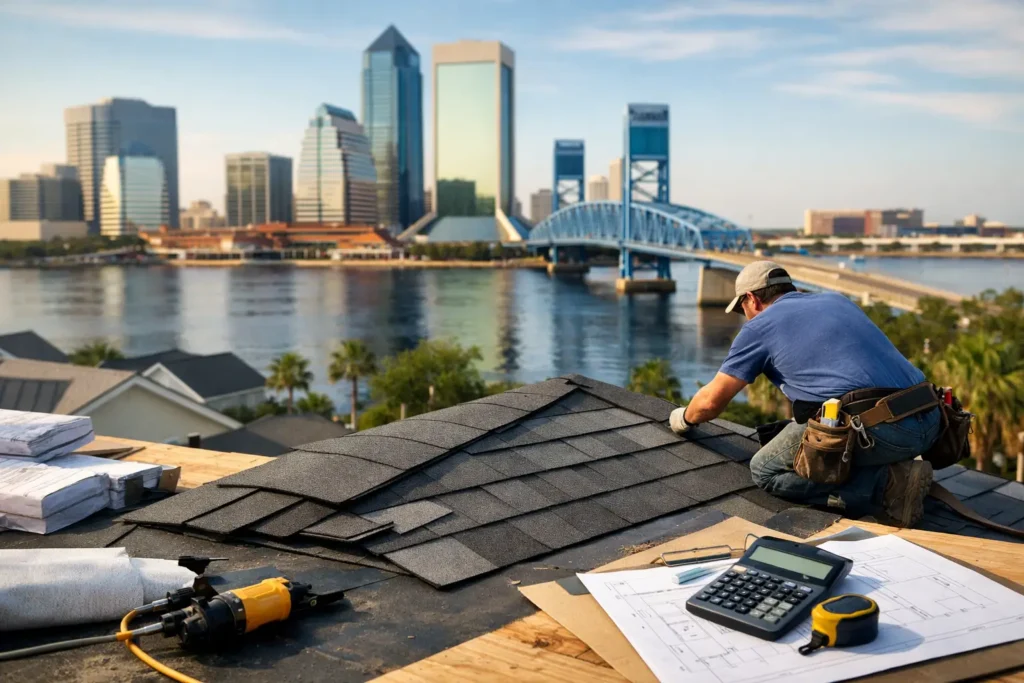
A roof can appear fine from the driveway while hiding soft decking, aging underlayment, lifted shingles, or storm-related damage underneath. That is why Jacksonville roof replacement cost is not one fixed number. A reliable price comes from inspecting the full roofing system, measuring the home correctly, and explaining what the job actually requires before work starts.
For many Jacksonville, Texas homeowners, a full roof replacement is a significant investment. It also protects everything beneath it: your family, ceilings, insulation, belongings, and the value of your home. The right contractor should make the process clearer, not more confusing, with a written scope, straightforward material options, and answers that make sense for your property.
What Does a Jacksonville Roof Replacement Cost?
Most residential roof replacements in the Jacksonville area fall somewhere between $7,000 and $26,000 or more. That wide range is normal. A modest, single-story home with a straightforward shingle roof may land near the lower end, while a large, steep, complex roof with premium shingles, extensive decking repairs, or metal materials can move well beyond it.
For a typical East Texas home, architectural asphalt shingles are often the most practical balance of appearance, durability, and upfront cost. A replacement using quality architectural shingles commonly runs around $4.50 to $8.50 per square foot of roof surface, though the final figure depends on the details of the installation. A 2,000-square-foot home does not necessarily have a 2,000-square-foot roof, either. Roof pitch, overhangs, garages, porches, valleys, and dormers all affect the actual roofing area.
Metal roofing generally costs more upfront, often ranging from $8 to $16 or more per square foot installed. It can be a strong long-term choice for owners who value longevity, wind resistance, and a distinctive appearance. The trade-off is simple: metal usually requires a larger initial investment and more specialized installation work.
The square-foot figures are useful for early planning, but they should never replace an on-site estimate. A price that looks unusually low may leave out materials or necessary work that will later appear as a surprise charge.
What Changes the Final Roof Replacement Price?
Roof size matters, but it is only the starting point. Two homes with the same living area can have very different roofing costs because the work happens above the ceiling line, not on the floor plan.
A steep roof takes more time and safety equipment to install than a low-slope roof. Multiple valleys, chimneys, skylights, vents, solar equipment, and transitions add cutting, flashing, and labor. A roof that is easy to access from a clear driveway is also different from one surrounded by fencing, landscaping, tight setbacks, or power lines.
Material selection makes a major difference as well. Three-tab shingles are generally less expensive than architectural shingles, but many homeowners choose architectural shingles for their thicker profile, stronger appearance, and better wind ratings. Designer shingles and impact-resistant options can raise the price further. They may make sense when appearance, hail performance, or potential insurance considerations justify the additional cost.
Then there is the condition beneath the shingles. If water has reached the roof deck, installers may need to replace damaged plywood or OSB before the new roof can be installed correctly. Rotten fascia, failing flashing, inadequate ventilation, and old pipe boots can also need attention. These are not “extras” when they are necessary for a sound roof. They are part of doing the job right the first time.
A Fair Estimate Should Show More Than a Total
A contractor should be able to walk you through the estimate without vague language or pressure. You deserve to know what materials are being installed, how the property will be protected, and what happens if concealed damage is found after tear-off.
A complete roof replacement proposal should clearly address these parts of the job:
- Removal and disposal of the existing roofing material
- New underlayment, shingles or metal panels, and required flashing
- Drip edge, starter materials, ridge components, and ventilation details
- Decking repair pricing if damaged wood is discovered
- Cleanup, magnetic nail sweeping, warranty coverage, and permit needs when applicable
Ask whether the estimate includes ice and water protection in vulnerable areas, even though East Texas does not face northern-style ice conditions every winter. This self-adhered barrier can still provide valuable added protection around valleys, eaves, penetrations, and other areas where water may back up during wind-driven rain.
Also ask whether the contractor is replacing flashing where needed instead of simply roofing around old components. Flashing at chimneys, walls, valleys, and pipe penetrations is one of the most important defenses against leaks. Saving a little on these details can cost far more when water reaches the interior later.
Storm Damage and Insurance Can Change Your Out-of-Pocket Cost
Jacksonville roofs face hard rain, wind, falling limbs, and hail. When storm damage is involved, insurance may cover part or much of a roof replacement, depending on the cause of loss and the terms of your policy. Coverage is never automatic, and an aging roof with normal wear is handled differently than sudden storm damage.
Your deductible is usually the most immediate out-of-pocket expense. Some policies pay replacement cost value, while others may begin with actual cash value and account for depreciation. The policy language, roof age, material type, and documented damage all matter.
A reputable roofing contractor can inspect the roof, photograph visible damage, and provide a detailed estimate that helps you understand the scope. They should not promise an insurance outcome they cannot control. Honest claim assistance means helping you document the condition of the roof and communicate clearly, while the insurance carrier makes the coverage decision.
If your roof is actively leaking after a storm, do not wait for the entire claim process before protecting the property. Emergency repairs or temporary coverings can help limit additional interior damage. Keep records, photos, and receipts for any emergency mitigation work.
When Replacement Is Smarter Than Another Repair
Repair is often the right answer for a localized leak, a few missing shingles, or a damaged pipe boot. Replacement becomes the more sensible path when repairs start stacking up, shingles are brittle across broad areas, granules are heavily washing away, or the roof is near the end of its expected service life.
A roof with widespread wind damage can be especially difficult to repair cleanly. New shingles may not match faded existing shingles, and disturbing brittle materials can create additional breakage. In those cases, patching may buy time, but it may not be the best value over the next few years.
The decision also depends on your plans for the property. If you expect to sell soon, a new roof can improve buyer confidence. If you plan to stay for decades, investing in a stronger shingle system or metal roof may be worth considering. There is no one material that is best for every home, which is why the conversation should start with your goals, not a sales pitch.
How to Budget Without Cutting the Wrong Corners
Start by getting a detailed, written inspection and comparing like-for-like scopes. One estimate may include new ventilation, upgraded underlayment, proper flashing, and cleanup, while another may only list shingles and labor. The lower number is not always the lower cost once missing items and future repairs are considered.
Financing can help homeowners address a failing roof before a small leak becomes damaged insulation, stained ceilings, mold concerns, or structural repairs. It is worth reviewing payment terms carefully and choosing a monthly payment that fits your household budget. Do not let urgency push you into signing a contract you do not understand, but do not ignore a roof that is allowing water into the home.
Workmanship protection matters, too. Manufacturer material warranties are valuable, but they do not replace a contractor standing behind installation details. Spartan Exteriors provides clear guidance, insurance documentation support, and a lifetime workmanship warranty on installations because the roof is only as dependable as the work performed underneath and around the visible material.
A Jacksonville roof replacement is a major decision, but it should not feel like a gamble. Request an inspection, ask direct questions, and choose a contractor who explains the price, protects your property, and treats your home with the care it deserves.