
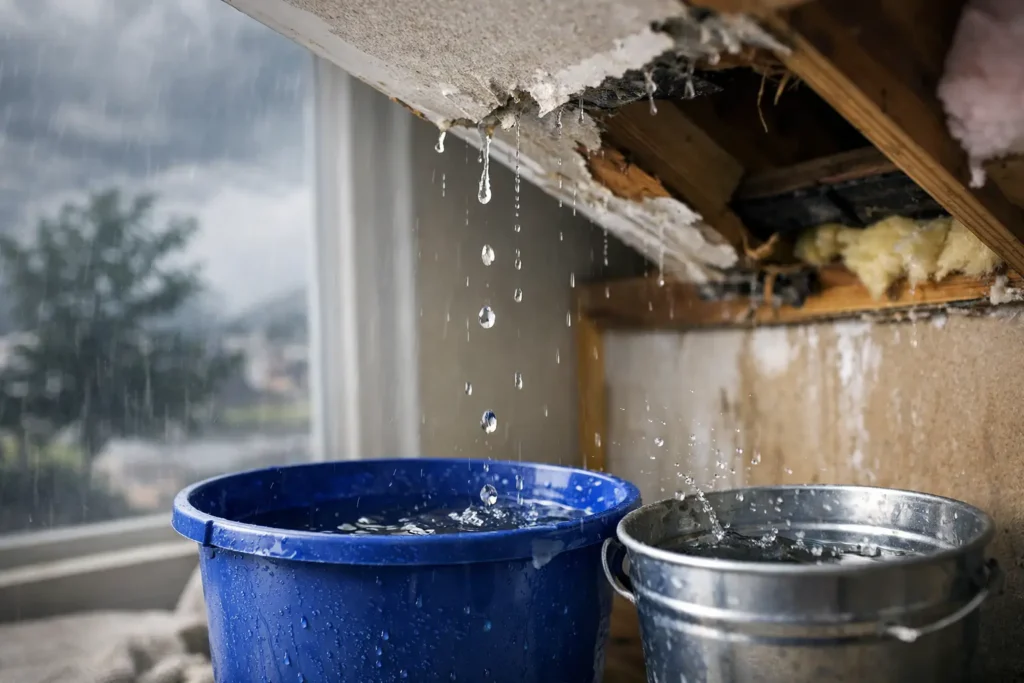
A hard East Texas storm can leave your roof looking perfectly normal from the driveway while water is already working its way beneath the shingles, flashing, or roof penetrations. Can storm damage cause hidden leaks? Absolutely. In fact, the leaks that do not show up until days or weeks after a storm are often the ones property owners miss until they have caused staining, mold, damaged insulation, or rotten decking.
The safest move after hail, high wind, fallen limbs, or driving rain is not to wait for a ceiling drip. It is to have the exterior checked while the evidence is still fresh and before a small opening becomes a more expensive repair.
Why storm-related leaks can stay hidden
A roof is a layered system. Shingles or metal panels are the first line of defense, but underlayment, flashing, vents, pipe boots, valleys, decking, and attic ventilation all play a part in keeping water outside. A storm can compromise one small part of that system without creating an obvious hole.
Wind can lift shingle edges just enough to break the seal beneath them. Hail can bruise shingles, crack a vent cover, or damage the protective granules that help asphalt shingles shed water. Heavy rain can then enter beneath the surface, travel along decking or framing, and appear far away from the actual point of entry.
That is why the location of a ceiling stain is not always the location of the roof damage. Water follows gravity, slopes, nails, rafters, and insulation. By the time it reaches a visible surface, it may have traveled several feet.
Hidden leaks are especially common around roof transitions and penetrations. Chimneys, skylights, wall intersections, valleys, ridge vents, plumbing vents, satellite mounts, and HVAC curbs all require properly installed flashing and seals. Storm movement can loosen, crack, or pull apart materials in these vulnerable areas even when the main roof field still looks intact.
Storm damage most likely to create a hidden leak
Not every storm requires a major repair, but certain kinds of weather deserve close attention. High winds can remove shingles outright, crease them, or expose fasteners. Even if a shingle lies back down afterward, its seal may no longer be dependable.
Hail is another concern because its effects are not always easy to identify from the ground. On an asphalt roof, hail impact may leave soft bruises, fractured granules, or cracks that shorten the roof’s service life. On metal roofing, dents may be cosmetic, but impact near seams, fasteners, or flashing deserves a professional evaluation.
Wind-driven rain can expose problems that ordinary rainfall never reveals. Rain pushed sideways can work behind loose siding, damaged window trim, lifted flashing, or compromised roof-to-wall areas. If a storm brought intense rain from one direction, inspect the corresponding interior walls and attic areas as well as the ceiling.
Fallen branches and flying debris can create obvious punctures, but they can also scrape away granules, bend gutters, tear flashing, or shift roof components without leaving a dramatic mark. A branch that briefly landed on a roof should be taken seriously, even if it did not come through the ceiling.
Signs of hidden roof leaks after a storm
The first clues are often subtle. A musty smell in a closet, a faint yellow ring on a ceiling, peeling paint near a wall, or a patch of damp insulation in the attic can all point to unwanted moisture. Do not dismiss these signs because they seem small. Water damage rarely stays small when the source remains open.
Watch for changes during the next several rain events. A leak may only appear when wind hits a certain side of the home or when rain is heavy enough to overwhelm a weakened area. Take photos each time you notice discoloration or moisture. A dated record can help a roofing professional trace the issue and can also support an insurance claim when covered storm damage is involved.
From the ground, look for missing shingles, lifted tabs, exposed roof felt, bent or detached gutters, scattered granules near downspouts, damaged vents, and debris caught in valleys. Use binoculars if needed, but do not climb onto a wet, steep, or potentially damaged roof. The risk of a fall is not worth it.
Inside the attic, use a flashlight and look for darkened wood, wet insulation, rusty nail tips, damp sheathing, or daylight coming through the roof deck. Avoid touching damaged electrical wiring or standing on unsupported drywall. If there is active water near electrical fixtures, turn off power to the affected area if it is safe to do so and call for help.
What to do before a small leak becomes major damage
Start by documenting what you can safely see. Photograph visible roof damage from the ground, fallen limbs, damaged gutters, interior stains, and any water entering the building. Note the date of the storm and when you first noticed the problem. Avoid throwing away damaged materials until your insurer or contractor has had a chance to review them.
If water is actively entering, protect the interior first. Move furniture, electronics, rugs, and valuables away from the area. Place a container beneath a steady drip, and use towels to limit spread on flooring. If water is collecting and bulging in a ceiling, do not puncture it unless you understand the risks and can do so safely. Ceiling material can fail unexpectedly, and water may be near wiring.
Temporary protection can buy time, but it is not a repair. A tarp, emergency patch, or sealant may reduce immediate exposure after a storm, especially when more rain is expected. Still, the damaged area needs a proper inspection and repair once conditions are safe. Covering a symptom without identifying the entry point can trap moisture where you cannot see it.
For commercial properties, act quickly even if the leak seems isolated. Water entering a flat or low-slope roof system can migrate beneath membranes and insulation, affecting a much larger area than the visible stain suggests. Silicone and other commercial roofing systems have specific repair requirements, so the inspection should match the type of roof in place.
When to involve your insurance company
Insurance coverage depends on your policy, deductible, roof age, damage type, and the cause of loss. Sudden storm damage may be covered, while long-term wear, neglected maintenance, or an old leak often is not. That difference is one reason prompt documentation matters.
A professional inspection can give you clear information before you make decisions. You should understand whether there is storm-related damage, what repairs are needed to prevent further loss, and whether the scope appears substantial enough to justify filing a claim. Do not let an unfamiliar contractor pressure you to sign paperwork before you understand the work, the estimate, and your responsibilities.
If you file, keep copies of photos, inspection findings, estimates, emails, claim numbers, and conversations. Ask questions when something is unclear. A trustworthy roofing contractor should help explain the documented damage and repair scope without promising an outcome they cannot control.
Why a professional inspection is worth it
A proper storm inspection is more than a quick look at the shingles. It includes checking roof coverings, flashing, valleys, vents, pipe boots, gutters, attic conditions when accessible, and the areas where water is most likely to enter. The goal is to identify both immediate damage and weaknesses that could leak during the next storm.
Sometimes the answer is a targeted repair. Other times, widespread hail or wind damage, aging materials, or repeated leaks may make reroofing the more sensible long-term investment. The right recommendation depends on the condition of the whole system, not just one wet spot.
For homeowners and business owners around Tyler, fast action after severe weather protects more than the roof. It protects framing, insulation, finishes, inventory, and the people who rely on the building every day. Spartan Exteriors can assess storm-related concerns, explain the findings plainly, and help you take the next step without guesswork.
A roof does not need a dramatic hole to let water in. If a recent storm left you wondering whether something shifted, cracked, or lifted, trust that instinct and arrange an inspection before the next hard rain gives a hidden leak time to grow.