
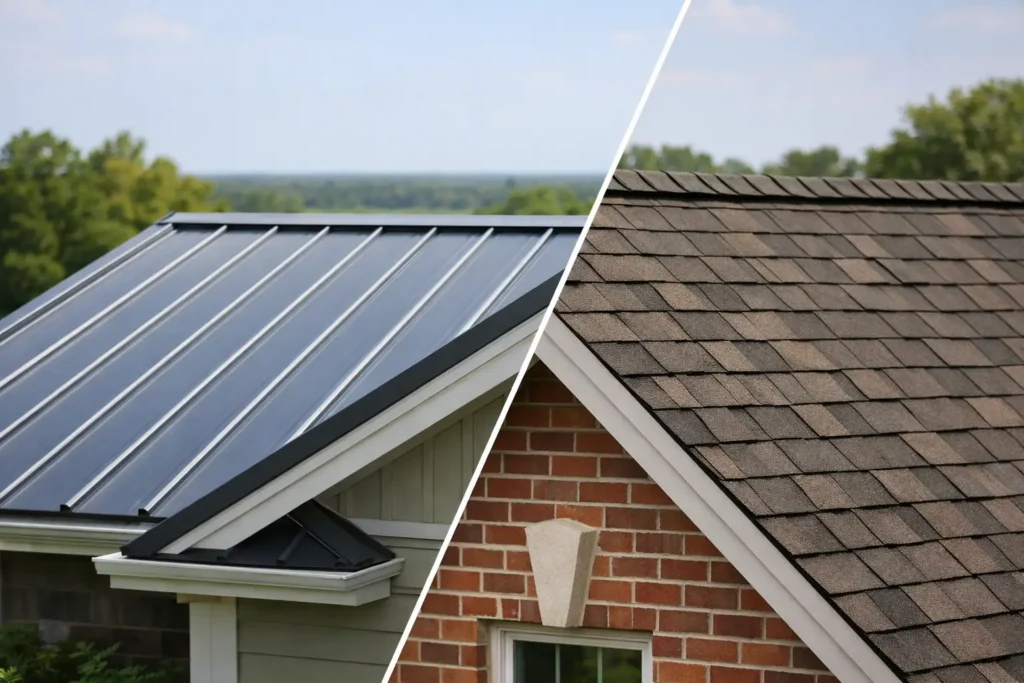
A roof decision in East Texas is rarely just about color. It is about whether your home can handle hard rain, summer heat, wind-driven storms, falling limbs, and the years of wear that follow. In the metal roof vs shingles decision, the right answer depends on your budget, your home’s condition, the look you want, and how long you plan to own the property.
Both systems can protect a home well when they are installed correctly. Neither is automatically the best choice for every family. The key is understanding where each material performs well, where it requires attention, and what the installation actually involves.
Metal Roof vs Shingles: The Big Differences
Asphalt shingles remain the most common roofing material on East Texas homes for good reason. They are familiar, flexible in design, and usually cost less upfront than metal. Modern architectural shingles also offer a dimensional look that works with many home styles, from traditional brick homes to newer builds.
Metal roofing is built for longevity and low maintenance. It can shed rain quickly, resist fire, and hold up well against intense sun. Standing-seam metal roofs offer a clean, modern appearance with concealed fasteners, while exposed-fastener panels can be a more budget-friendly option for certain homes, workshops, barns, and other structures.
The material matters, but the system matters just as much. Flashing around chimneys and walls, underlayment, ventilation, roof decking, pipe boots, valleys, and fastening methods all affect whether a roof stays watertight. A quality material installed carelessly can still leak.
Upfront Cost and Long-Term Value
For most homeowners, shingles have the lower initial price. That can make them the practical choice when a roof replacement is urgent, when insurance proceeds need to stretch across several repairs, or when a homeowner wants a dependable new roof without the larger investment metal requires.
Metal generally costs more at installation because the materials, fabrication, trim details, and labor are more specialized. Complex rooflines with many valleys, dormers, skylights, or transitions can also raise the cost of either system, but metal details often demand more precision.
The long-term picture may favor metal for an owner who plans to stay put. A properly installed metal roof can last substantially longer than a typical shingle roof and may require fewer replacements over the life of the home. That does not mean metal is maintenance-free or indestructible. Fasteners, sealants, penetrations, and flashing should still be inspected periodically.
A lower upfront shingle cost can still represent excellent value. If you expect to sell in a few years, are restoring a home on a defined budget, or simply prefer the appearance of shingles, a high-quality architectural shingle system may be the smarter financial move.
Storm Performance in East Texas
Tyler-area roofs face more than ordinary sunshine. Heavy rain can expose weak flashing quickly. Strong winds can lift poorly secured materials. Hail can bruise shingles, dent metal, and damage vents, gutters, skylights, and other roof components. Tree limbs add another risk after severe weather.
Metal performs well in rain because its panels direct water off the roof efficiently. It is also noncombustible and can offer strong wind resistance when the panel profile and fastening system are designed and installed correctly. Some metal products are rated for impact resistance, but homeowners should understand that hail can still leave visible dents, especially on softer metals or thinner panels. Cosmetic damage and functional damage are not always the same thing, yet both can matter during an insurance claim or future resale.
Shingles can also perform very well in storms, especially quality architectural products installed with the correct underlayment, starter materials, nail placement, and ventilation. Certain impact-resistant shingles are designed to better withstand hail. However, shingles are more vulnerable to granule loss, creasing, lifting, and age-related wear over time.
After a storm, do not decide based on what looks fine from the driveway. Damage may be concentrated in one slope, around ridge caps, or near roof penetrations. A professional inspection gives you a clearer record of the condition and can help document legitimate claim-related damage.
Heat, Energy Use, and Ventilation
Metal is often chosen for its ability to reflect solar heat, particularly in lighter colors or reflective finishes. That can help reduce heat absorbed by the roof surface. But no roofing material works alone. Attic insulation, air sealing, ventilation, roof color, shading, and ductwork all influence comfort and energy use.
Shingle roofs can also be selected in lighter, more reflective colors. They may not reflect heat the same way as many metal systems, but a properly ventilated attic and well-installed roofing system can still make a major difference in an East Texas home.
Ventilation deserves special attention regardless of the roof you choose. Poor ventilation can trap heat and moisture in the attic, contribute to premature material wear, and make cooling systems work harder. During a reroof, it is wise to evaluate intake ventilation at the eaves and exhaust ventilation near the ridge rather than treating the roof covering as the entire solution.
Appearance, Noise, and Everyday Living
Shingles offer the widest range of familiar residential looks. They can complement brick, stone, siding, and wood exteriors without changing the home’s character. Architectural shingles are especially popular because they create more depth than basic three-tab shingles.
Metal can be striking on the right property. A standing-seam roof works beautifully with farmhouse, modern, cabin, ranch, and contemporary designs. Metal is also available in many colors, so the result does not have to look industrial. Still, metal is a stronger visual choice. Some homeowners love that clean profile; others prefer the softer texture of shingles.
A common concern is rain noise. With proper decking, underlayment, attic insulation, and interior ceiling construction, a metal roof over a home is not usually dramatically louder inside than a shingle roof. Noise can be more noticeable on open structures such as patios, carports, and barns.
Installation Details That Should Drive the Decision
A roof replacement is the right time to address problems that cannot be seen once the new material is installed. Soft or damaged decking, deteriorated fascia, poorly flashed transitions, old pipe boots, inadequate ventilation, and hidden leak paths need attention before the final roof covering goes on.
For shingles, proper nail placement and the right number of fasteners are critical. Nails driven too high, too low, or too deeply can reduce wind performance. For metal, panel layout, fastener spacing, expansion and contraction allowances, sealant placement, and trim installation are equally important. A metal roof is not simply sheet metal placed over a house.
Be cautious about installing a new roof over existing layers without a full assessment. While overlay options may be allowed in limited situations, removing old roofing often gives the contractor a better opportunity to inspect the deck and correct concealed issues. That matters after years of East Texas rain and heat.
Which Roof Is Right for Your Property?
Choose shingles when you want a lower initial investment, a traditional residential appearance, broad color and style options, or a strong balance of performance and affordability. They are also a practical fit for many insurance-funded replacements where budget control is a priority.
Choose metal when long service life, low routine maintenance, rain shedding, fire resistance, and a distinctive appearance are high on your list. It can be an especially worthwhile investment for homeowners planning to remain in the property for many years, as well as for select commercial buildings, shops, and rural structures.
Your roof pitch also matters. Shingles require an adequate slope to shed water properly. Metal can work on lower slopes when the correct panel system and installation method are used, but low-slope roofing should never be treated as a one-size-fits-all metal project. Some commercial roofs are better suited to specialized systems such as silicone coatings.
The best next step is a straightforward roof evaluation, not a sales pitch. A qualified contractor should inspect the roof, explain the condition of the decking and ventilation, discuss material options honestly, and provide a clear scope of work. Spartan Exteriors helps East Texas property owners make that call with practical recommendations, detailed estimates, and workmanship built to protect what matters most.
Before choosing a color or signing a contract, ask to see exactly how the roof will be installed – including underlayment, flashing, ventilation, cleanup, and warranty coverage. Those details are what turn a new roof into real protection when the next storm rolls through.