
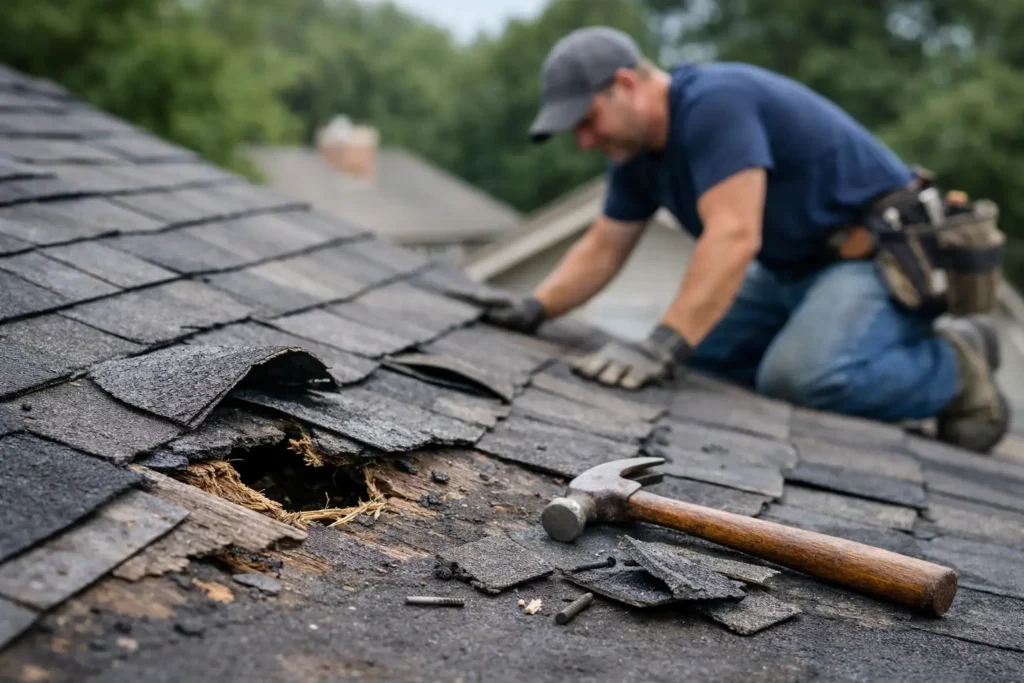
A roof usually gives you warnings before it fails. The trouble is, many homeowners do not recognize them until a small issue turns into interior damage, mold, or an insurance headache. If you are trying to spot the top signs your roof needs replacement, the goal is not to panic. It is to catch the problem early, understand what matters, and make a clear decision before the next East Texas storm makes it worse.
Why roof replacement is not always obvious
Some roofs look worn from the ground but still have life left in them. Others appear fine until water starts showing up on a ceiling stain, around a vent, or behind a wall. That is why roof replacement is rarely about one symptom alone. It is usually a pattern of age, weather exposure, visible damage, and repeat repairs that no longer make financial sense.
In East Texas, heat, humidity, wind, hail, and heavy rain can shorten a roof’s lifespan faster than many property owners expect. A roof that has handled years of summer sun and storm season may not fail all at once, but it can lose the ability to protect your home the way it should.
Top signs your roof needs replacement
1. Your roof is simply getting old
Age matters, especially with asphalt shingles. Many shingle roofs last around 15 to 25 years depending on material quality, ventilation, installation, and storm history. Metal roofing can last longer, but even durable systems need evaluation as they age.
If your roof is near the end of its expected lifespan and new issues are starting to show up, replacement often becomes the smarter move. A repair may buy a little time, but an aging roof with widespread wear usually keeps demanding more money.
2. Shingles are curling, cracking, or going bald
Shingles are your roof’s first line of defense. When they begin curling at the edges, cracking through the surface, or losing large amounts of granules, the system is wearing down. Granule loss is often easy to spot in gutters or near downspouts. If shingles look patchy or thin, they may no longer protect against UV exposure and water intrusion.
A few damaged shingles can sometimes be replaced. But if the problem is spread across multiple slopes, it usually points to overall roof deterioration rather than one isolated trouble spot.
3. You keep finding leaks or water stains
One leak does not always mean full replacement. Sometimes the issue is flashing, a pipe boot, or storm damage in one area. But repeated leaks are different. If water keeps showing up in the attic, around ceiling fixtures, along exterior walls, or after every major rain, your roof may be failing in more than one place.
Water follows the path of least resistance, so the stain you see inside is not always directly below the source. That is one reason roofing problems can be more serious than they first appear. If leaks are becoming a pattern, it is time for a full inspection, not another temporary patch.
4. The roof is sagging or feels uneven
A sagging roofline is one of the clearest warning signs that something serious is going on. Sagging can point to trapped moisture, rotted decking, structural stress, or long-term water damage below the surface. This is not a cosmetic issue.
If part of your roof looks dipped, wavy, or soft underfoot, do not wait to see if it gets worse. A sagging section needs prompt professional attention because the damage may extend beyond the shingles into the decking and support structure.
5. Storm damage keeps stacking up
In this part of Texas, hail and wind can do real damage fast. Sometimes the signs are obvious, like torn shingles, dented metal, or tree impact. Other times the damage is harder to spot from the ground. Lifted shingles, bruising from hail, broken seals, and compromised flashing can all weaken the roof without creating an immediate leak.
After a major storm, the question is not just whether your roof was damaged. The real question is how much useful life it lost. If the system already had age-related wear before the storm hit, replacement may be the most reliable path forward.
6. Repairs are becoming frequent
A repair is often the right call when the roof is generally in good shape and the damage is limited. But there comes a point when repeated repairs start costing more than they are worth. If you have fixed leaks, replaced shingles, patched flashing, and still do not feel confident every time it rains, the roof may be telling you it is done.
This is one of the most overlooked top signs your roof needs replacement. Homeowners often try to stretch a roof by handling problems one at a time, but constant patchwork can become more expensive than investing in a new system with a warranty and long-term peace of mind.
7. Flashing and roof penetrations are failing
Roof penetrations include vents, chimneys, skylights, and pipe boots. These areas are common leak points because they rely on flashing and seal integrity. If several penetrations are failing at once, or if flashing is rusted, loose, separated, or repeatedly repaired, the larger roofing system may also be near the end.
A targeted repair can solve a localized flashing issue. But if multiple vulnerable areas are breaking down on an older roof, replacement may be the stronger and more cost-effective choice.
8. Moss, algae, or trapped moisture are taking hold
Dark streaks do not always mean you need a new roof, but widespread biological growth can be a sign of bigger problems. Moss and algae thrive where moisture lingers. In shaded or poorly ventilated areas, trapped moisture can wear down materials faster and increase the risk of rot below the surface.
This is one of those it-depends situations. Surface staining alone might be manageable. But if moisture has been sitting on the roof for a long time, especially on an older system, it can contribute to the kind of hidden damage that makes replacement necessary.
9. Your energy bills are climbing without another clear reason
A failing roof can affect more than weather protection. Poor attic ventilation, damaged roofing materials, and moisture intrusion can all contribute to heat buildup and reduced energy efficiency. If your HVAC system is working harder and your home feels harder to cool, the roof may be part of the problem.
This is not always the first clue homeowners notice, but it matters. A roof system works together with ventilation and insulation. When one part starts failing, comfort and efficiency usually suffer too.
10. Your neighbors are replacing roofs built around the same time
This is not proof on its own, but it is a useful clue. If homes in your neighborhood were built around the same time and several nearby roofs are being replaced, yours may be approaching the same stage. This is especially true if your area has been through similar storms and sun exposure.
It is worth treating that trend as a reminder to schedule an inspection rather than waiting for a leak to force the issue.
When a repair makes sense and when it does not
Not every damaged roof needs to be replaced. If the roof is relatively new, the decking is sound, and the issue is limited to one section, a repair may be the right answer. A trustworthy contractor should tell you that plainly.
Replacement becomes more likely when damage is widespread, active leaks are recurring, storm impact is significant, or the roof is already near the end of its life. In those cases, repairs may only delay the bigger problem while adding more cost along the way.
What to do if you see these warning signs
Start with a professional inspection. That gives you a clear picture of the roof’s condition, not just the most visible symptom. If storm damage is involved, documentation matters, especially if you may need to file an insurance claim.
Ask direct questions. Is the problem isolated or widespread? How much life is realistically left in the roof? Would a repair hold up through another storm season, or are you likely to face the same issue again in six months? A good contractor will explain the trade-offs in plain language.
If replacement is the right path, the material choice matters too. Some homeowners want an updated shingle roof that improves curb appeal. Others may be better served by metal roofing for durability. Commercial owners may need a system like silicone roofing that fits the building and budget. The right answer depends on the structure, the wear pattern, and your goals.
For homeowners and property owners around Tyler, a fast response can make a major difference after storm damage or an active leak. Spartan Exteriors approaches these situations the way they should be handled – with urgency, honesty, and a clear plan.
A roof does not have to be falling in to need replacement. If the warning signs are there, paying attention now can save your home, your budget, and a lot of stress the next time severe weather rolls through.