
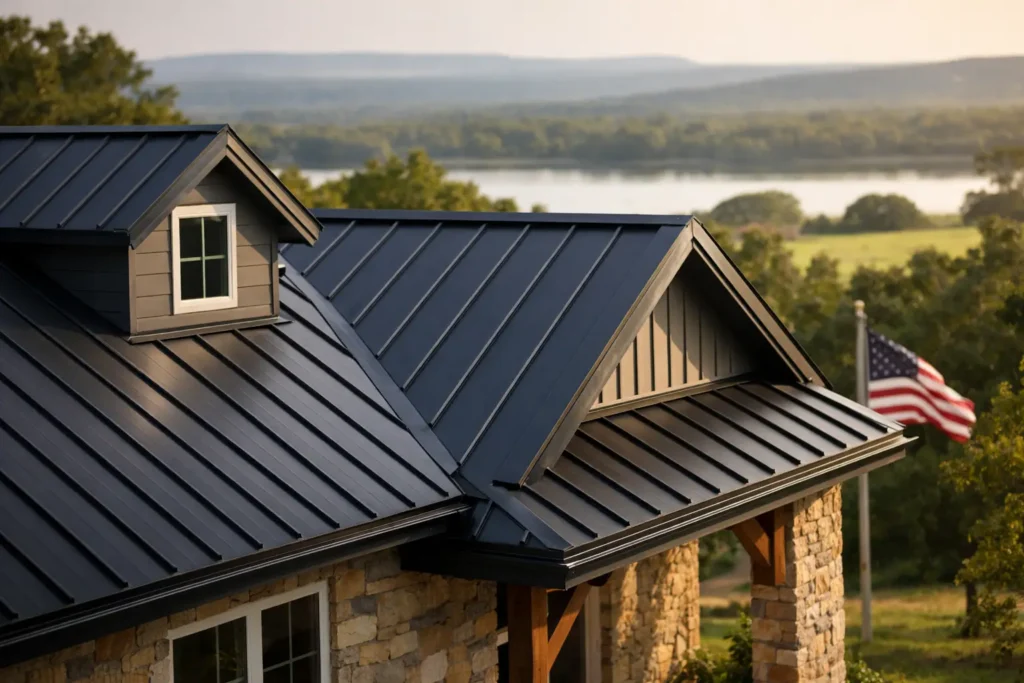
A metal roof can look like a simple upgrade from the street. From the decking up, it is a complete system that must manage heat, rain, wind, flashing, ventilation, and movement in the metal itself. This metal roofing system review gives East Texas homeowners and property owners a straight answer on what they are buying, where metal performs well, and what can go wrong when installation details are ignored.
For many properties around Tyler and across East Texas, metal roofing is worth serious consideration. It offers long service life, strong wind performance, and a clean appearance that works on farmhouses, traditional homes, mobile homes, shops, and commercial buildings. But it is not automatically the right choice for every budget, roof shape, or existing structure.
What a Metal Roofing System Actually Includes
The visible panels are only one part of the roof. A properly installed metal roofing system begins with sound roof decking. If the decking is soft, damaged by leaks, or poorly fastened, covering it with new metal only hides a problem that can grow worse.
Next comes the underlayment. This layer provides secondary water protection beneath the panels and is especially important around valleys, penetrations, and transitions. The right underlayment depends on the roof design, slope, local code requirements, and the metal system selected.
Flashing is where craftsmanship shows. Valleys, chimneys, skylights, vents, walls, pipe boots, eaves, ridges, and gable ends all need components that direct water away from vulnerable areas. A panel may last for decades, but a poorly flashed pipe boot can leak much sooner. That is why a roof should never be judged only by the gauge of its panels or the color of its finish.
Fasteners, closures, trim, sealants, and ventilation complete the system. These pieces may not get much attention during a sales conversation, yet they determine whether the roof sheds water properly and stays secure during severe weather.
Metal Roofing System Review: The Real Benefits
Metal has earned its reputation for durability. Unlike traditional shingles, metal panels do not rely on granules that can wear away under intense sun exposure. Quality metal systems can offer a long service life when the roof is designed correctly and installed by an experienced contractor.
Wind resistance is another major advantage. East Texas storms can bring sudden high winds, driven rain, and falling limbs. A properly attached metal roof can perform very well under those conditions. The key word is properly. Panel type, fastener pattern, decking condition, edge details, and installation method all affect wind performance.
Metal roofs are also fire-resistant and can be a practical choice for rural properties, homes near wooded areas, and commercial buildings. They are lightweight compared with some roofing materials, which can be helpful when evaluating an existing structure.
Appearance matters, too. Today’s metal roofing options are not limited to the bright exposed-fastener panels many people picture first. Standing seam roofs create a clean, raised-rib profile with concealed fasteners. Metal shingles and specialty profiles can provide a more traditional look while still delivering metal’s durability. Colors range from understated charcoal and bronze to lighter shades that can help reflect solar heat.
For business owners, metal can be especially attractive on low-slope or large roof areas when paired with the right design and drainage plan. It provides a durable exterior surface, but commercial roofing decisions should be based on the building’s slope, drainage, HVAC penetrations, insulation needs, and intended use. In some cases, a silicone roofing system may be the better commercial solution.
The Trade-Offs Homeowners Should Expect
The biggest obstacle for many homeowners is the upfront investment. Metal roofing usually costs more than a standard asphalt shingle replacement. The final price varies widely based on roof size, pitch, panel profile, trim complexity, tear-off requirements, decking repairs, and the number of penetrations.
That higher initial price can make sense when you plan to stay in the home for many years, want lower replacement frequency, or need a roof built for demanding weather. It may be harder to justify on a property you expect to sell soon, particularly if the surrounding market does not value the upgrade enough to support the added cost.
Noise is another common concern. Rain on a metal roof can sound different than rain on shingles, but a metal roof installed over solid decking with proper underlayment and attic insulation is not usually the drumbeat people expect. An open-framed building, porch roof, or workshop without insulation will be noticeably louder.
Metal also expands and contracts as temperatures change. That is normal. Good installers account for this movement through proper panel selection, clip systems where applicable, fastening methods, and trim details. If a system is installed too tightly or with incorrect fasteners, it may develop oil canning, loosened screws, or unwanted noises over time.
Finally, repairs can require a more specialized approach than shingle repairs. If a tree branch damages a panel or flashing area, a contractor must match the profile, color, and installation method. This is another reason to choose a roofing company that understands the full system rather than treating metal as just another material.
Exposed Fastener vs. Standing Seam Metal
Exposed-fastener panels are often the more budget-friendly metal option. Screws pass through the face of the panels and use washered fasteners to seal the penetrations. This system works well for many barns, shops, mobile homes, and straightforward residential roofs. It can be durable and attractive when installed correctly.
The trade-off is maintenance. Fasteners and washers are exposed to sun, weather, and normal expansion and contraction. They should be inspected periodically, and some may need tightening or replacement as the roof ages. This does not make exposed-fastener metal a poor choice. It simply means the owner should understand the maintenance expectation before signing a contract.
Standing seam metal uses raised seams and concealed clips or fasteners, reducing the number of exposed penetrations across the roof field. It has a cleaner architectural appearance and is often preferred for higher-end homes or roofs where long-term weather performance is a priority. It generally costs more, especially on steep, cut-up rooflines with numerous valleys and dormers.
Neither option wins in every situation. A well-installed exposed-fastener roof can be a smart, practical investment. A standing seam system may be better for an owner who wants a premium finish and is prepared for the added cost.
Questions to Ask Before Choosing Metal
A clear proposal should explain more than the panel color and square footage. Ask whether the old roof will be removed, how damaged decking will be handled, what underlayment will be used, and how flashing around walls, valleys, chimneys, and penetrations will be installed. You should also know whether ventilation changes are needed and who is responsible for protecting landscaping and cleaning up job-site debris.
For storm-related replacements, ask for documentation that clearly identifies visible damage and the recommended scope of work. Insurance claims can be stressful, particularly after a widespread storm. A contractor should help you understand the roofing scope without making unrealistic promises about what an insurance carrier will approve.
Warranty language deserves close attention. Manufacturer coverage may apply to panels or finishes, while workmanship coverage applies to installation. Those are different protections. Read the terms, ask what is excluded, and keep copies of your contract and warranty information after the work is complete.
Installation Quality Decides the Outcome
A metal roof is not forgiving of rushed work. Panels must be aligned correctly from the first course. Cuts need to be clean. Fasteners must be placed and tightened correctly. Flashing must be integrated so water flows out, not behind the metal. Small shortcuts at the beginning can create a roof that looks acceptable on day one but causes trouble after the first hard rain.
Before work begins, a reliable contractor should inspect the roof structure, identify soft decking or ventilation concerns, explain the proposed system, and provide a written scope. During the project, communication matters just as much. Property owners should know what was found, what changed, and why.
Spartan Exteriors approaches roofing with that level of care because a roof is not just another construction project. It protects the people, possessions, and work inside the building. A lifetime workmanship warranty means more when the installation process is handled correctly from the start.
A metal roof can be one of the strongest long-term improvements you make to a property, but only when the system fits the building and the installation earns your trust. Start with a careful inspection, ask direct questions, and choose a contractor who is willing to explain the details before the first panel goes on.