
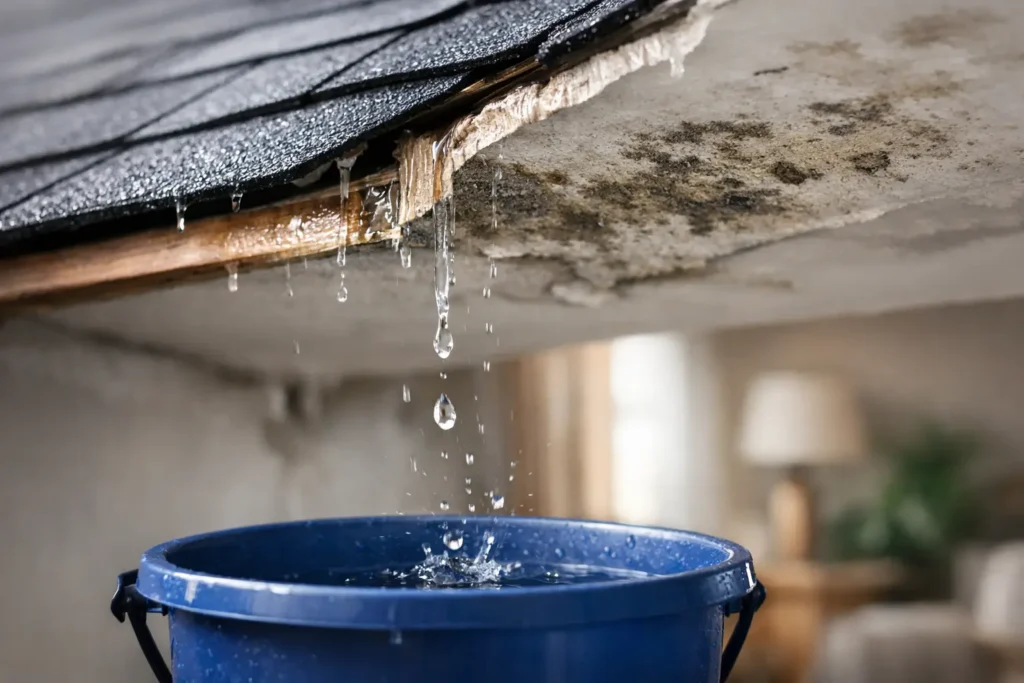
A roof leak does not need to pour water onto the floor to create a serious problem. A small opening around a vent, damaged shingle, lifted flashing, or storm-damaged roof valley can let moisture into your attic, insulation, wall cavities, or ceiling materials for weeks before you see a stain. So, can roof leaks cause mold? Yes. If moisture remains trapped long enough, mold can begin growing on materials that many homeowners cannot see.
For East Texas property owners, the risk is real. Heavy rain, wind-driven storms, high humidity, and hot attic temperatures can turn a minor roof issue into water damage, mold growth, and expensive interior repairs. The good news is that prompt roof repair can often stop the source before the damage spreads.
Why Roof Leaks Create the Right Conditions for Mold
Mold needs moisture, a food source, and time. Unfortunately, a home or commercial building already contains plenty of potential food sources: wood framing, roof decking, paper-faced drywall, insulation backing, dust, and carpet padding. A roof leak supplies the missing ingredient.
Once rainwater enters the roof system, it may soak into materials without creating an obvious drip. Wet insulation can hold moisture against ceiling drywall. Water can travel along rafters or electrical lines and appear far from the actual leak. In some cases, roof decking gets damp repeatedly after each storm while drying only partially between rain events.
Mold can begin developing within roughly 24 to 48 hours when conditions stay wet. That does not mean every brief leak will cause a major mold problem. A small amount of water that is found, dried, and repaired quickly may leave no lasting issue. The bigger concern is recurring moisture or hidden leaks that keep materials damp.
How Fast Can a Roof Leak Lead to Mold?
There is no single timeline because the result depends on the size of the leak, indoor humidity, ventilation, insulation type, temperature, and how quickly the area dries. Still, homeowners should treat any active roof leak as urgent rather than waiting to see whether a stain gets worse.
A one-time leak from a storm can sometimes be dried out before mold takes hold. But a slow leak that wets attic insulation each time it rains can create a mold-friendly environment long before it reaches the ceiling below. In East Texas, humid weather can make drying slower, especially in poorly ventilated attics or closed commercial spaces.
The roof repair itself is only one part of the solution. Stopping water from entering is the first priority, but wet materials may also need to be dried, removed, or evaluated. Repairing shingles while leaving saturated insulation or damaged drywall in place can allow the moisture problem to continue inside the building.
Signs a Roof Leak May Be Causing Mold
The first sign is not always visible mold. Many property owners notice a musty odor before they see any discoloration. That smell is worth taking seriously, particularly after a storm or in rooms below the attic.
Ceiling stains, peeling paint, bubbling drywall, warped trim, and soft spots around skylights or exterior walls can all point to water intrusion. In the attic, look for dark staining on roof decking, damp insulation, wet rafters, rusty nail tips, or areas that appear darker than the surrounding wood. Do not assume every dark mark is active mold or that every mold issue comes from the roof. Condensation, plumbing leaks, and HVAC problems can create similar symptoms.
Visible mold may look black, green, gray, brown, or even white. Color alone cannot identify the type or severity of mold. What matters first is finding and correcting the moisture source. If a large area is affected, materials are heavily saturated, or anyone in the building has respiratory concerns, professional evaluation is the safer path.
The Hidden Damage a Small Leak Can Cause
A small leak can quietly affect much more than the roof surface. Water can weaken roof decking, reduce the effectiveness of insulation, stain ceilings, damage framing, and create conditions that attract wood-destroying insects. In commercial properties, moisture can also disrupt operations, damage inventory, and affect tenants or employees.
The trade-off homeowners sometimes face is whether to repair a localized problem or replace a broader section of the roof. If the damage is limited to a missing shingle, failed pipe boot, or loose flashing, a targeted repair may be the right answer. If the roof is aging, has repeated leaks, widespread storm damage, or deteriorated decking, continuing to patch it may cost more over time.
A thorough inspection helps separate a simple repair from a larger roofing issue. The goal should not be selling more work than needed. It should be identifying where water entered, how far it traveled, and what will prevent the next leak.
What to Do When You Find a Roof Leak
Start by protecting people and limiting interior damage. If water is near light fixtures, outlets, or electrical equipment, avoid touching those areas and use caution. Move furniture, electronics, and valuables away from the leak if it is safe to do so. Place a container under an active drip and take photos of stains, wet belongings, and visible damage for insurance documentation.
Then contact a qualified roofing contractor promptly. Emergency roof repair may include temporary protection to keep more rain out while a permanent repair is scheduled. Do not climb onto a wet or storm-damaged roof yourself. Slippery surfaces, hidden soft spots, and damaged shingles make that a dangerous job.
Inside the property, improve airflow and begin drying affected areas as soon as possible. Fans and dehumidifiers can help with a small, accessible wet area, but they cannot solve moisture trapped inside insulation, walls, or ceiling cavities. If drywall is soft, insulation is soaked, or there is visible mold growth, the area may need more involved drying and remediation.
Roof Repairs That Help Prevent Mold From Returning
The best mold prevention is keeping water out of the building in the first place. That means addressing the details that commonly fail during severe weather, including missing or cracked shingles, damaged flashing, exposed nails, deteriorated pipe boots, roof penetrations, clogged valleys, and storm damage around vents or chimneys.
Attic ventilation also matters. A properly functioning ventilation system helps manage heat and humidity, which supports drying and protects roofing materials. However, ventilation cannot compensate for an active leak. If rainwater is entering through the roof, the leak must be repaired first.
For flat and low-slope commercial roofs, ponding water, damaged seams, failing penetrations, and aging coatings deserve close attention. A commercial roofing system may need repair, restoration, or replacement depending on its condition. Silicone roofing can be a strong option for certain commercial buildings because it creates a durable, moisture-resistant surface, but suitability depends on the roof structure and existing system.
When to Call for Professional Help
Call for a roof inspection after a storm if you notice interior staining, missing shingles, granules in gutters, a new musty odor, or water around ceilings and walls. You should also schedule an inspection when a roof leak keeps returning, even if the visible damage seems minor. Recurring leaks often mean the original entry point was not fully identified or the surrounding materials have deteriorated.
For homeowners in Tyler and throughout East Texas, Spartan Exteriors can inspect roof damage, explain the condition in clear terms, and help determine whether emergency repair, a standard repair, or reroofing is the responsible next step. If storm damage may be covered, detailed photos and clear documentation can also make the insurance process less confusing.
A roof leak is rarely just a stain on the ceiling. Treat it as an early warning, act before the next rainfall, and give the structure a real chance to dry. Fast, honest repair protects the roof, the building, and the people who rely on it.