
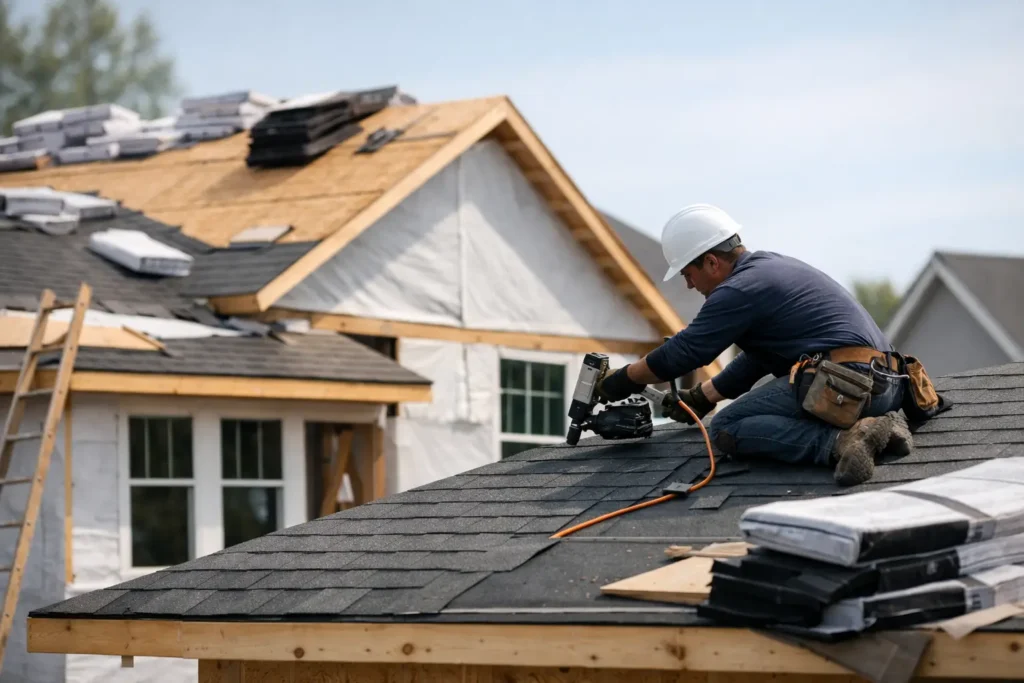
Building a new home in East Texas means making a hundred decisions fast, and the roof is one of the few that will affect your comfort, insurance, energy use, curb appeal, and repair costs for decades. Roof installation for new home construction is not just about picking a color and waiting for crews to show up. It is about choosing a system that can handle heat, wind, rain, hail, and the day-to-day wear that comes with our weather.
A lot of homeowners assume the roof decision is simple because it happens near the end of the build. In reality, the right roof starts with planning long before the final shingle or panel goes on. If the material, ventilation, flashing, and installation details are not handled correctly, problems can show up early – and they usually show up when the weather gets rough.
Why roof installation for new home projects deserves real attention
A new roof has one job above all else: protect the structure underneath it. But on a new build, it also has to work with the home design, the attic ventilation plan, the local code requirements, and your long-term budget. That is why the cheapest option on paper is not always the best value.
In East Texas, roofing decisions are shaped by climate. Long periods of sun can wear materials down over time. Storm season can test every seam, fastener, valley, and flashing point. High humidity can make poor ventilation more than a comfort issue. It can shorten the life of the roof system and affect the attic space below it.
This is where experience matters. A good contractor is not only installing materials. They are helping make sure the full roofing system is built correctly from the deck up.
Choosing the right roofing material for a new home
For most new homes, the conversation usually starts with shingles or metal. Both can be strong choices, but they serve homeowners differently.
Asphalt shingles remain popular because they are cost-effective, widely available, and flexible in style. They work well on many home designs and give homeowners a broad range of color options. If budget matters but you still want dependable protection and solid curb appeal, shingles are often the practical place to start.
Metal roofing appeals to homeowners who want longer service life, strong storm performance, and a clean, modern look. It can also make sense for rural properties, homes with certain architectural styles, and owners who are thinking long term. The upfront price is usually higher, so the decision often comes down to how long you plan to stay in the home and how much value you place on durability.
There is no one-size-fits-all answer. A family building a starter home may prioritize affordability and appearance. A homeowner building their forever home may lean toward metal for longevity. The right recommendation depends on budget, style, roof pitch, and local weather exposure.
The parts of a roof system that matter most
Homeowners often focus on the visible material, but the visible layer is only part of the system. Good roof installation for new home construction depends on what is happening underneath and around the edges.
The roof deck has to be sound and properly prepared. The underlayment matters because it adds a layer of moisture protection under the finished roofing material. Flashing around chimneys, walls, valleys, vents, and penetrations has to be installed carefully because those areas are common leak points. Ventilation has to be balanced so heat and moisture can move through the attic as intended.
Even the best-looking roof can fail early if these details are rushed. That is why workmanship matters just as much as product selection. A roof is only as reliable as the way it is installed.
What to expect during the installation process
On a new build, roofing usually happens after framing and sheathing are complete, but before the home is fully finished inside. Timing matters because roofing crews are often working alongside the broader construction schedule. If communication breaks down between trades, delays and avoidable issues can follow.
A professional roofing process should start with clear planning. That includes reviewing the roof design, confirming material selection, measuring properly, ordering enough product, and checking that the deck and structure are ready. Once installation begins, crews should work in a way that protects both the structure and the job site.
Weather can affect timing, especially in East Texas. Rain delays happen. High winds can slow work. That does not mean the project is off track. It means the contractor should be honest about schedule changes and protect the exposed structure until work resumes.
After installation, the roof should be inspected for workmanship, cleanup, and completion. On a new home, this is the time to make sure details were not overlooked before everything else moves forward.
Common mistakes homeowners make on a new roof
One of the biggest mistakes is treating the roof as a line item instead of a major system. People spend months thinking about flooring, countertops, paint, and fixtures, then rush the roof decision because it is less visible from the inside. That can lead to regretting the choice later.
Another common mistake is comparing bids based only on price. Two roofing proposals can look similar while including very different materials, warranty terms, ventilation plans, or flashing details. If one estimate is far lower than the others, there is usually a reason.
Homeowners also sometimes assume the builder’s standard package is good enough without asking questions. Sometimes it is. Sometimes it is the bare minimum. Ask what underlayment is included, what ventilation is planned, what material options are available, and who is standing behind the workmanship.
How to think about budget without cutting the wrong corners
Every new build has budget pressure. That is normal. The goal is not to spend the most. The goal is to spend wisely where performance matters.
If the budget is tight, it may make sense to choose a reliable shingle system with proper installation rather than stretching for a premium material installed by the wrong crew. A well-installed midrange roof will usually outperform a poorly installed high-end roof. That is one of the most important trade-offs to understand.
At the same time, some upgrades are worth serious consideration. Better impact resistance, stronger wind ratings, improved underlayment, and solid ventilation can make a real difference in East Texas. The best value often comes from investing in the parts of the roof you cannot afford to have fail.
Financing can also help homeowners avoid false economy. When a small monthly difference allows you to choose a stronger system with better long-term performance, that may be the smarter move than settling for the cheapest possible option.
Questions to ask before signing for roof installation for new home construction
Before approving the roofing portion of your build, make sure you know who is doing the work and what is actually included. Ask what material is being installed, what underlayment is used, how ventilation is being handled, what warranty covers workmanship, and how cleanup and final inspection will be handled.
It is also smart to ask how the contractor addresses storm-related concerns common in this area. East Texas homes need roofing systems built with local weather in mind, not generic recommendations copied from another region.
If you are comparing contractors, pay attention to how they communicate. Do they explain the job clearly? Do they answer questions directly? Do they act like they are protecting your investment, or just trying to close the job? A roof company should make you feel informed, not pressured.
Why local experience makes a difference
A contractor who knows East Texas understands more than installation basics. They understand how heat cycles, sudden storms, and regional building expectations affect roofing choices. They also know that homeowners want more than a roof that looks good on move-in day. They want one that holds up.
That is why many property owners prefer working with a local company that responds quickly, explains the process honestly, and stands behind the work after the project is complete. Spartan Exteriors is built around that approach – doing the job right, communicating clearly, and treating every home like it matters, because it does.
When you are building a home, there is pressure to keep the project moving. That is real. But the roof is not the place to rush blind. Ask better questions, look past the surface, and choose a system that matches your home, your budget, and the weather it will have to face for years to come. A strong roof lets the rest of your home do what it was built to do – protect the people inside.