
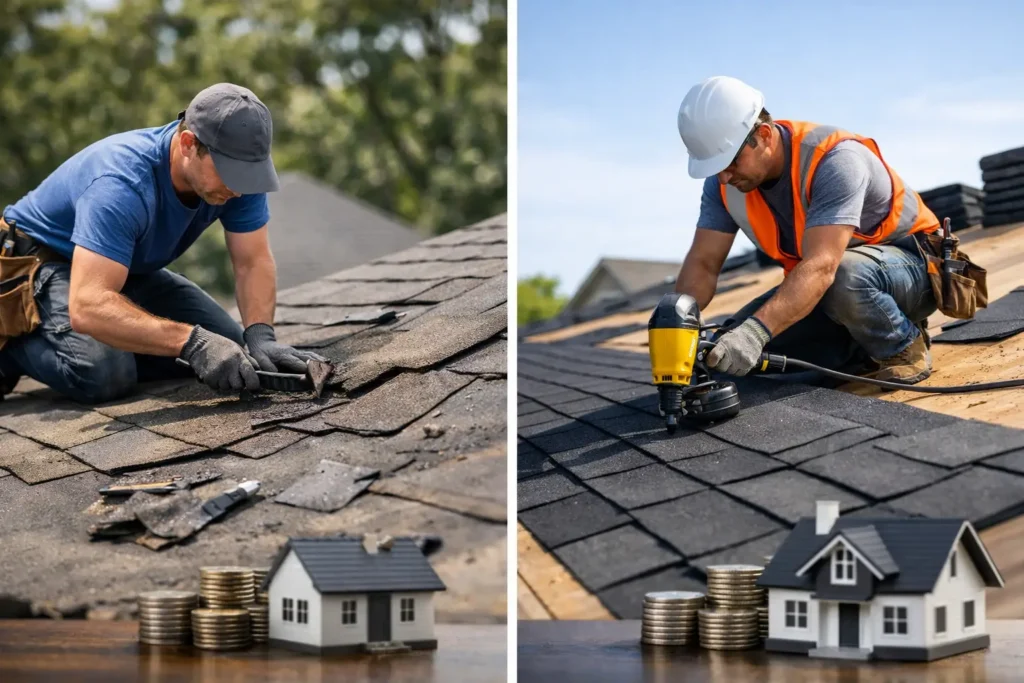
A roof leak rarely shows up at a convenient time. It hits after a storm, during a busy workweek, or right when you’re trying to avoid a major expense. That is why roof repair vs replacement is one of the biggest decisions a property owner can face. The right answer depends on what caused the damage, how far it has spread, how old the roof is, and whether a repair will truly solve the problem or just buy a little time.
For homeowners and business owners in East Texas, that decision matters even more. Between high heat, heavy rain, hail, and wind-driven storms, roofs here take a beating. A quick patch can be the smart move in some cases. In others, it turns into repeat service calls, interior damage, and more money spent chasing a roof that has already reached the end of its useful life.
How to Think About Roof Repair vs Replacement
The simplest way to look at it is this. Repair makes sense when the problem is limited and the rest of the roof is still in solid condition. Replacement makes sense when the roof system is worn out, broadly damaged, or no longer dependable.
That sounds straightforward, but roofs do not fail in neat categories. A missing section of shingles after a wind event may be a clean repair. A leak around a vent pipe may only need flashing work. On the other hand, if that same roof has brittle shingles, granule loss, soft decking, and signs of repeated patching, the visible problem may only be a small part of a much bigger issue.
A trustworthy contractor should be willing to tell you both sides. If a repair will give you real value, that should be said clearly. If a repair is only temporary and replacement is the smarter long-term move, you deserve to hear that too.
When Roof Repair Usually Makes Sense
Roof repair is often the better option when damage is recent, isolated, and easy to trace. That could mean a few shingles lifted by wind, flashing that pulled away around a chimney, or a small puncture from debris. If the roof is still within a reasonable age range and the surrounding materials remain sound, a targeted repair can restore protection without the cost of a full reroof.
Repairs also make sense when storm damage is limited to one area and the rest of the system is performing well. In those cases, fast action matters. A small opening in the roof can let in water that damages insulation, drywall, framing, and electrical components. Fixing the roof quickly can prevent a much larger restoration bill inside the home or building.
For commercial properties, repair can be especially practical when a membrane or silicone system has a localized issue rather than widespread failure. The key is proper diagnosis. You do not want someone treating symptoms while moisture keeps moving below the surface.
Signs a Repair Is Probably Enough
A repair is more likely to be worthwhile when the roof is under 10 to 15 years old, the leak source has been identified, damage is confined to one section, and there are no signs of underlying structural deterioration. Matching materials also matters. If replacement shingles or panels can integrate well with the existing roof, the result is usually cleaner and more cost-effective.
That said, even a good repair has limits. If you are repairing one side today and another side six months from now, the savings can disappear fast.
When Replacement Is the Smarter Investment
There comes a point when repairs stop being protective and start becoming expensive delays. If your roof has widespread wear, multiple leak points, sagging areas, repeated storm damage, or clear age-related breakdown, replacement is usually the better financial decision.
This is especially true when water has already worked into the decking or support structure. Roofing materials are only one layer of the system. Once moisture gets deeper, you may be dealing with rot, mold, weakened decking, or insulation damage. At that stage, patching the top layer does not fully address the problem.
Replacement also gives you a chance to improve performance. Many East Texas property owners move from older, worn shingles to more durable systems with better wind resistance, better curb appeal, or longer-term value. Commercial owners may choose a more energy-efficient roofing system that reduces maintenance and holds up better under standing water and sun exposure.
Common Signs You Are Past the Repair Stage
If shingles are curling, cracking, or losing large amounts of granules, that is a warning sign. If you see staining on ceilings in more than one room, repeated leaks after past repairs, soft spots when walking the roof, or visible sagging, it is time to seriously consider replacement. The same goes for roofs approaching the end of their expected lifespan. Even if the leak seems small, old roofing materials become less reliable across the board.
An honest inspection should answer a simple question: are you fixing a specific issue, or are you trying to extend the life of a system that is already failing?
Cost Is Important, but So Is Timing
A lot of people frame this choice around upfront price alone. That is understandable. Repair usually costs less today than replacement. But the lower invoice is not always the lower overall cost.
If a repair adds several solid years of service, it may be the right call. If it adds only a few months before the next leak or emergency visit, it can become money spent twice. This is where timing matters. Replacing a roof before severe interior damage occurs can save thousands in drywall, flooring, insulation, and business interruption.
There is also the insurance factor. After major storm events, documenting damage early can make a big difference. Some losses may support a broader claim, while others may not. A contractor experienced in storm response can help property owners understand whether the damage appears isolated or extensive enough to justify a larger scope.
Age, Materials, and East Texas Weather
Roofing decisions are never made in a vacuum. In East Texas, weather patterns can shorten the life of a roof that already has weak spots. Heat bakes shingles. Humidity holds moisture where it should not be. Hail bruises materials in ways that are not always obvious from the ground. Strong winds can loosen shingles, ridge caps, and flashing long before a visible leak appears.
Material type matters too. Asphalt shingles, metal roofing, and commercial silicone systems each age differently and fail in different ways. A metal roof with a fastening issue may be very repairable. An older shingle roof with widespread granule loss may not be. Commercial flat roofs can hide moisture under the surface, so what looks minor can turn out to be broader than expected.
That is why a real inspection matters more than guesswork. Photos from the ground or a quick glance in the attic only tell part of the story.
The Best Decision Starts With an Honest Inspection
The biggest mistake property owners make is waiting too long because they hope the problem stays small. The second biggest mistake is accepting a one-size-fits-all recommendation from someone more interested in selling than solving.
You need a clear assessment of the roof’s current condition, the likely remaining lifespan, the extent of the damage, and the pros and cons of repair versus replacement. A good contractor will explain what they found in plain language, show where the issues are, and tell you what is urgent versus what can be planned.
That kind of guidance matters whether you own a family home in Tyler, a mobile home outside town, or a commercial building with a low-slope system. The right path is not always the cheapest today or the biggest project on paper. It is the option that protects your property, fits the roof’s actual condition, and gives you confidence that the job was done right the first time.
If you are stuck between repairing and replacing, do not make the call based on hope. Make it based on the roof you actually have, the weather it has been through, and what will truly protect your property next season, not just next week.