
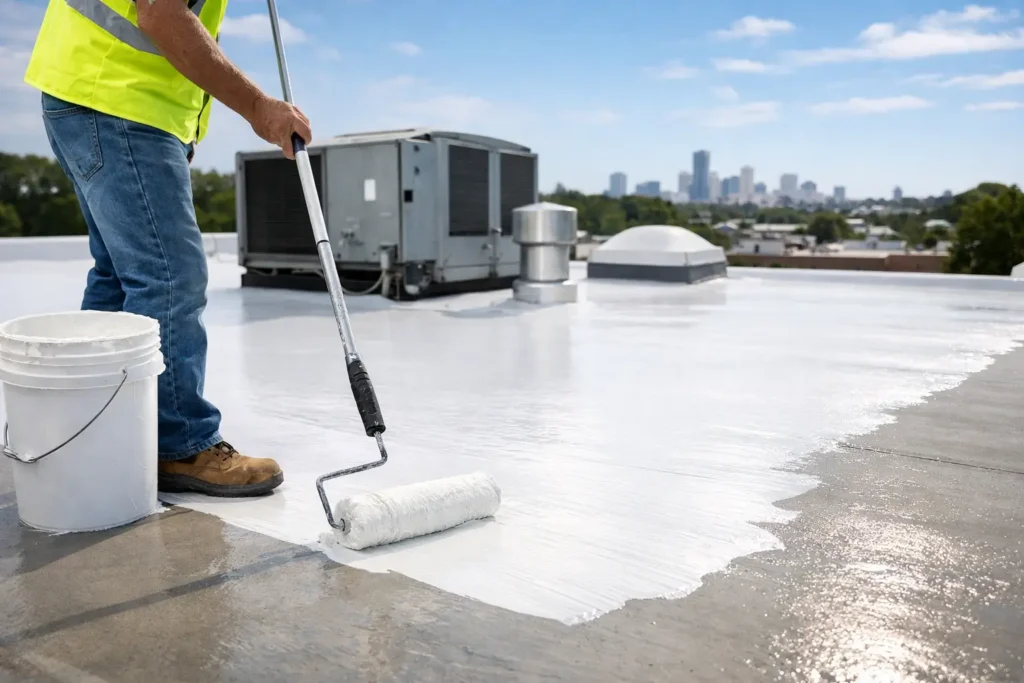
A commercial roof usually does not fail all at once. It starts with ponding water near a drain, small cracks around penetrations, or a leak that keeps coming back after patchwork repairs. That is why silicone roof coating benefits matter to property owners who want a practical fix before roof problems turn into business disruptions and major replacement costs.
For many commercial buildings, a silicone coating is not just a stopgap. It can be a smart restoration option that adds protection, extends service life, and helps you get more value from the roof you already have. The key is knowing where silicone performs well, where it has limits, and whether your current roof is a good candidate.
Why silicone roof coating benefits stand out
Silicone roof coatings are liquid-applied systems designed to create a protective membrane over an existing commercial roof. Once cured, that coating forms a flexible, water-resistant surface that helps defend the roof from sun exposure, weather, and ongoing wear.
What makes silicone different from some other coatings is how well it handles standing water. In East Texas, where heavy rain and storm activity can put a lot of stress on low-slope commercial roofs, that matters. A roof that holds water after a storm needs more than a cosmetic treatment. It needs a system that can keep protecting the surface even when drainage is not perfect.
That does not mean silicone is right for every roof. Proper prep work, repairs, and product selection still matter. But when the roof is a good candidate, the performance advantages are real.
1. Strong resistance to ponding water
One of the biggest silicone roof coating benefits is resistance to ponding water. Many commercial roofs develop low areas over time. Water may sit there for a day or two after rain, and some coating systems break down faster under those conditions.
Silicone tends to hold up better than many alternatives when standing water is part of the picture. That can make a major difference on aging flat or low-slope roofs that are still structurally sound but vulnerable at the surface. If your building has recurring trouble spots near drains, seams, or HVAC units, this is often the first reason silicone gets serious consideration.
It is still better to improve drainage where possible. A coating should not be used to ignore major slope or structural problems. But if ponding is part of your roof’s real-world condition, silicone can be a more forgiving option.
2. Excellent UV protection in hot weather
East Texas heat is hard on roofing materials. Constant UV exposure dries out surfaces, accelerates aging, and can cause cracking, chalking, and loss of flexibility over time.
Silicone coatings do a strong job reflecting sunlight and reducing UV damage. That protection helps slow the breakdown of the existing roof membrane underneath. On roofs that are still serviceable but showing weather-related wear, that extra layer can buy valuable time.
A reflective coating may also help reduce rooftop temperatures, which can ease some heat load on the building. Energy savings vary based on insulation levels, building use, roof color, and HVAC efficiency, so it is best not to overpromise. Still, lower surface temperatures are a meaningful benefit, especially during long Texas summers.
3. Extended roof life without a full tear-off
Replacing a commercial roof is expensive, disruptive, and sometimes unnecessary. If the roof deck and underlying system are still in decent shape, restoration may be the better move.
This is where silicone roof coating benefits become especially attractive. A properly installed coating system can extend the life of an existing roof by adding a fresh layer of protection over vulnerable surfaces. That can delay full replacement and give property owners more time to plan capital expenses instead of reacting under pressure.
For many businesses, that matters just as much as the material performance. A coating project is often less disruptive than a tear-off, with less mess and less interruption to daily operations. If your goal is to protect the building while controlling costs, restoration deserves a serious look.
4. Fewer leak paths on the roof surface
Commercial roofs often leak at seams, flashing details, penetrations, and transition points. Every joint or exposed area creates another opportunity for water to get in.
A silicone coating can help by creating a continuous membrane across the roof surface. That added layer covers many of the weak points where water intrusion tends to start. Around vents, curbs, and other roof details, reinforcement and proper detailing are still critical, but the end result is often a more unified, water-resistant system.
This does not mean a coating can fix every active leak by itself. Wet insulation, open seams, damaged flashing, and substrate issues need to be addressed before coating begins. The best results come from a contractor who treats the project like a restoration system, not just a spray-and-go job.
5. Lower maintenance demands over time
Every commercial roof needs inspections and maintenance. No system is maintenance-free. But silicone coatings can reduce the frequency and severity of common surface issues when they are installed correctly.
Because silicone resists weathering and moisture well, the roof may need fewer recurring patch repairs compared with an aging uncoated system. That can help owners move from constant reactive maintenance to a more predictable inspection schedule.
The trade-off is that silicone can attract dirt over time, which may reduce reflectivity. In some cases, periodic cleaning or recoating may be needed to keep the system performing at its best. That is normal. The goal is not zero upkeep. The goal is a roof that is easier and less costly to maintain than one that is already breaking down.
6. Good fit for many existing commercial roof types
Another one of the practical silicone roof coating benefits is versatility. Silicone can often be applied over several types of existing commercial roofing systems, assuming the roof is dry, stable, and properly prepared.
That makes it useful for owners who want options. Instead of assuming replacement is the only path forward, you may be able to restore the current roof if inspection shows the substrate is still viable. This is especially helpful for buildings with large roof areas, where replacement costs can rise quickly.
Compatibility is not automatic, though. Surface prep, adhesion testing, moisture checks, and repair work all matter. If the roof has trapped moisture, serious deterioration, or structural issues, a coating may not be the right answer. An honest inspection should come before any recommendation.
7. Better budget control for property owners
Most property owners are balancing roof needs against everything else their building requires. If you can solve a roofing problem without jumping straight to a full replacement, that changes the financial conversation.
A silicone coating system often costs less upfront than a complete tear-off and replacement. It may also reduce labor, disposal, and disruption costs. For business owners, facility managers, and commercial property owners, that can make roof restoration a practical way to protect the asset while preserving cash flow.
That said, lower upfront cost should not be the only reason to choose silicone. If the roof is too far gone, coating over serious problems only delays the real repair. The right question is not whether a coating is cheaper. It is whether it is appropriate for the roof in its current condition.
When silicone coating is a smart choice
Silicone is often a strong fit when a commercial roof has surface wear, minor leak history, UV damage, or ponding-water concerns, but the underlying system still has life left in it. It is also worth considering when the owner wants to avoid the cost and downtime of a full replacement.
In storm-prone areas like Tyler and surrounding East Texas communities, coatings can also make sense as part of a broader roof restoration plan after weather exposure. A roof that has taken a beating from heat, rain, and debris may still be restorable if the damage is caught early.
The key is condition, not age alone. Some older roofs are still good candidates. Some newer roofs are not. Inspection tells the truth.
What to watch out for before you move forward
Not every contractor approaches coatings the same way. The success of a silicone system depends heavily on surface preparation, repairs, application rates, and attention to detail around penetrations and edges.
If a roof has saturated insulation, loose sections, major structural movement, or severe membrane failure, coating may not solve the core problem. It is also important to set realistic expectations. A coating is a restoration solution, not magic. It performs best when matched to the right roof and installed the right way.
That is why property owners should look for clear answers, not sales pressure. You want to know what condition the roof is in, what repairs are needed first, how the coating will be applied, and what kind of warranty support comes with the work.
For commercial property owners who need straight guidance, silicone can be one of the most cost-effective ways to protect a roof that still has useful life left. The right next step is not guessing from the ground – it is getting the roof inspected by a contractor who will tell you the truth about whether restoration or replacement makes more sense for your building.