
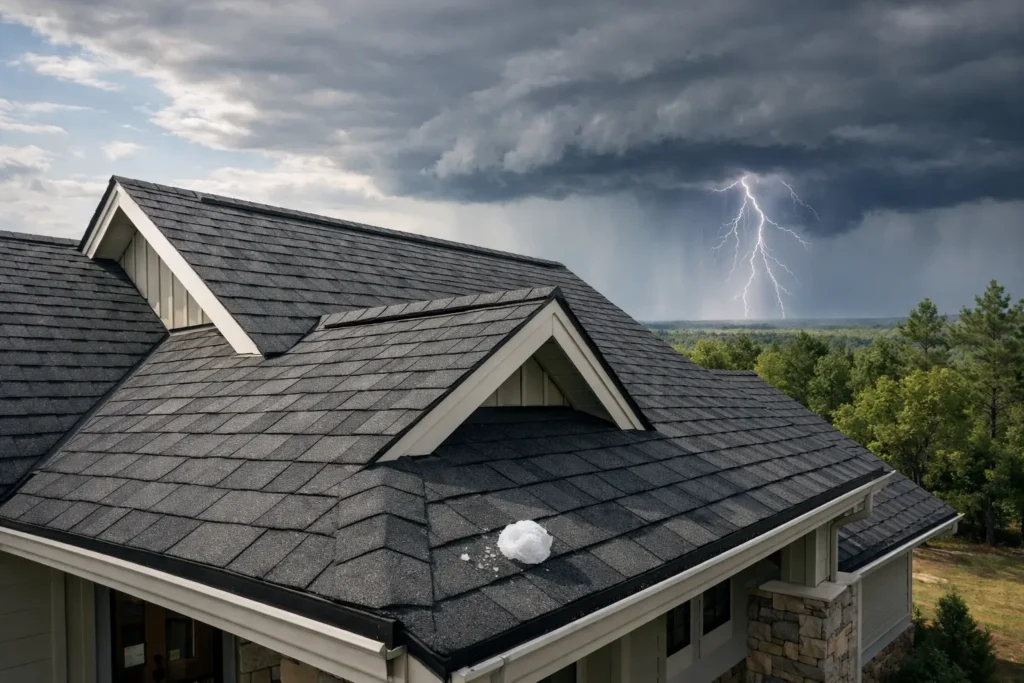
A storm can turn a small roofing weakness into a living-room leak in one hard afternoon. In East Texas, wind-driven rain, hail, falling limbs, and sudden severe weather put every part of a roof to the test. Storm resilient roofing is not one product or a promise that a roof will never be damaged. It is a system of smart material choices, sound installation, regular maintenance, and quick action when weather exposes a problem.
For homeowners and property owners, the goal is straightforward: reduce the chances that a storm turns into expensive interior damage, disruption, and a difficult insurance claim. The right roof should protect the building when conditions get rough, while also fitting the structure, budget, and long-term plans for the property.
What Makes Storm Resilient Roofing Different?
A roof does more than shed water on a calm day. During a storm, it must resist uplift from high winds, deflect hail impact, keep wind-driven rain from reaching the deck, and move water safely into gutters and away from the structure. If one part of that system fails, water can travel beneath the surface before it becomes visible indoors.
That is why the shingles or metal panels you see from the street are only part of the conversation. Storm performance also depends on the roof deck, underlayment, flashing, ventilation, fasteners, roof penetrations, and the workmanship connecting it all. A premium material installed incorrectly can still fail early. A properly built roofing system gives each layer a clear job and makes sure those layers work together.
It also helps to be realistic about the trade-offs. No conventional roof is immune to a large falling tree or extreme hail. Storm resilience means building more protection into the areas most likely to fail and addressing small concerns before the next storm pushes them further.
Start With an Honest Roof Assessment
The best time to assess a roof is before water is dripping from the ceiling. Aging shingles, exposed nail heads, loose ridge caps, deteriorated sealant, soft decking, and damaged flashing can all become entry points during heavy rain. A professional inspection helps identify whether the roof needs maintenance, a targeted repair, or a full replacement.
Age matters, but it should not be the only factor. A newer roof may need repair after a hailstorm, while an older roof with no active damage may still have useful life remaining. The roof’s slope, drainage, prior repairs, attic ventilation, surrounding trees, and material condition all affect the recommendation.
Property owners should be cautious of anyone who decides on a full replacement from the driveway. Clear photos, a plain-language explanation of the damage, and an itemized scope give you a better basis for making a decision. When a storm has passed through, documentation also gives your insurance claim a stronger starting point.
Choose Materials for Your Property and Local Weather
There is no single best roofing material for every East Texas property. The right choice depends on your building, budget, desired appearance, maintenance expectations, and the risks around your home or business.
Impact-Resistant Shingles
Architectural shingles remain a practical choice for many homes because they offer dependable protection, broad color options, and a familiar appearance. For properties that see frequent hail exposure, impact-resistant shingle options can be worth considering. These products are designed to better withstand impacts than standard shingles, though performance depends on the specific product rating and proper installation.
They usually cost more up front, and the added cost may not be necessary for every roof. Still, homeowners who have dealt with recurring hail claims or want greater peace of mind may find the investment worthwhile. Check with your insurance carrier as well, since coverage and potential discounts vary by policy.
Metal Roofing
Metal roofing is a strong option for homeowners, mobile homeowners, and commercial buildings looking for long service life and reliable wind performance. Properly specified metal panels can shed rain quickly and resist many of the problems associated with aging shingle surfaces.
The details matter here. Panel type, gauge, fastening pattern, trim, underlayment, and installation around valleys and penetrations all affect performance. Metal may also involve a higher initial investment and can show cosmetic dents after severe hail even when it remains watertight. That distinction is worth discussing before selecting a system.
Commercial Silicone Roofing
For many low-slope commercial roofs, silicone roofing can provide a durable, seamless coating solution over a suitable existing roof. It is particularly useful where standing water, UV exposure, and ongoing maintenance have challenged the current surface. A coating is not a shortcut for a roof with widespread wet insulation, failed decking, or major structural concerns. The roof must be inspected and prepared correctly for the system to perform as intended.
Installation Details That Carry the Load
A storm-ready roof is built in the details homeowners rarely see after the job is finished. Underlayment provides a critical secondary barrier beneath the primary roofing material. In vulnerable areas, enhanced waterproofing protection can help defend against water that gets past the outer surface during wind-driven rain.
Flashing deserves special attention. Chimneys, skylights, valleys, walls, plumbing vents, and other transitions are common leak locations because they interrupt the roof plane. Flashing should be properly integrated with the surrounding roof system, not covered with excessive sealant and treated as a permanent fix.
Fasteners matter just as much in high winds. Whether a roof uses nails, screws, or specialized attachment methods, the correct placement and quantity help the roofing material stay attached when wind pressure rises. Good ventilation also supports the system by managing attic heat and moisture, which can shorten material life and create problems that are easy to mistake for a roof leak.
Protect the Roof Before Storm Season
Storm preparation does not have to be complicated, but it should be consistent. Keep gutters and downspouts clear so water does not back up at the roof edge. Trim dead or overhanging limbs with help from a qualified tree professional when needed. Look from the ground for lifted shingles, missing pieces, sagging areas, or debris collecting in valleys.
Inside the property, check the attic after heavy rain for damp insulation, stained decking, or daylight where it should not be. Catching a small problem early can mean the difference between a straightforward repair and damaged ceilings, insulation, flooring, or inventory.
After a storm, avoid climbing onto the roof yourself. Wet surfaces, loose materials, and hidden structural damage create real hazards. Take photos from the ground if it is safe to do so, protect the interior with buckets or tarps as needed, and arrange a professional inspection. If water is actively entering the building, emergency roof repair should be addressed quickly to limit the damage.
When Insurance May Be Part of the Process
Storm damage claims can feel overwhelming, especially when you are trying to protect your home or keep a business open. Start by reviewing your policy and reporting damage promptly when appropriate. Keep photos, inspection notes, receipts for emergency mitigation, and records of conversations related to the claim.
A qualified roofing contractor can document visible storm-related damage, explain the recommended scope, and help you understand the repair process. The contractor should not pressure you to sign unclear paperwork or promise an outcome that only your insurer can determine. Honest documentation and clear communication serve property owners far better than gimmicks.
At Spartan Exteriors, the focus is on helping East Texas property owners understand what happened to their roof, what needs attention, and what the next step should be. Whether the answer is a repair, replacement, or a commercial roofing solution, you deserve clear information and workmanship that stands behind the work.
When the forecast starts turning, a roof is not the place to gamble on loose shingles, old flashing, or unanswered questions. A timely inspection gives you the chance to strengthen the system while the repair is still on your terms.