
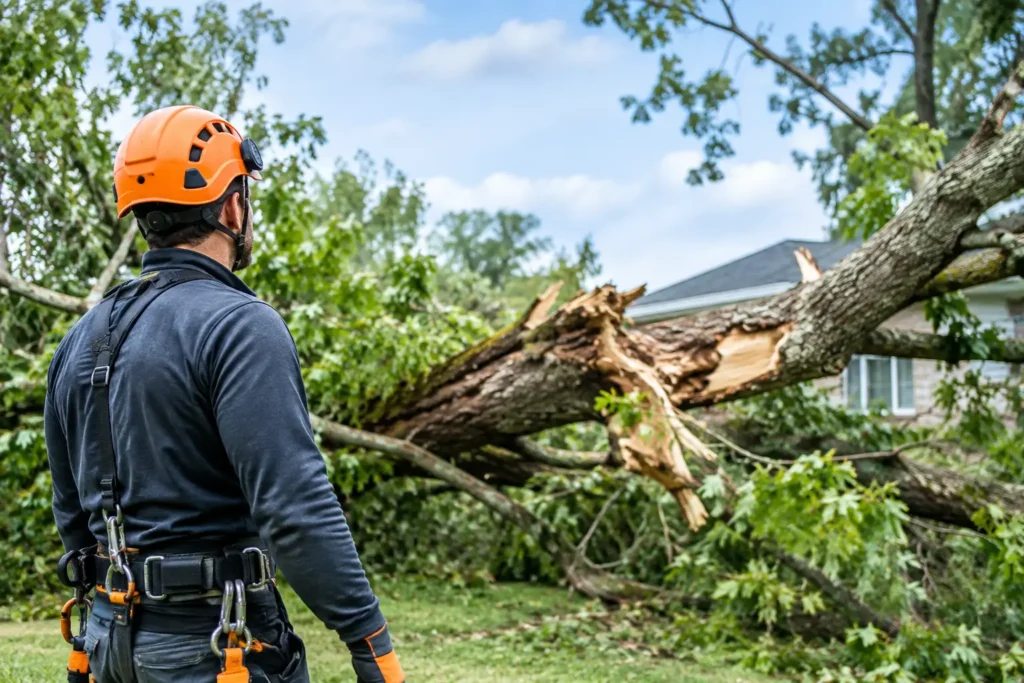
A tree does not have to come all the way through the roof to create a serious problem. A heavy limb can crush shingles, pull gutters loose, crack decking, dent siding, or leave a small opening that lets water travel into your attic and walls. Proper tree damage restoration starts with protecting people first, then finding every part of the exterior affected by the impact.
For homeowners and property owners in East Texas, speed matters after a storm. But moving too fast without a clear plan can make a stressful situation worse. The right response is safe, documented, and focused on lasting repairs instead of a quick cosmetic patch.
Start With Safety, Not Cleanup
If a tree or large limb is resting on your roof, stay out of the damaged area. Do not climb onto the roof, pull branches away, or try to cut the tree yourself. The weight may be holding damaged materials in place, and one wrong move can cause part of the roof to collapse. Downed power lines, unstable limbs, and wet surfaces add another level of risk.
Keep family members, employees, pets, and vehicles clear of the area. If there is an immediate electrical hazard, a gas smell, a sagging ceiling, or water entering near electrical fixtures, contact the appropriate emergency service or utility provider before anyone begins work.
A qualified tree professional should handle hazardous tree removal. Once the tree has been safely removed, an exterior contractor can inspect the structure beneath it. This order matters. Repairs should not begin until the damaged roof, gutters, siding, windows, and surrounding materials can be fully seen.
What Tree Damage Restoration Should Include
A visible hole or broken shingle is only part of the picture. A thorough inspection looks for impact damage that may not be obvious from the ground. On a roof, that can include fractured decking, bent or broken rafters, damaged underlayment, torn flashing, displaced vents, and loosened fasteners. Even if shingles appear mostly intact, the force of a fallen limb can create weak spots that lead to leaks later.
The same impact can affect more than the roof. Gutters may be twisted away from the fascia. Siding can crack or pull loose at corners. Windows may have broken seals or cracked frames. A branch that scraped across the exterior can remove paint and expose wood to moisture, which creates a different repair need than a direct puncture.
Inside the property, look for new water stains, damp insulation, bubbling paint, soft drywall, or a musty odor. These signs do not always appear immediately. Water can move along framing and show up several feet from the original entry point. That is why a careful inspection should connect exterior damage with what is happening inside the building.
Take Photos Before Temporary Repairs Begin
Documentation can make the insurance process much clearer. Before debris is moved, take wide photos that show the tree, the damaged area, and the overall property. Then take closer photos of broken shingles, damaged gutters, cracked siding, punctures, and any interior water intrusion. If it is safe, capture photos from multiple angles.
Keep notes about the date and time of the storm, when you discovered the damage, and any temporary steps taken to protect the property. Save receipts for reasonable emergency measures, such as tarping or water removal. Avoid throwing away damaged materials until your insurer or contractor advises you to do so.
Insurance coverage depends on the cause of loss, the condition of the property, the policy, and the specific damage found. A storm-related fallen tree may be handled differently than a tree that failed because of neglect or long-term decay. Clear photos, a detailed inspection, and a straightforward scope of work give you better information to discuss with your insurance carrier.
Protect the Roof From More Water
After a tree impact, temporary protection is often needed before permanent repairs can be made. A professional tarp can reduce the chance of rain entering an exposed roof area, but it is not a repair. Tarps can shift in wind, collect water, or hide damage beneath them, so they should be checked and replaced as needed.
The goal is to stop additional damage without creating new problems. Driving fasteners through undamaged shingles, using loose plastic sheeting, or placing heavy objects on the roof can make a bad situation worse. A proper temporary cover should be installed with the roof’s slope, drainage path, and damaged materials in mind.
If water has entered the attic or interior, drying is just as important as covering the roof. Wet insulation loses effectiveness, and trapped moisture can affect wood framing, drywall, and indoor air quality. The longer moisture remains, the more expensive the restoration may become.
Decide Between Repair and Replacement
Not every tree strike requires a complete roof replacement. A localized impact on a newer roof may be repairable if the decking, underlayment, flashing, and surrounding shingles can be restored without compromising the system. Matching existing shingles can be a factor, especially when a roof has faded from years of Texas sun.
Replacement becomes more likely when damage is widespread, structural components are affected, or the existing roof was already near the end of its service life. A patch on an aging roof can solve the immediate opening while leaving the property vulnerable to the next heavy rain. That does not automatically mean replacement is the only answer, but it should be part of an honest conversation.
Commercial properties require the same careful judgment. A puncture in a low-slope roof can allow water to spread beneath the membrane before it becomes visible indoors. Repairing the surface without checking insulation, seams, drains, and underlying materials may leave hidden moisture behind.
Look Beyond the Roof Line
Tree damage often creates a chain reaction around the exterior. When gutters are pulled loose, water can spill near the foundation or soak fascia boards. When siding is cracked, wind-driven rain can reach the wall assembly. When a window is struck, even a small frame gap can affect energy efficiency and allow moisture into the wall.
A complete restoration plan should address these connected components. That may include roof repair or replacement, gutter reattachment, fascia and soffit repair, siding replacement, exterior painting, or window repair. The exact scope depends on the impact and the materials on your home or building.
This is where clear communication matters. You deserve to know what is emergency stabilization, what is direct storm damage, what was pre-existing wear, and what work is recommended to restore the property correctly. A contractor should explain those distinctions plainly, not bury them in vague language.
Choose a Contractor Who Can Document the Damage
After a storm, property owners are often pressured to make quick decisions. You do need prompt help, but you do not need high-pressure sales tactics. Look for a local contractor who will inspect carefully, provide a written scope, explain material options, and answer questions about the repair process before work begins.
Ask how the contractor handles emergency protection, insurance documentation, permits when required, and workmanship coverage. Confirm that the company is properly credentialed and insured. If structural damage is suspected, make sure the scope accounts for that work rather than simply covering the visible opening.
Spartan Exteriors helps East Texas property owners assess storm-related roof and exterior damage with clear communication, responsive service, and workmanship built to last. Whether the damage is limited to a few shingles or extends across several exterior systems, the goal should be the same: protect the property now and repair it the right way.
A Strong Recovery Starts With a Clear Plan
A fallen tree can make a home or business feel exposed in a matter of minutes. The best next step is not guessing at the damage or settling for the fastest patch available. Secure the area, document what happened, prevent additional water intrusion, and get a professional assessment of the full exterior system. A careful restoration plan gives your property the best chance to stand strong when the next East Texas storm rolls through.