
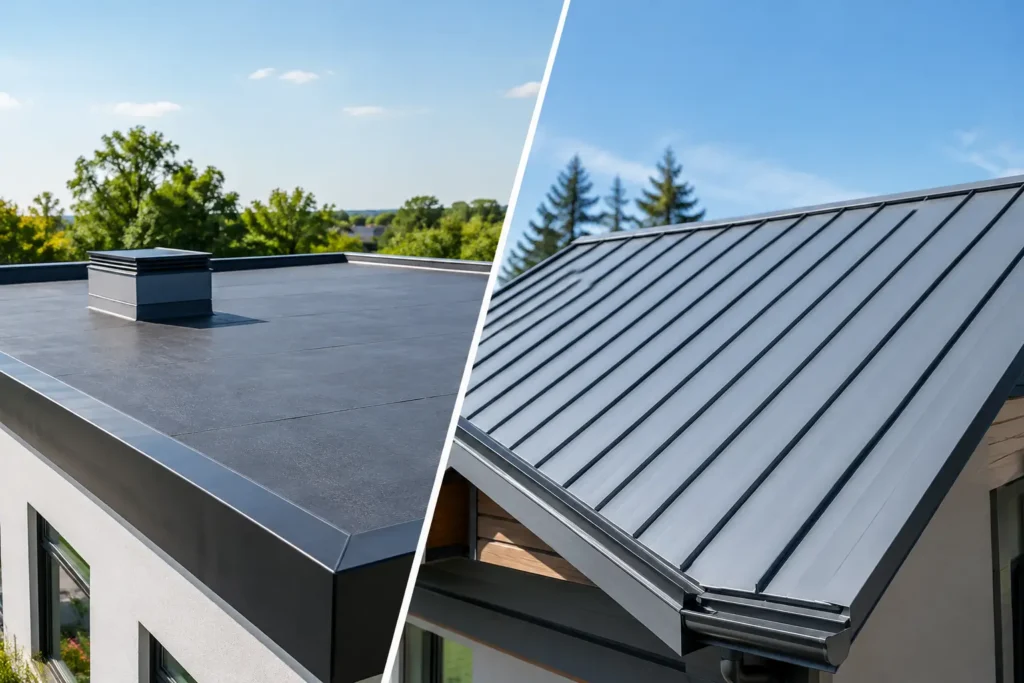
A roof choice can affect far more than curb appeal. It can determine how your property handles heavy rain, summer heat, wind-driven storms, future repairs, and long-term operating costs. When comparing flat roof vs metal roofing, the right answer depends on your building design, budget, drainage, and how long you plan to own the property.
For many East Texas property owners, a flat or low-slope system makes practical sense on commercial buildings, additions, and certain modern homes. Metal roofing is often the stronger fit for steep-slope residential roofs and owners who want a long service life. Both can perform well, but neither material can overcome poor design or careless installation. That is why the details matter from the first inspection through final cleanup.
Flat Roof vs Metal Roofing: Know What You Are Comparing
A “flat” roof is rarely perfectly flat. Most low-slope roofs are built with a slight pitch so water can move toward drains, scuppers, or gutters. These systems are commonly covered with materials such as modified bitumen, TPO, PVC, EPDM, or silicone coating systems. They are especially common on commercial properties because they cover wide roof areas efficiently and make it easier to place HVAC equipment.
Metal roofing usually refers to panels installed over a more noticeable slope. Standing seam panels, exposed-fastener panels, and metal shingles all fall under the metal roofing category, though their performance and price can vary significantly. On homes, metal can provide a clean appearance, strong weather protection, and decades of service when installed correctly.
The most useful comparison is not simply flat versus metal. It is low-slope roofing designed around drainage versus metal roofing designed around panel layout, flashing, movement, and wind resistance.
Drainage Is the Deciding Factor for Low-Slope Roofs
Water is the biggest concern on a flat or low-slope roof. A properly installed system should direct water off the roof without allowing it to sit in vulnerable areas for long periods. Ponding water can speed up material wear, expose weak seams, and turn a minor maintenance issue into an interior leak.
Before choosing a flat roofing system, look closely at the roof’s existing slope, drain locations, scuppers, gutters, and any low spots. If the structure has poor drainage, simply applying a new surface may not solve the real problem. Tapered insulation or targeted corrections may be needed to improve water flow.
Metal roofs shed water quickly because of their slope and panel design. That is a major advantage during the intense rain that can hit Tyler, Longview, Jacksonville, and surrounding East Texas communities. Still, metal roofing is not leak-proof by default. Flashings around chimneys, valleys, vents, skylights, and wall transitions must be installed with care. Water finds shortcuts when details are rushed.
Cost: Upfront Price Versus Long-Term Value
A low-slope roof can have a lower initial price than a premium standing seam metal roof, particularly on large commercial buildings. The final number depends on access, roof size, insulation needs, tear-off requirements, the condition of the existing deck, and how much drainage work is required.
Metal roofing usually costs more at installation, especially standing seam systems with concealed fasteners. That higher initial investment can make sense for a homeowner who plans to stay in the property for many years or for an owner who wants to reduce replacement cycles. A quality metal roof may last several decades, while most low-slope membranes require more frequent replacement or restoration planning.
Cost should never be judged by material alone. A cheap roof that requires repeated repairs, suffers storm damage, or leaks around neglected details is rarely a bargain. Ask for a clear scope that explains tear-off, decking repairs, underlayment or insulation, flashing, ventilation where applicable, drainage work, and warranty coverage. Clear documentation protects your budget before work begins.
Storm Performance in East Texas
East Texas roofs must stand up to heat, humidity, sudden downpours, hail, and strong winds. Each roofing type has strengths, along with vulnerabilities that property owners should understand.
Metal roofing performs well in high winds when the panels, clips, trim, and fasteners are installed according to the system requirements. It is also noncombustible and sheds rain efficiently. Hail can dent some metal panels, particularly thinner gauge products, although a dent does not always mean the roof is leaking or functionally damaged. The distinction between cosmetic and functional damage matters during an insurance inspection.
Flat roofing systems can perform very well in storms when seams, penetrations, edges, and drains are in good condition. On a large commercial roof, wind damage often starts at perimeter metal, corners, loose flashing, or aged seams. After a storm, water may enter through an opening that is difficult to spot from the ground. Prompt inspection helps prevent trapped moisture from spreading through insulation or decking.
No roof is maintenance-free after severe weather. Fallen branches, displaced metal, punctures, clogged drains, and granule or debris buildup deserve attention before the next rain arrives.
Maintenance Needs Are Different, Not Optional
A metal roof generally needs less routine maintenance than a low-slope roof, but it still needs periodic inspection. Check for loose fasteners on exposed-fastener systems, damaged sealant, loose trim, scratches that could lead to corrosion, and debris collecting in valleys or gutters. Standing seam systems have fewer exposed fasteners, but their flashings and penetrations still need attention.
Low-slope roofs benefit from a more regular maintenance schedule. Property owners should keep drains and scuppers clear, remove debris, watch for standing water, and inspect seams and penetrations after major storms. HVAC service crews also need to treat the roof carefully. A dropped tool, dragged equipment, or careless foot traffic can puncture certain membrane systems.
For commercial owners, planned maintenance is often the difference between a manageable repair and a disruptive leak over offices, inventory, or equipment. For homeowners with a low-slope section over a porch, addition, or patio, early repairs can protect the adjoining structure from hidden moisture damage.
Appearance and Building Use Matter
Metal roofing gives a home a distinct profile and comes in many colors and panel styles. It can suit ranch homes, farm-style properties, newer construction, and buildings where a clean architectural finish matters. Reflective finishes may also help manage heat gain, depending on color, insulation, attic conditions, and roof assembly.
Flat roofs are less visible from the ground, which can be an advantage for commercial buildings and modern residential designs. They also provide usable space for rooftop equipment and, in some cases, solar planning. Their simpler appearance should not be mistaken for a simple installation. Low-slope roofing requires exact attention to seams, transitions, penetrations, and drainage paths.
If your property includes both steep and low-slope sections, a combination approach may be best. For example, a building might use metal roofing on visible sloped areas and a membrane system on a low-slope rear section. Matching the system to each roof area is often smarter than forcing one material across every surface.
When Metal Roofing Is Usually the Better Fit
Metal roofing is often a strong choice when your roof has adequate slope, you want a long-lived system, and you value fast water shedding. It can be especially practical for homeowners replacing an aging shingle roof who want to make a long-term investment rather than plan for another replacement in a shorter period.
It is also a good option when wind resistance and low routine maintenance are high priorities. The key is selecting the right panel type and gauge for the property, rather than choosing based on color or the lowest estimate alone.
When a Flat Roofing System Makes More Sense
A low-slope system is the right solution when the building design calls for it. Commercial properties, warehouses, retail buildings, offices, and many additions cannot simply be converted to metal panels without major structural changes. A professionally installed membrane or coating system can provide dependable protection when drainage and details are handled correctly.
Roof coatings may also be worth considering when an existing low-slope roof remains structurally sound but needs renewed protection. A coating is not a shortcut for a roof with saturated insulation, widespread seam failure, or damaged decking. An honest inspection should determine whether restoration is appropriate or whether replacement is the safer investment.
Choose the Contractor Before You Choose the Color
The best material can still fail if it is installed over damaged decking, flashed poorly, or left with unresolved drainage problems. A trustworthy contractor should inspect the full roof system, explain what they found in plain language, and give you a scope that makes sense for your property. If storm damage is involved, photos and clear documentation can also make the insurance process easier to understand.
Spartan Exteriors helps East Texas homeowners and commercial property owners evaluate roof condition, storm damage, repair options, and replacement materials without gimmicks or pressure. The goal is to help you make a decision you can stand behind long after the crew leaves.
If you are weighing flat roof versus metal roofing, start with a professional assessment of the structure you have, not a guess based on what worked for another building. The right roof should fit your drainage, your property’s design, and the weather it will face year after year.