
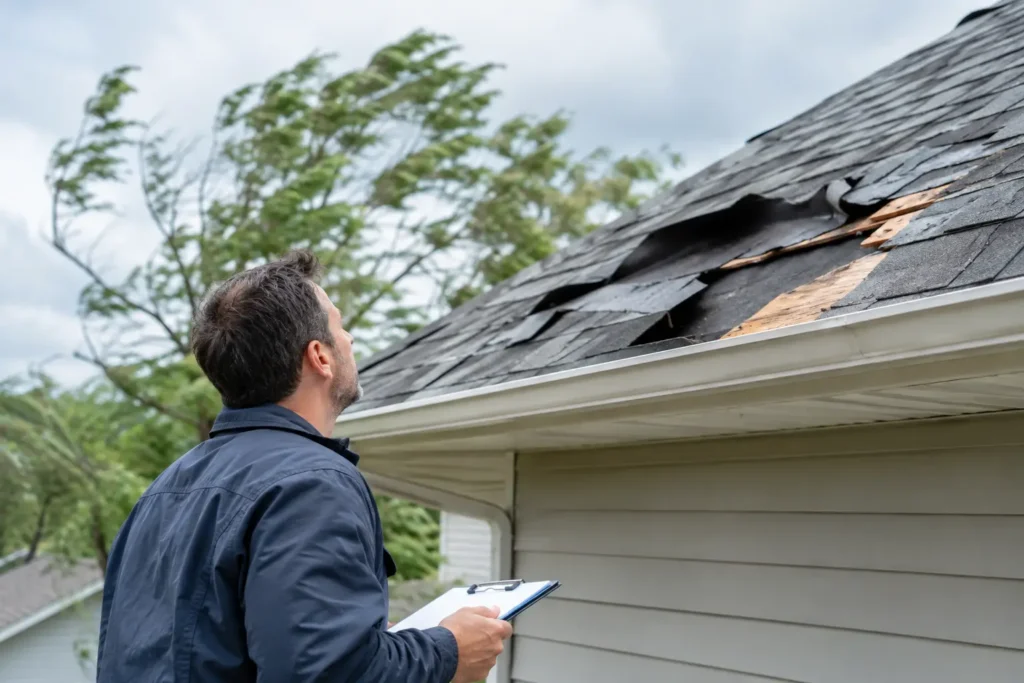
A hard East Texas storm can leave your property looking normal from the driveway while hidden damage is already letting water in. Learning how to identify wind damage early gives you a better chance to make a targeted repair, document the condition clearly, and prevent a small opening from becoming a costly leak.
Wind damage does not always look dramatic. Missing shingles and fallen limbs are obvious, but lifted flashing, loosened siding, dented vents, and compromised window seals can be just as serious. The safest approach is to inspect from the ground first, take clear photos, and call a qualified exterior contractor when something does not look right.
Start With Safety, Not a Ladder
After a storm, check for immediate hazards before inspecting the building. Stay clear of downed power lines, broken tree limbs under tension, and any roof area that appears sagging or unstable. If a branch has landed on the roof, do not try to pull it down yourself. Its weight may be holding damaged materials in place, and moving it can make the opening worse.
Walk the property slowly from the ground. Look at each slope of the roof you can see, then check gutters, siding, windows, doors, fences, and outdoor equipment. Take photos and short videos before moving debris or making temporary repairs. This creates a useful record of the storm condition and may help support an insurance claim.
If water is entering the building, protect the interior first. Move furniture, place containers under active drips, and use towels to limit spread. Do not puncture a bulging ceiling unless you understand the risks involved. Water, damaged drywall, and electrical wiring are a dangerous combination.
How to Identify Wind Damage on Your Roof
Your roof takes the greatest force during a wind event, especially along ridges, edges, valleys, and around vents. Wind can get underneath roofing materials and break their seal even when the shingles do not immediately blow away.
Missing, lifted, or creased shingles
Missing shingles are a clear sign of damage, but they are not the only concern. From the ground, look for uneven rows, dark bare spots, exposed underlayment, or shingles that appear raised at the edges. A lifted shingle may settle back down after the storm, but its seal can remain broken. That makes it more vulnerable during the next rain or gusty day.
Creased shingles are another common warning sign. When wind folds a shingle upward, it can leave a horizontal line or crack where the material bent. The shingle may still be present, yet it has lost part of its ability to shed water and resist future wind.
Granules in gutters or on the ground
Asphalt shingles shed some granules naturally as they age, so a small amount is not automatically storm damage. What matters is a sudden, noticeable accumulation after high winds or a patchy appearance on the roof. Granules often collect at downspout exits, in gutters, or near the foundation after a storm.
Heavy granule loss can expose the asphalt layer beneath the shingle. That speeds up wear from sun and rain and can shorten the roof’s service life. It is especially worth checking if your roof is older or had visible wear before the storm.
Damaged flashing, vents, and roof edges
Wind often finds weak points around metal components. Check for bent or lifted flashing around chimneys, walls, skylights, and pipe penetrations. Look at ridge vents, turbine vents, and box vents for loosened fasteners, dents, gaps, or missing caps.
The roof edge deserves close attention because wind pressure is strongest there. Drip edge metal that is lifted or separated can allow water to work behind the roofing system. These details may look minor, but they are often where leaks begin.
Interior signs that point to roof damage
A roof problem may show up indoors before it is easy to see from outside. Check ceilings and attic spaces for fresh water stains, damp insulation, dripping, peeling paint, or a musty odor. Brown rings on a ceiling are not always from a current leak, so compare them with photos or notes from before the storm if possible.
A new stain after wind and rain should not be ignored. Water can travel along framing before it reaches the ceiling, which means the visible stain may be several feet from the actual roof opening.
Check Siding, Gutters, Windows, and Doors
Roofing is not the only exterior system affected by wind. Strong gusts can pull on siding panels, loosen trim, force water around windows, and damage gutters that direct rain away from the foundation.
Look along siding walls for panels that have shifted, cracked, separated, or bowed outward. Vinyl siding may rattle in the wind after its fastening points have loosened. Wood trim can split or pull away, creating a path for water and pests. On painted surfaces, watch for fresh cracks, peeling, or exposed wood around corners and trim boards.
Inspect gutters from the ground for sagging sections, loose brackets, seams that have separated, or downspouts that have pulled away from the wall. A gutter that no longer drains correctly can overflow against the fascia, siding, and foundation during the next storm.
At windows and doors, look for damaged screens, cracked glass, bent frames, broken weatherstripping, or gaps in caulk. Wind-driven rain can enter through openings that do not cause an obvious leak right away. If a window suddenly feels drafty, sticks when opened, or shows moisture between panes, it deserves a closer look.
Separate New Storm Damage From Existing Wear
One of the hardest parts of a storm inspection is determining what happened recently and what was already there. Aging materials can have worn edges, faded surfaces, old repairs, and previous stains. Wind damage is often more sudden and concentrated in exposed areas, while normal wear tends to be more gradual and consistent.
Context matters. Did the issue appear right after a known storm? Is there fresh debris nearby? Are multiple shingles damaged along one roof edge, or is one section of siding newly loose? Photos taken before and after storms can be helpful, but you do not need to make the final call alone.
Avoid relying on one sign by itself. A loose shingle, for example, may be caused by age, installation issues, or wind. A trained inspection can identify the condition of surrounding materials, fasteners, seals, and flashing to build a clearer picture.
Document What You Find Before Repairs Begin
Good documentation supports better repair decisions and reduces confusion if you file an insurance claim. Take wide photos that show where the damage is located on the property, then take close-ups of the specific issue. Include damaged shingles on the ground, bent gutter sections, broken screens, fallen branches, and interior water marks.
Write down the date of the storm, when you first noticed the problem, and any changes you have seen since then. If water is entering the structure, note the rooms affected and whether the leak occurs only during rain. Keep receipts for reasonable emergency measures, such as tarping or water mitigation.
Do not throw away damaged materials until they have been photographed and discussed with your contractor or insurance representative. At the same time, do not delay temporary protection just because you are documenting the condition. Preventing additional water damage is part of responsible property care.
When a Professional Inspection Is the Right Next Step
Call for a professional inspection when you see missing or lifted roofing materials, damaged flashing, a ceiling stain, loose siding, dented or detached gutters, broken windows, or debris that has struck the building. It is also smart to schedule an inspection after a strong storm if your roof is aging or you cannot safely evaluate the areas of concern.
A thorough inspection should explain what is damaged, what can be repaired, what should be replaced, and what can be monitored. The answer depends on the age of the materials, the extent of the damage, whether water has entered the building, and whether matching materials are available. Honest guidance matters more than a rushed guess.
For homeowners and property owners around Tyler, Spartan Exteriors can inspect storm-related concerns, provide clear photo documentation, and help you understand practical repair and claim-related next steps. The goal is not to create alarm. It is to protect your property with accurate information and workmanship that holds up.
If something changed after the wind, trust that observation. A quick, professional look today can protect the roof, walls, and interior you depend on long after the sky clears.