
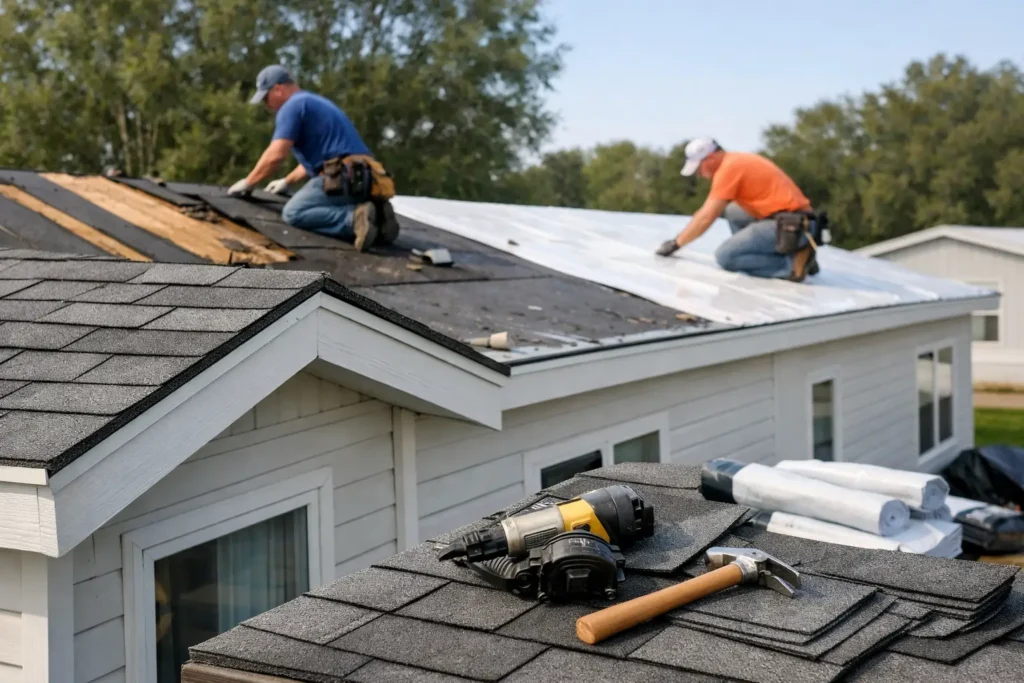
A ceiling stain that keeps growing after every storm is usually the moment mobile homeowners stop asking whether they can wait. When leaks keep coming back, soft spots start showing up, or the roof has simply reached the end of its life, a mobile home roof replacement becomes less of a project and more of a protection decision.
For families in East Texas, that decision carries extra weight. Heat, wind, heavy rain, hail, and falling limbs can wear out a mobile home roof faster than expected. The right replacement can stop interior damage, improve energy performance, and give you a stronger system that holds up better the next time rough weather rolls through. The wrong choice can leave you paying for repeat repairs and patchwork fixes that never really solve the problem.
When mobile home roof replacement makes more sense than repair
Not every leak means you need a full replacement. Some roofing problems are isolated and can be repaired if the surrounding roof system is still in solid shape. A small area of storm damage, a limited seam issue, or a localized flashing problem may be fixable without tearing off the whole roof.
But there comes a point when repair money starts chasing a bigger failure. If the roof has multiple leak points, signs of sagging, recurring water intrusion, wet insulation, rotted decking, or widespread corrosion, replacement is often the smarter long-term move. The same goes for older roofs that have already been patched several times. A cheap repair can feel like the easy answer until the next storm exposes the next weak spot.
Age matters too, but age alone does not tell the whole story. Some mobile home roofs fail early because of poor drainage or storm exposure. Others last longer because they were maintained well and built with better materials. What matters most is the actual condition of the roof structure, the surface, and what is happening underneath.
Common signs your mobile home roof is failing
The warning signs usually show up before total failure. Water stains on ceilings or walls are obvious, but they are not the only clue. You may also notice bubbling or sagging roof sections, musty odors from trapped moisture, rising energy bills, visible rust on metal panels, loose fasteners, damaged seams, or interior drywall issues that keep returning.
In mobile homes, roof problems can spread faster than many owners expect. Once water gets under the surface, it can move into insulation, decking, framing, and interior finishes. That is one reason professional inspection matters. What looks minor from inside the home may reflect a larger issue above it.
If your roof was damaged by a storm, timing matters. Waiting too long can make insurance claims harder to document and can allow secondary damage to grow. In a storm-prone area, quick response is part of protecting the home, not just the roof.
Mobile home roof replacement options
The best replacement system depends on the roof’s current condition, your budget, and how long you plan to stay in the home. There is no one-size-fits-all answer, and any contractor who treats it that way is skipping the details that matter.
Metal roofing
Metal is a common choice for mobile home roof replacement because it is durable, long-lasting, and well-suited for harsh weather. It sheds water efficiently and generally requires less maintenance than some other materials. For East Texas homeowners dealing with heavy rain and strong sun, that can be a practical advantage.
That said, metal is not automatically the cheapest option upfront. Installation quality matters a great deal, especially around seams, penetrations, and edge details. Poor installation can lead to fastener issues, leaks, and movement over time. A properly installed metal roof is a strong investment. A rushed one can become a problem.
Roof-over systems
In some cases, a roof-over system can be installed over the existing mobile home roof rather than fully removing everything down to the deck. This can reduce tear-off labor and provide a fresh roofing surface, but it only works when the underlying structure is sound.
If there is hidden rot, trapped moisture, or significant structural weakness, covering it up is not a real fix. That is why inspection is critical. Roof-over systems can be cost-effective in the right scenario, but they should never be used to hide major damage.
Shingle roofing
Shingles may be an option on some mobile homes, depending on roof pitch and structural support. They are familiar, widely available, and often attractive to homeowners who want a more traditional residential look.
The trade-off is weight and compatibility. Not every mobile home is a good candidate for shingles, and the framing must be evaluated carefully. If the structure is not suited for the added load, another system may be the better call.
Coating-based restoration versus full replacement
Some commercial-style coatings can help extend the life of certain roofing systems, but they are not the same thing as replacement. A coating may be helpful when the roof is still fundamentally sound and the goal is to seal, protect, and improve performance.
If the roof has widespread damage beneath the surface, a coating will not correct that. Homeowners sometimes hear “restoration” and assume it solves everything. Sometimes it does. Sometimes it delays the real work. Honest guidance means knowing the difference.
What affects the cost of a mobile home roof replacement
Price depends on more than square footage. The size of the home matters, of course, but so do roof shape, material choice, structural repairs, tear-off needs, insulation upgrades, and the amount of hidden damage discovered during the project.
Access can also affect labor. A simple, straightforward roof is different from one with drainage issues, previous layering, soft decking, or storm-related structural damage. If the roof needs emergency tarping first, interior protection, or insurance documentation, those details can become part of the overall scope too.
The lowest estimate is not always the lowest final cost. If a quote is vague, skips preparation details, or does not explain what happens if damaged decking is found, you may not be comparing the full job. Clear scope matters because surprises usually get expensive fast.
What to expect during the replacement process
A professional replacement should start with a real inspection, not a guess from the driveway. The contractor needs to assess the roof covering, decking, drainage, penetrations, edge conditions, and signs of moisture intrusion below the surface.
From there, you should get a clear explanation of what needs to be done, what materials make sense for the home, and whether repair is still a realistic option. If storm damage is involved, documentation should be handled carefully. That includes photos, measurements, and notes that support the condition of the roof.
On installation day, the goal is not just to put on new material. It is to build a complete roofing system that protects the home. That means proper tear-off or preparation, replacement of compromised decking where needed, correct fastening, sealed transitions, and attention to detail around vents, trim, and edges.
Good communication matters just as much as workmanship. Homeowners should know what is happening, what the timeline looks like, and whether any changes are needed once the project begins. That kind of clarity helps avoid confusion and builds trust where it should be built – on the work itself.
Choosing the right contractor for a mobile home roof replacement
Mobile homes are not just smaller versions of site-built houses. Their roofing systems often involve different structural considerations, material limitations, and installation details. Experience matters because shortcuts on a mobile home roof can turn into major issues quickly.
Look for a contractor who inspects thoroughly, explains options clearly, and does not pressure you toward a one-answer-fits-all solution. If insurance is involved, it helps to work with a company that can document damage and walk you through the claim process without creating more stress.
Local accountability matters too. In East Texas, storms do not wait for convenient timing, and roofing issues can become urgent overnight. Working with a contractor who responds quickly, communicates honestly, and stands behind the job with a workmanship warranty gives homeowners something every roofing project should provide – confidence.
That is why many homeowners want more than installation. They want guidance, financing options if needed, and a team that treats the home with respect from first inspection to final cleanup. Spartan Exteriors built its reputation around that kind of service because getting the roof done right the first time is better for everyone.
A better roof should give you peace of mind
A mobile home roof replacement is a serious investment, but it is also one of the most direct ways to protect your home, your belongings, and your family from the next round of weather. If your roof is leaking, aging out, or showing signs of bigger failure, waiting rarely makes the decision easier. A clear inspection and honest recommendation can. The best next step is the one that gives you a dry, dependable roof and fewer worries every time the forecast turns rough.