
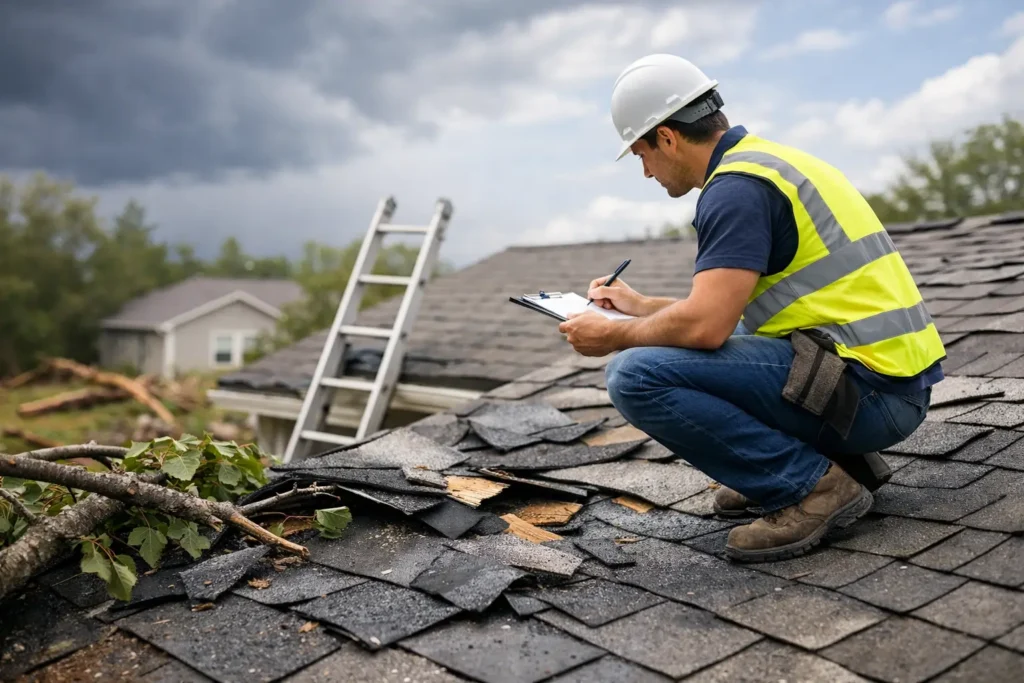
The storm passes, the rain lets up, and then you notice the water stain spreading across the ceiling. That is usually the moment people start searching for what to do after roof storm damage. The right next steps can protect your home, strengthen your insurance claim, and keep a manageable problem from turning into a full roof replacement.
When a roof takes a hit from hail, wind, or falling limbs, speed matters. So does judgment. Some issues need immediate emergency protection, while others look minor from the ground but hide damage that keeps getting worse with every rain.
What to do after roof storm damage right away
Start with safety. If there is active leaking, bubbling drywall, exposed electrical wiring, or a tree limb on the roof, stay out of the affected area until it is safe. Water and electricity are a dangerous mix, and a storm-damaged roof can be weaker than it looks.
Do a ground-level check before you do anything else. Walk the perimeter of the home or building and look for obvious signs like missing shingles, metal flashing on the ground, dented gutters, broken vents, fallen branches, and debris scattered around the property. For commercial properties, also look for signs of rooftop equipment impact or loose membrane material near drains and edges.
If water is coming inside, take steps to limit interior damage. Move furniture, electronics, rugs, and anything valuable away from the leak. Use buckets or containers to catch dripping water. If water is pooling in a ceiling bubble, some homeowners choose to drain it carefully to reduce collapse risk, but that depends on the size of the bubble and whether electrical fixtures are nearby. If there is any doubt, wait for a professional.
Call for emergency roof protection if the roof is open to the weather. Temporary tarping or other emergency repair measures can make a major difference. Insurance companies generally expect property owners to take reasonable steps to prevent further damage, so waiting too long can work against you.
Document everything before cleanup goes too far
One of the biggest mistakes after a storm is cleaning up too quickly without taking photos. Before branches are moved, before wet drywall is torn out, and before temporary repairs begin, document what happened.
Take clear photos and video from multiple angles. Capture the roof from the ground, damaged gutters, siding impact, broken windows if any, water stains inside, soaked insulation, damaged ceilings, and debris that likely caused the problem. If hail was involved, photograph dents on metal components like gutters, downspouts, vents, and garage doors. Those details can support the bigger story of storm impact.
Write down the date of the storm and what you noticed first. Include when the leak started, which rooms are affected, and whether the damage appears to be getting worse. Keep receipts for anything you buy to protect the property, such as tarps, buckets, fans, or emergency service calls. Good records matter because insurance claims often come down to documentation, timing, and consistency.
Should you get on the roof yourself?
Usually, no. After a storm, roofs can be slick, unstable, or weakened around decking and edges. Even a single-story home can become dangerous fast if shingles are loose or the surface is wet. For mobile homes and commercial buildings, access points and roof systems vary, and that changes the risk.
A basic view from the ground or from inside the attic is enough for most property owners. In the attic, look for wet decking, daylight showing through, damp insulation, or dark streaks that were not there before. That information helps a contractor or adjuster understand the likely extent of the issue without putting yourself in harm’s way.
Get a professional inspection early
Storm damage is not always obvious. Wind can break the seal on shingles without tearing them off. Hail can bruise shingles and shorten roof life even when the roof still looks mostly intact from the yard. Metal roofing may show visible dents, while low-slope commercial systems may develop punctures, seam problems, or drainage issues that only show up later.
That is why one of the smartest answers to what to do after roof storm damage is to schedule a professional inspection as soon as possible. A qualified roofing contractor can identify visible damage, hidden weaknesses, and urgent repair needs before the next storm exposes them.
The timing matters in East Texas. One round of severe weather often gets followed by another, and a roof that is already compromised rarely performs better the second time. Quick action can mean the difference between a localized repair and major structural damage.
Understand the insurance side without getting overwhelmed
If the damage is more than cosmetic or involves active leaks, start your insurance claim promptly. Contact your carrier, report the loss, and ask what documentation they want first. Some insurers move fast after major storms, while others may take longer if the region has widespread claims.
Be clear and factual when describing the damage. Stick to what you know. Tell them the date of loss, what type of storm occurred if known, and what damage you observed. Avoid guessing about the full scope until the inspection is complete.
It also helps to have a contractor who understands insurance documentation and can walk the property with you or meet with the adjuster. That does not mean every damaged roof will qualify for a full replacement. Sometimes the right outcome is a repair. Sometimes the age of the roof, prior wear, and policy language all affect what gets approved. The best approach is honest documentation and a clear scope based on actual conditions.
Temporary repair now, permanent repair after review
Emergency service and permanent repair are not the same thing. Temporary work is meant to stop active intrusion and stabilize the property. That may include tarping, sealing an exposed section, removing dangerous debris, or securing loose components.
Permanent repair should happen after a full inspection determines what was damaged and whether the issue is isolated or widespread. Replacing a few shingles may be enough if the damage is limited and the surrounding roof is still in good shape. But if a storm has affected multiple slopes, flashing systems, ridge components, or decking, patchwork repairs may only delay a larger failure.
This is where experience matters. A trustworthy contractor should tell you when a repair is appropriate and when it is not. You do not need pressure. You need a straight answer about what protects the property long term.
Different roof types can require different next steps
Shingle roofs usually show storm damage through lifted tabs, granule loss, bruising from hail, or shingles torn off by wind. Metal roofs can handle weather well, but storms may dent panels, loosen fasteners, or damage trim and flashing. On commercial properties, low-slope systems may suffer punctures, ponding issues, membrane separation, or damage around penetrations.
That matters because the right fix depends on the roofing system. A repair that works on architectural shingles is not the same as what is needed for standing seam metal or a silicone-coated commercial roof. If you own a business property, ask specifically whether the inspection includes drainage, seams, penetrations, and rooftop units. Those areas often tell the real story after a storm.
Watch for damage that shows up days later
Not every storm problem appears immediately. Some signs show up after the roof dries out and the next weather event hits. Keep an eye on ceilings, attic spaces, trim, and exterior walls for the next few weeks.
Warning signs include musty odors, stained drywall, warped paint, sagging soffits, rising energy bills, and leaks that only happen during wind-driven rain. If you notice any of those, do not assume the storm issue was minor. Delayed symptoms often point to hidden moisture moving through the roof system or attic.
Choose the contractor carefully
Storm season always brings out fast-talking sales teams and out-of-town crews. Some do good work. Some disappear when warranty issues come up. After roof storm damage, the safest move is to work with a contractor who is established, responsive, and willing to explain the scope in plain language.
Look for local credibility, proof of insurance, clear inspection findings, written estimates, and a workmanship warranty. Ask how emergency protection is handled, what materials are being used, and who will communicate with you during the claim and repair process. If financing is part of your decision, bring that up early instead of waiting until the work is underway.
For many East Texas property owners, the best contractor is not the one with the hardest pitch. It is the one who shows up quickly, documents the damage honestly, and does the job right the first time. That is the standard Spartan Exteriors believes property owners deserve after a storm.
What to do after roof storm damage if it seems minor
Even if the roof looks mostly fine, do not ignore it. Minor storm damage has a way of becoming expensive damage when moisture gets under shingles, flashing pulls loose, or small punctures go unnoticed. A quick inspection now can save you from emergency repairs later.
The main thing is not to freeze. Protect the interior, document what you see, get a professional inspection, and move on the insurance process if needed. A storm can leave your home or building feeling exposed, but the right response puts you back in control – one clear step at a time.