
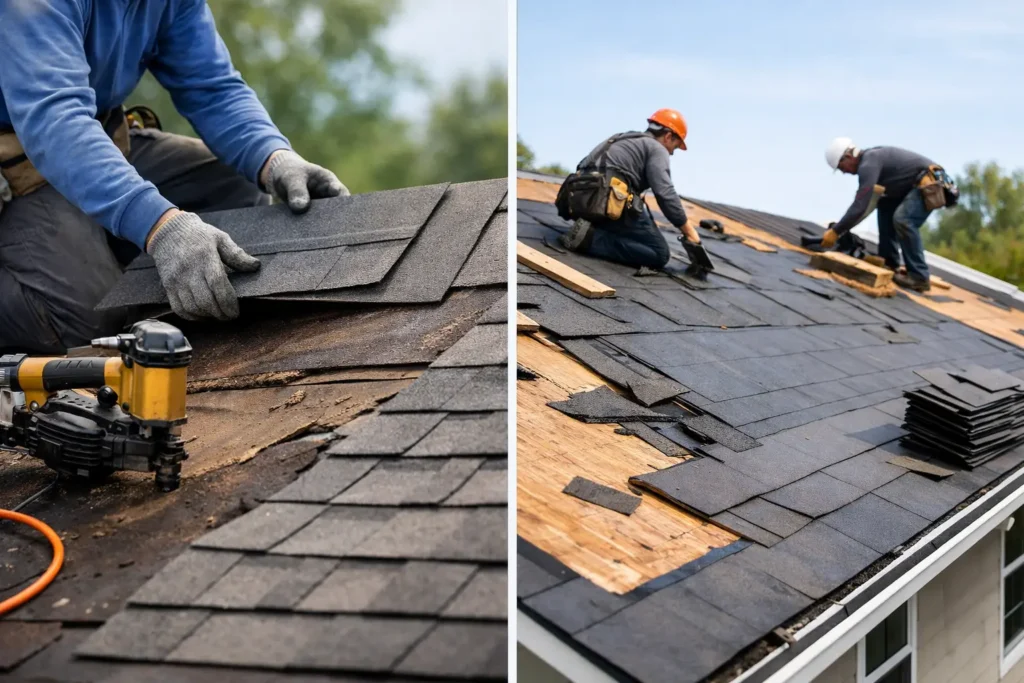
When a roof starts failing, most property owners ask the same question: reroofing vs roof replacement – which one actually makes sense? The answer depends on more than price. It comes down to what shape your current roof is in, how long you plan to stay in the property, whether storm damage is involved, and whether a quicker fix today could create a bigger expense later.
In East Texas, that decision matters even more. Heat, wind, heavy rain, hail, and fallen limbs can turn a worn roof into an urgent problem fast. If you’re looking at missing shingles, leaks, soft spots, or visible age, the right choice is the one that protects your home or building for the long haul – not just the one with the lower number on the estimate.
Reroofing vs roof replacement: what is the difference?
Reroofing usually means installing a new layer of shingles over an existing roof. It is sometimes called a roof overlay. This option can work when the roof has one existing layer, the decking underneath is still solid, and the main issue is surface wear rather than widespread structural damage.
Roof replacement is more complete. The old roofing material is removed down to the decking so the contractor can inspect the wood underneath, replace damaged sections if needed, and install a full new roofing system. That includes underlayment, flashing, ventilation components, and the new exterior roofing material.
The big difference is simple. Reroofing covers the old roof. Roof replacement gives you a fresh start.
When reroofing may be the right move
Reroofing can be a practical option when the existing roof is nearing the end of its appearance or performance life but the underlying structure is still in good condition. If the shingles are aging evenly, there is no major sagging, and leaks are limited or nonexistent, an overlay may buy you more time at a lower upfront cost.
For some homeowners, that matters. If you’re trying to control spending, preparing to sell soon, or dealing with cosmetic roof wear more than deeper failure, reroofing can be appealing. It is usually faster than a full replacement, creates less tear-off debris, and often costs less in the short term.
That said, reroofing has limits. It does not fix hidden deck rot. It does not give your contractor the same chance to inspect flashing failures or moisture damage below the surface. And if the existing roof already has multiple trouble spots, putting new material over old problems can shorten the life of the new layer.
When roof replacement is the smarter choice
If your roof has active leaks, storm damage, soft decking, sagging areas, widespread shingle loss, or signs of trapped moisture, full replacement is usually the smarter investment. The same goes for roofs that already have more than one layer. In many cases, building code and best practice make reroofing a poor fit or rule it out entirely.
A replacement gives you something reroofing cannot: visibility. Once the old system is removed, your contractor can see what is really happening underneath. That matters after hail, wind, or tree damage, and it matters on older roofs where years of small issues may be hidden under the shingles.
This is also the better option if you want the longest service life. A full replacement lets the new roofing system perform as designed from the decking up. That means better protection, cleaner installation details, and fewer surprises later.
Cost matters, but it should not be the only factor
A lot of reroofing vs roof replacement decisions start with budget, and that is understandable. Reroofing usually costs less because there is less labor, less tear-off work, and fewer disposal costs. For property owners under financial pressure, that lower upfront price can look like the clear winner.
But cheaper now does not always mean cheaper overall. If the old roof hides moisture damage or weak decking, reroofing can postpone a full replacement rather than prevent it. You may spend less today and still face a larger repair bill sooner than expected.
Roof replacement costs more at the start, but it often provides better long-term value. You are not just buying shingles. You are paying for inspection, correction of hidden damage, updated materials, and a roofing system built to last. If financing is available, many owners decide that a full replacement makes more sense than paying twice.
Storm damage changes the conversation
In East Texas, roofing decisions are often made after a storm, not on a calm weekend with plenty of time to compare options. Hail can bruise shingles. Wind can break seals and lift edges. Heavy rain can exploit small weak points that were not leaking before.
After storm damage, reroofing is not always enough. If water has gotten below the surface, or if impact damage affects more than the visible shingles, a full replacement may be necessary to restore proper protection. This is one reason a thorough inspection matters. You need to know whether the damage is cosmetic, functional, or structural.
Insurance can also affect the best path forward. In some cases, covered storm damage may support replacement instead of a simple overlay. Clear documentation, photos, and an experienced contractor can help property owners understand what the roof needs and what the claim may support.
What about commercial properties and mobile homes?
For commercial roofs, the answer is even more dependent on the system already in place. A commercial reroof may involve coatings or recover systems in some situations, while other roofs need full tear-off because of trapped moisture, membrane failure, or insulation issues. Silicone systems, metal panels, and low-slope assemblies all need to be evaluated differently.
Mobile homeowners also need a tailored recommendation. Roof shape, substrate condition, previous modifications, and leak history all matter. A quick fix may look attractive, but if the structure has weak spots or recurring water intrusion, replacement is often the safer route.
This is where honest guidance matters most. A trustworthy roofer should not push the more expensive option by default. They should explain what they found, what your options are, and what each path means for lifespan, cost, and risk.
Signs you should not choose reroofing
There are times when reroofing is simply not the right call. If your roof has multiple layers already, widespread curling or missing shingles, repeated leaks, deck damage, mold risk, or clear storm-related structural issues, covering it up is not a solid plan.
The same goes for roofs with poor ventilation or flashing problems. An overlay may improve the surface appearance while leaving the root cause untouched. That can lead to heat buildup, moisture problems, and shorter roof life.
A good rule is this: if the problem goes deeper than the top layer, the solution usually needs to go deeper too.
How to make the right decision
The best decision starts with a real inspection, not a guess from the driveway. You want to know the age of the current roof, how many layers are installed, whether the decking is sound, whether the leaks are isolated or widespread, and whether storm damage has compromised the system.
From there, think about your timeline. If this is your long-term home or business property, replacement often gives better value and peace of mind. If the roof is otherwise sound and you need a lower-cost option for a shorter horizon, reroofing may be reasonable.
You should also think about warranty protection. A full replacement often gives stronger workmanship and material coverage because the entire system is being installed new. That matters when you want confidence that the job was done right the first time.
The choice should protect more than your budget
A roof is not just another exterior feature. It protects your family, your inventory, your ceilings, your insulation, and everything underneath it. That is why reroofing vs roof replacement should never be treated like a simple price comparison.
The right answer is the one that fits the real condition of the roof and the real needs of the property owner. For some roofs, reroofing is a practical short-term solution. For others, replacement is the only responsible option. At Spartan Exteriors, that conversation starts with straight answers, a careful inspection, and a recommendation built around what serves your property best.
If your roof is showing signs of age or storm damage, the smartest next step is to have it evaluated before a manageable issue turns into interior damage, insurance headaches, or a much bigger repair.