
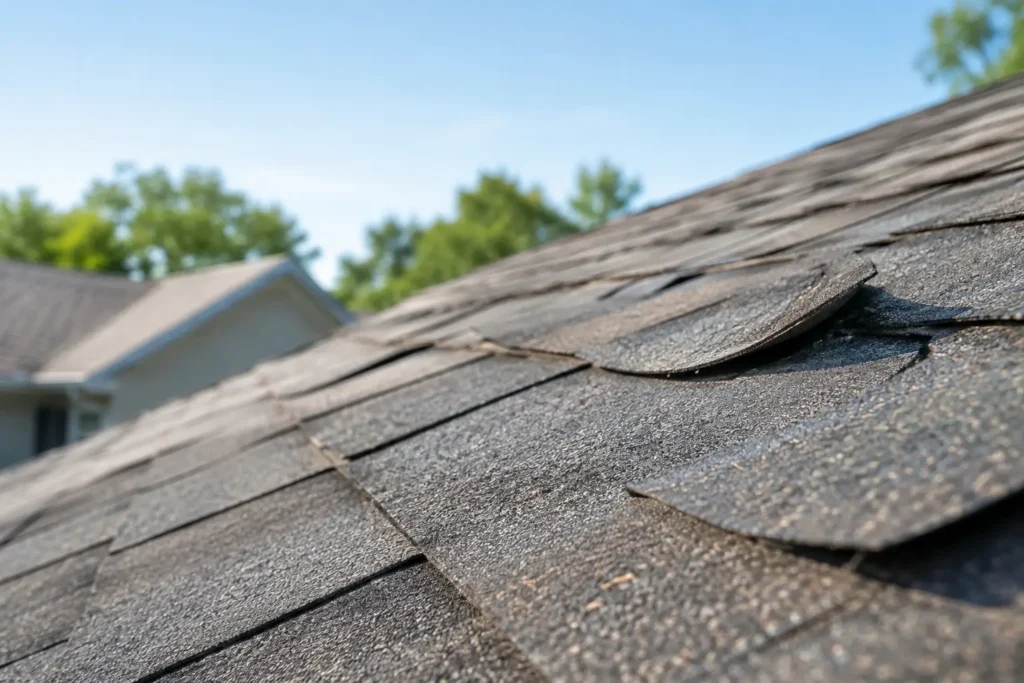
A curled shingle is more than an eyesore on an aging roof. It can be the first visible sign that your roof is losing its ability to shed water, resist wind, and protect the structure below. Understanding shingle curling causes helps East Texas property owners act before a small warning sign turns into a leak, damaged decking, or a stressful insurance claim.
What Does Shingle Curling Look Like?
Shingles can curl in two main ways. Cupping happens when the edges of a shingle turn upward, creating a shallow cup. Clawing happens when the middle of the shingle lifts while the edges turn downward, creating a claw-like shape.
Either pattern can expose more of the shingle to sun, rain, and wind. Once the seal between shingles begins to fail, wind can get underneath the tabs and pull them loose. A roof may still look mostly intact from the ground, but curling in several areas deserves a closer look.
The Most Common Shingle Curling Causes
Curling does not always mean the entire roof must be replaced immediately. The cause, age of the roofing system, extent of the issue, and condition of the roof deck all matter. Still, curling rarely corrects itself, and waiting usually makes the repair more expensive.
Heat and Sun Exposure
East Texas heat puts roofing materials through a demanding cycle. Shingles expand under intense sun, then cool down overnight or after a storm. Over many seasons, this repeated movement can dry out the asphalt oils that help shingles remain flexible.
As shingles become brittle, their corners and edges are more likely to lift. Sun damage is often worse on roof slopes that receive the strongest afternoon exposure. Dark streaks, missing granules, and cracking may show up alongside curling.
Poor Attic Ventilation
A roof is not just the shingles you can see. The attic space below plays a major role in how long those shingles last. When hot air and moisture cannot move out of the attic effectively, the underside of the roof can become extremely hot.
That trapped heat accelerates shingle aging and may cause uneven curling across the roof. In some homes, moisture buildup can also contribute to mold, damp insulation, or wood deterioration. Adding more shingles without correcting a ventilation problem may only delay the same problem on the new roof.
Proper ventilation is a balanced system. Intake ventilation near the lower roof edge and exhaust ventilation near the ridge must work together. A professional inspection can determine whether the roof has enough ventilation and whether insulation or blocked vents are contributing to the problem.
Age and Normal Material Wear
Asphalt shingles have a service life, not a lifetime. Even a well-installed roof eventually loses flexibility, protective granules, and weather resistance. Curling often appears when a roof reaches the later part of its expected lifespan.
Age-related curling tends to be widespread rather than limited to one small section. If shingles are curling throughout several slopes, feel brittle, and have noticeable granule loss, repairs may offer only a short-term solution. Replacement may be the more responsible investment because surrounding shingles can fail soon after spot repairs are completed.
Installation Problems
The quality of installation matters from the first day a roof is installed. Shingles can curl prematurely if they were not fastened correctly, were installed over an uneven surface, were applied in unsuitable weather, or were not allowed to seal as intended.
Poorly placed nails can create weak points and let shingles move in wind. Insufficient roof slope, improper underlayment, and installation over existing damaged shingles can also create conditions that lead to early failure. These issues are why homeowners should be cautious about the cheapest bid. A low price is not a value if the roof needs major work years before it should.
Moisture Under the Shingles
Water does not always announce itself with a ceiling stain. A slow leak, failing flashing, damaged underlayment, or condensation in the attic can allow moisture to reach the back side of shingles or the roof deck.
When the deck swells, shifts, or softens, shingles may no longer lie flat. You may notice curling near chimneys, valleys, vents, skylights, or areas where branches have rubbed the roof. Moisture-related curling needs prompt attention because the visible shingle issue may be covering a deeper problem with decking or framing.
Storm and Wind Damage
Strong winds can break shingle seals and lift edges without tearing every shingle off the roof. After repeated storms, lifted tabs can stay bent rather than returning flat. Hail impacts may remove protective granules and speed up weathering, making curled shingles more likely over time.
A storm-related issue can be difficult to identify from the ground. Not every curled shingle qualifies as covered damage, but timely documentation is useful when a storm has affected your property. Clear photos, a professional inspection, and an honest explanation of the findings give property owners a stronger starting point when evaluating an insurance claim.
Why Curled Shingles Should Not Be Ignored
Curling changes the way water moves across a roof. Raised edges can catch wind-driven rain, and gaps between shingles can allow moisture beneath the surface. Water may then reach underlayment, decking, insulation, and interior ceilings.
Curled shingles also make a roof more vulnerable in the next storm. What begins as a few lifted edges can turn into blown-off shingles when wind gets underneath them. For commercial properties, even a small roof opening can disrupt operations and damage inventory, ceilings, and equipment.
There is also an energy concern. If attic ventilation and insulation are part of the underlying issue, your heating and cooling system may be working harder than it should. A roof inspection can look beyond the shingle surface and identify whether heat or moisture is affecting the whole roofing system.
Can Curled Shingles Be Repaired?
Sometimes, yes. If curling is limited to a few shingles and the rest of the roof is in good condition, a qualified roofer may be able to replace the affected shingles, address a flashing issue, or correct a localized source of moisture.
Replacement is often the better answer when curling is widespread, shingles are brittle, granules are washing into gutters, or the roof is near the end of its service life. Trying to patch a failing roof one area at a time can become costly and leave you exposed when the next severe storm arrives.
The key is an inspection that does not jump straight to a sales pitch. A trustworthy contractor should explain what is causing the curling, show you the affected areas, and give clear options based on the roof’s actual condition. If replacement is needed, you should understand the materials, ventilation considerations, workmanship coverage, timeline, and financing options before work begins.
What Homeowners Can Check Safely
You do not need to climb onto the roof to notice warning signs. From the ground, look for uneven shingle lines, raised corners, bare spots where granules are missing, dark areas, or shingles that appear warped. After a heavy rain, check the attic for damp insulation, water marks, or a musty smell.
Check your gutters too. A small amount of granule loss is common over time, but large amounts of coarse, sand-like material can indicate shingle deterioration. Keep tree limbs trimmed back from the roof, since rubbing branches can wear down shingles and trap moisture.
Avoid trying to flatten curled shingles with adhesive or nails. Walking on a brittle roof can cause additional damage, and a surface fix may hide an active moisture or ventilation issue. Roof work is safest and most effective when the full system is evaluated.
When to Schedule a Roof Inspection
Schedule an inspection soon if you see multiple curled shingles, find granules in gutters, notice water stains indoors, or suspect damage after a storm. You should also have the roof checked if it is approaching the expected age of its materials, even if no leak has appeared yet.
For homeowners in Tyler and nearby East Texas communities, Spartan Exteriors can inspect the roof, explain the condition in plain language, and help document qualifying storm damage when appropriate. The goal is not to create pressure. It is to give you a clear picture of what is happening overhead and what needs to happen next.
A roof does not have to be leaking through the ceiling before it deserves attention. Addressing curled shingles early gives you more choices, more time to plan, and a better chance to protect your home before weather finds the weak spot.